
The festival year
Every great Hindu festival, set in the month of the lunisolar year it falls in, with the story and text behind it, how it is kept, and where. Then the calendar itself: the five limbs of the Panchang and the eras India counts its years by.
Month by month
From Chaitra to Phalguna. Gregorian dates move each year; the tithi does not.
01चैत्रःChaitraMarch–April 02वैशाखःVaishakhaApril–May 03ज्येष्ठःJyeshthaMay–June 04आषाढःAshadhaJune–July 05श्रावणःShravanaJuly–August 06भाद्रपदःBhadrapadaAugust–September 07आश्विनःAshvinaSeptember–October 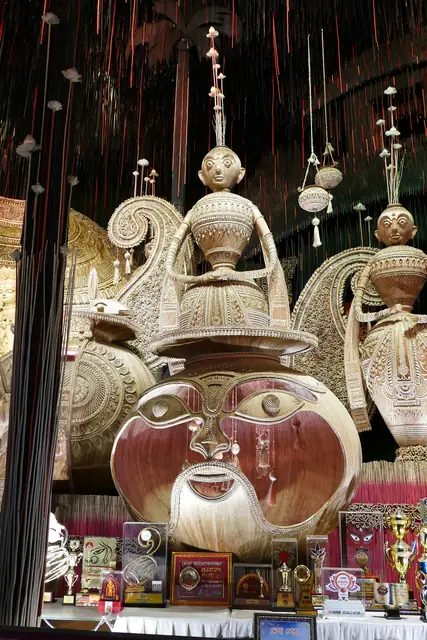 Navaratri and Durga PujaAshvina Shukla Pratipada to Navami (Sharad Navaratri); Chaitra Navaratri in spring
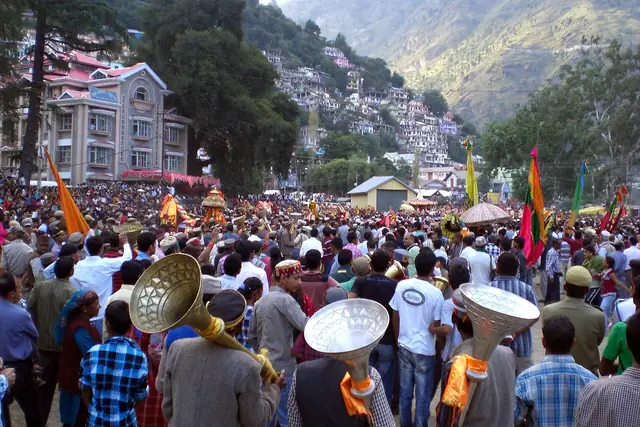 Dussehra (Vijayadashami)Ashvina Shukla Dashami
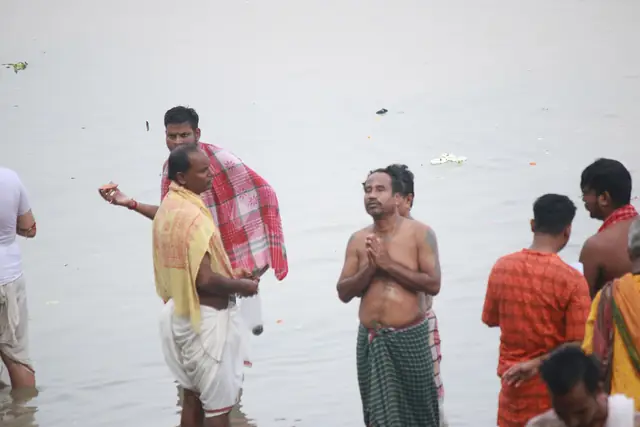 Pitru Paksha (Shraddha Paksha)Ashvina Krishna Paksha in the purnimanta reckoning (Bhadrapada Krishna Paksha in the amanta)
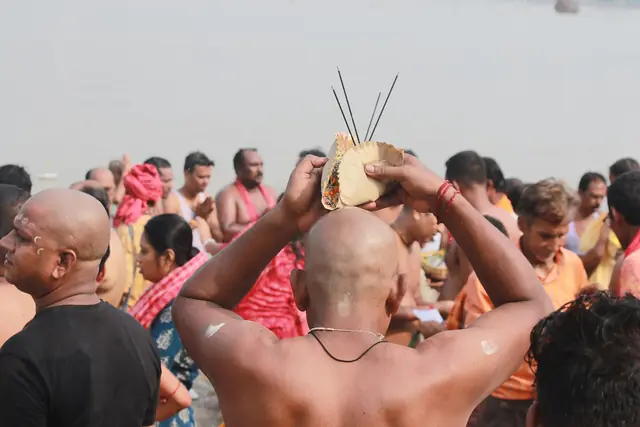 MahalayaAshvina Amavasya in the purnimanta reckoning (Bhadrapada Amavasya in the amanta)
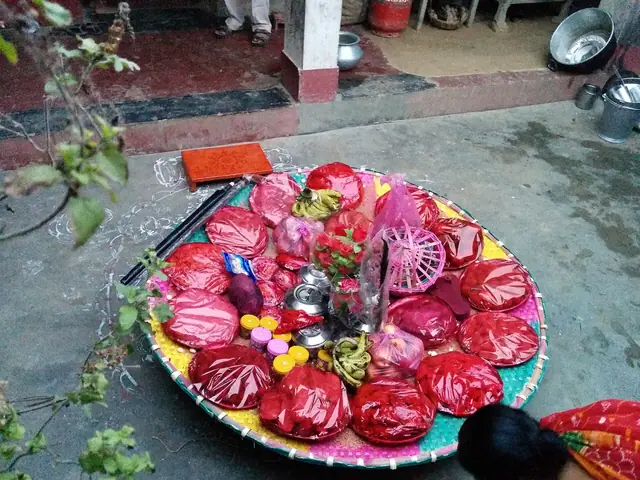 Sharad Purnima (Kojagari)Ashvina Purnima
08कार्तिकःKartikaOctober–November 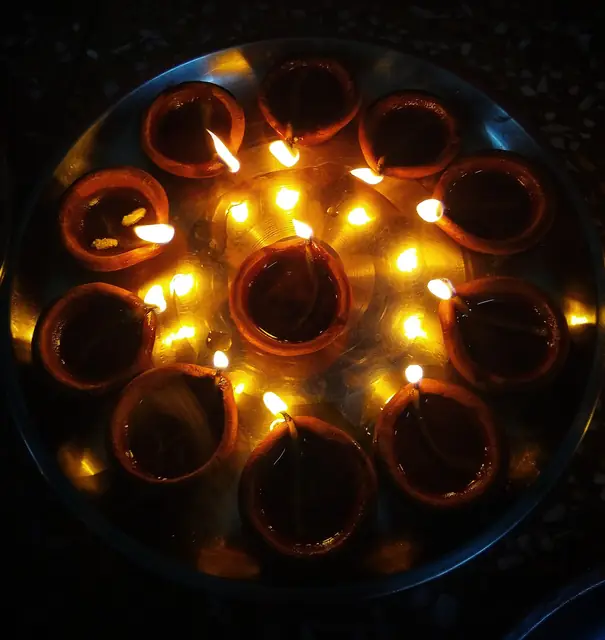 Diwali (Deepavali)Kartika Amavasya (Ashvina Amavasya in the amanta reckoning)
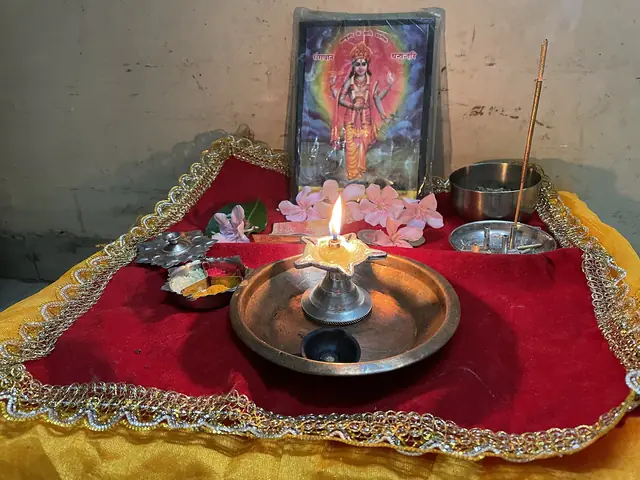 Dhanteras (Dhanatrayodashi)Kartika Krishna Trayodashi (Ashvina in the amanta reckoning)
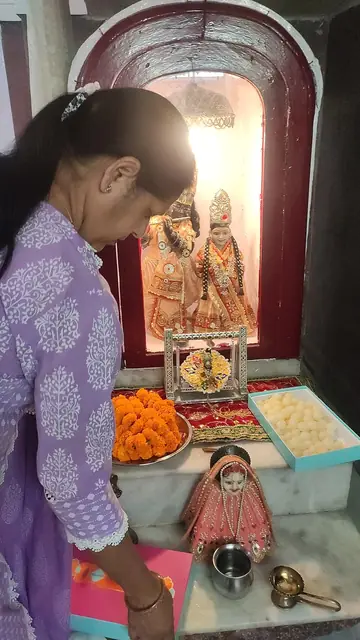 Govardhan Puja and AnnakutKartika Shukla Pratipada
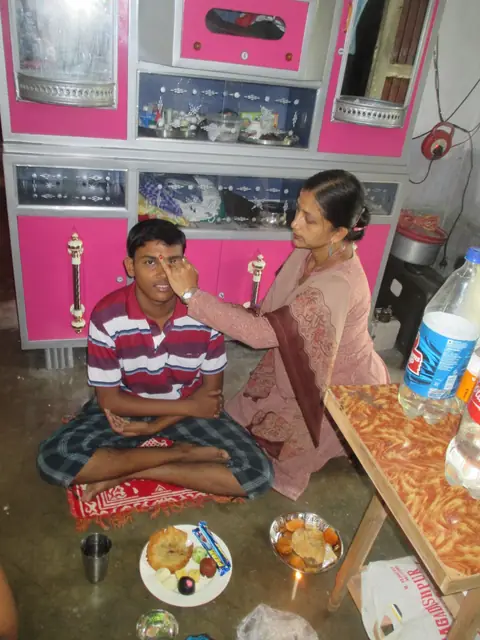 Bhai Dooj (Yama Dvitiya)Kartika Shukla Dvitiya
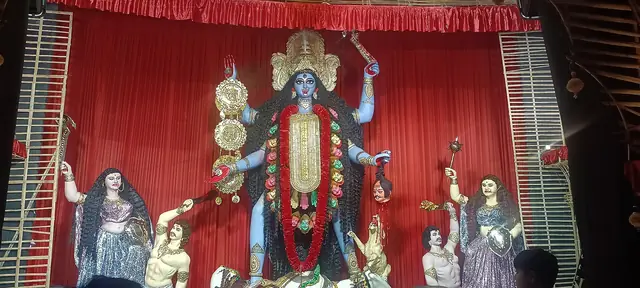 Kali Puja (Shyama Puja)Kartika Amavasya (Ashvina Amavasya in the amanta reckoning)
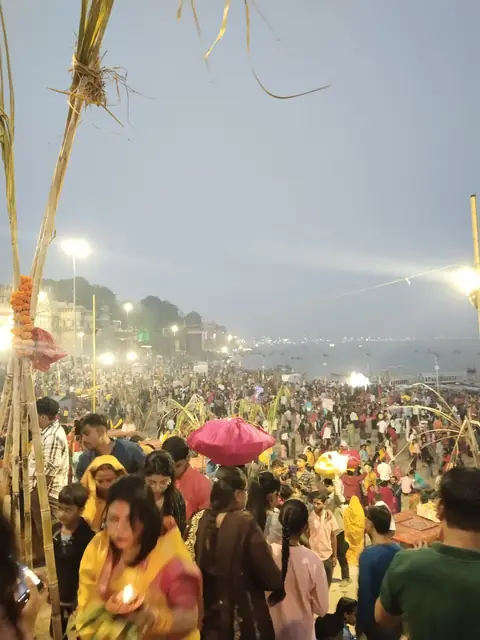 Chhath PujaKartika Shukla Shashthi (and Chaitra Shukla Shashthi for Chaiti Chhath)
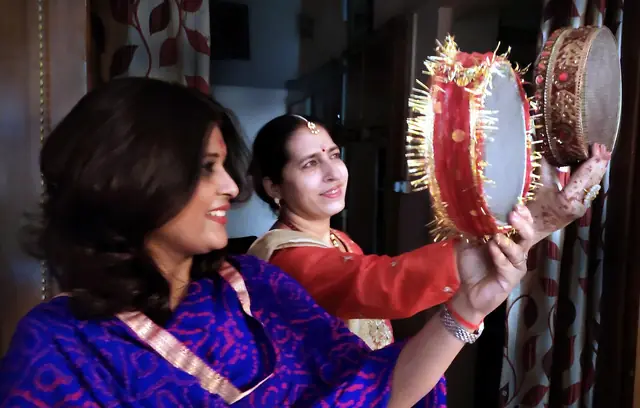 Karva ChauthKartika Krishna Chaturthi (Ashvina in the amanta reckoning)
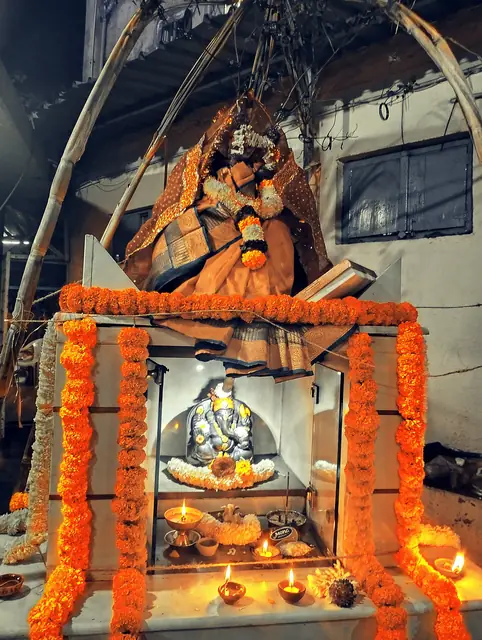 Tulsi VivahKartika Shukla Ekadashi or Dvadashi (Prabodhini), in some homes up to Kartika Purnima
09मार्गशीर्षःMargashirsha (Agrahayana)November–December ·10पौषःPaushaDecember–January ·11माघःMaghaJanuary–February 12फाल्गुनःPhalgunaFebruary–March
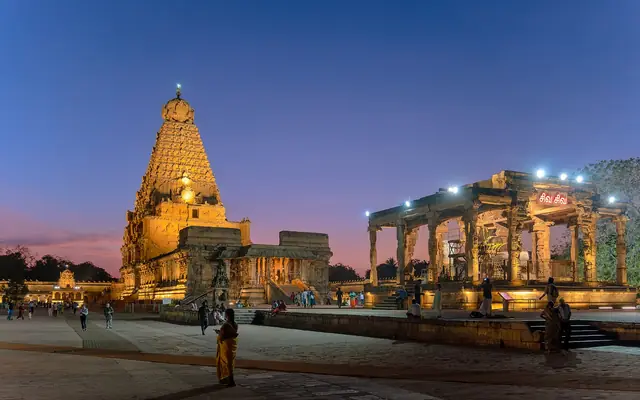
By the sun, or across months
 Makar SankrantiSolar: the day Surya enters Makara (Capricorn), in Pausha or Magha
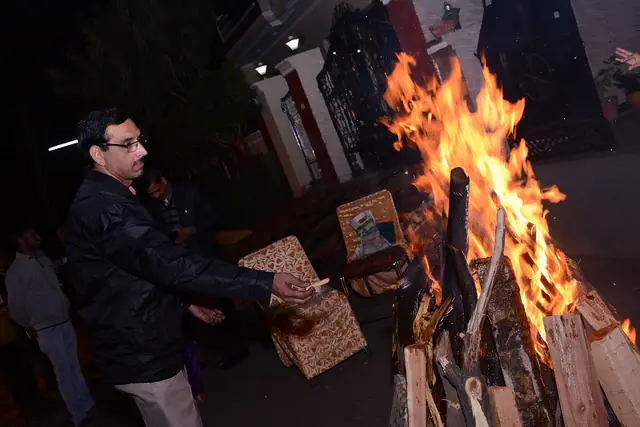 LohriSolar: the eve of Makar Sankranti, the last night of Pausha
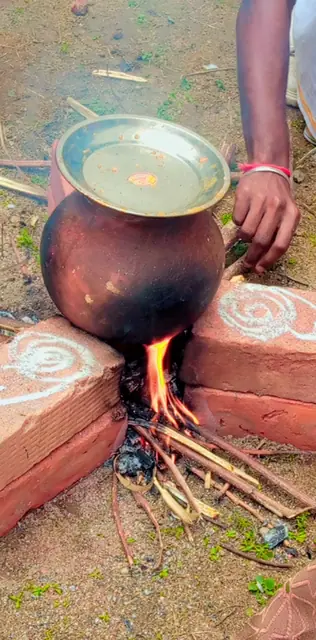 Thai PongalSolar: Thai 1, the day Surya enters Makara
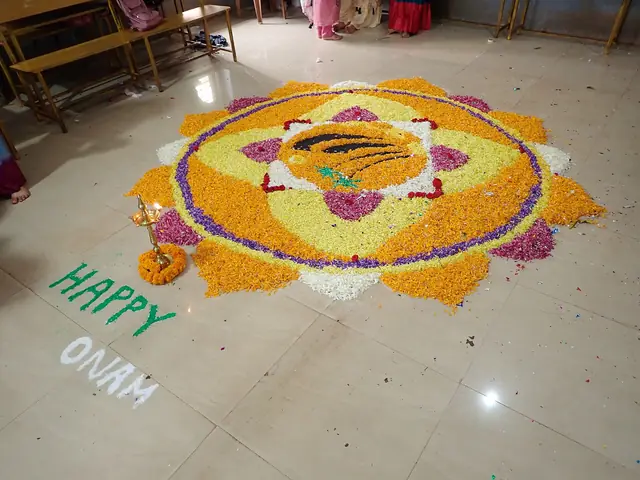 OnamChingam (Simha) month of the Kollam calendar, on Thiruvonam (Shravana) nakshatra
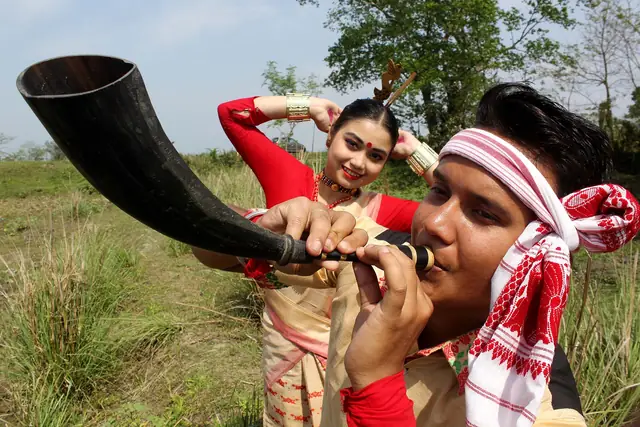 Rongali (Bohag) BihuSolar: Mesha Sankranti, the start of the Assamese month of Bohag (Vaishakha)Vaisakhi (Baisakhi)Solar: Mesha Sankranti, the first day of Vaishakha in the solar calendar
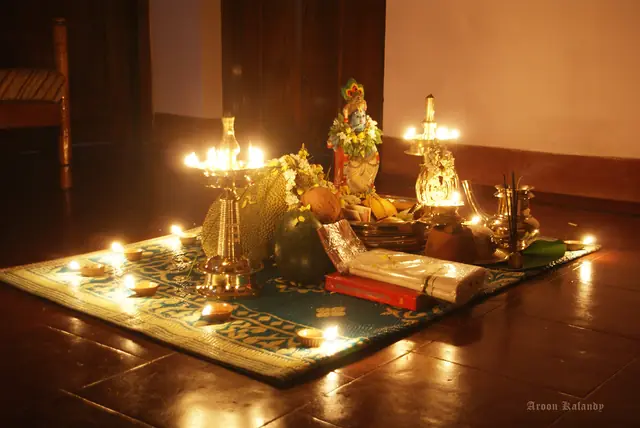 VishuSolar: Medam 1, Mesha Sankranti
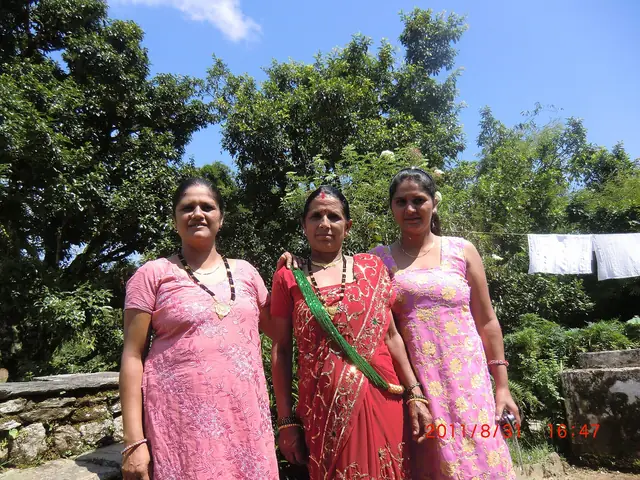 TeejHariyali Teej on Shravana Shukla Tritiya; Kajari Teej on Bhadrapada Krishna Tritiya; Hartalika Teej on Bhadrapada Shukla Tritiya
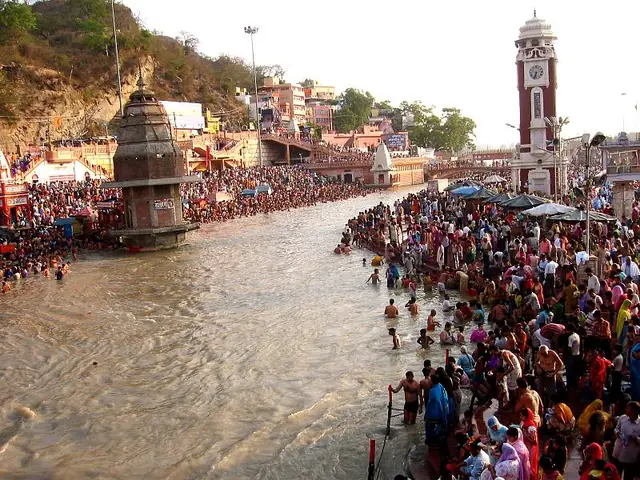
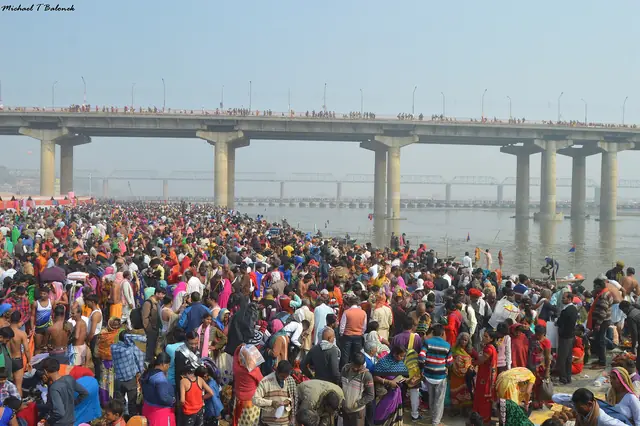 Kumbh MelaFixed by Brihaspati (Jupiter) and Surya: at Prayagraj in Magha; at Haridwar in Chaitra–Vaishakha; at Nashik in Shravana–Bhadrapada; at Ujjain in Vaishakha
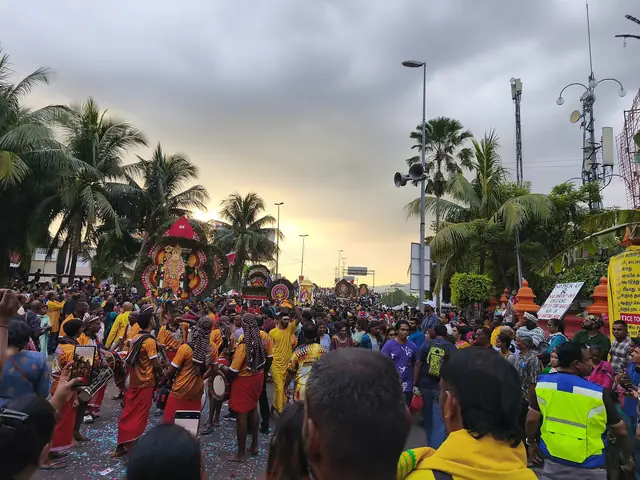 ThaipusamThe Tamil month of Thai, on Pusam (Pushya) nakshatra, usually at the full moon
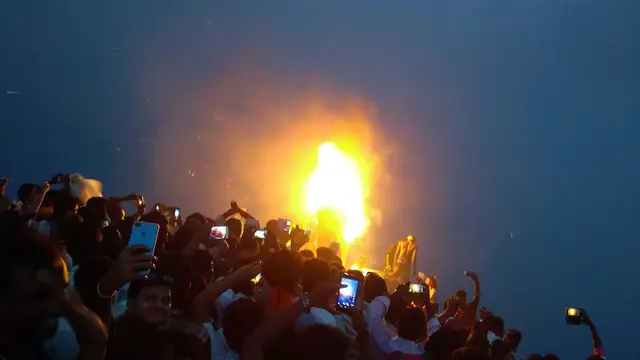 Karthigai DeepamThe Tamil month of Karthigai, on Krittika nakshatra, usually at the full moon
How the Panchang works
The Hindu calendar is lunisolar. Its days are counted by the moon and its year is held to the sun. A lunar month runs from one new moon to the next, about 29.5 days, and is divided into thirty tithis, each the time the moon takes to draw twelve degrees further from the sun. The first fifteen, from new moon to full, are the shukla paksha, the bright half; the next fifteen, from full to new, the krishna paksha, the dark half. So a tithi can be shorter or longer than a day, and a festival is fixed by the tithi current at sunrise, or at noon, or at midnight, as the Shastra for that festival lays down. Twelve lunar months make about 354 days, eleven short of the solar year. To keep the festivals in their seasons, a thirteenth month is added when a lunar month passes with no sankranti, no entry of the sun into a new rashi; this adhika masa, also called purushottama masa, falls about once in thirty-two and a half months. North India counts each month as ending on the full moon (purnimanta); Gujarat, Maharashtra, Karnataka, Andhra Pradesh and Telangana count it as ending on the new moon (amanta). The bright half carries the same name in both, but a dark-half tithi falls in a month one name later in the purnimanta reckoning: Maha Shivaratri is Magha Krishna Chaturdashi in Pune and Phalguna Krishna Chaturdashi in Varanasi, on the same night. Tamil Nadu, Kerala, Odisha, Bengal, Assam and Punjab also keep a solar calendar whose months begin at each sankranti.
The time in which the moon gains twelve degrees on the sun. There are thirty in a month, fifteen in each paksha, named Pratipada, Dvitiya and so on to Chaturdashi, with Purnima ending the bright half and Amavasya the dark. Because the moon’s speed varies, a tithi lasts from about nineteen to twenty-six hours; one may be skipped between two sunrises (kshaya) or span two of them (vriddhi). Vratas, shraddhas and most festivals are fixed by tithi.
The civil day from one sunrise to the next, named for the seven grahas: Ravi (Sunday), Soma (Monday), Mangala (Tuesday), Budha (Wednesday), Guru (Thursday), Shukra (Friday) and Shani (Saturday). Each has its deity and its vratas: Monday for Shiva, Tuesday and Saturday for Hanuman, Thursday for Brihaspati and Vishnu. The Aryabhatiya and the Surya Siddhanta count days continuously from the start of the Kali Yuga, the ahargana, from which the weekday can be found.
The band of the sky the moon passes through is divided into twenty-seven nakshatras of 13°20′ each, from Ashvini to Revati; the moon stays about a day in each. The nakshatra at birth gives a person’s janma nakshatra, and festivals such as Onam (Shravana), Thaipusam (Pushya) and Karthigai Deepam (Krittika) are fixed by it. The lunar months themselves are named for the nakshatra near which the full moon falls: Chitra gives Chaitra, Vishakha gives Vaishakha, Krittika gives Kartika.
The longitudes of the sun and the moon are added together and the sum is divided into twenty-seven parts of 13°20′, each a yoga, from Vishkambha and Priti to Vaidhriti. Some, such as Vyatipata and Vaidhriti, are held unfavourable for beginning new work; Siddhi and Shubha are favoured. The yoga of the moment is read when fixing a muhurta.
Each tithi has two halves, each a karana, so a month has sixty. Eleven karanas are named: seven movable ones, Bava, Balava, Kaulava, Taitila, Garaja, Vanija and Vishti, which repeat eight times through the month, and four fixed ones, Shakuni, Chatushpada, Naga and Kimstughna, which fall around the new moon. Vishti, also called Bhadra, is avoided for auspicious beginnings; Raksha Bandhan, for instance, is not tied while Bhadra is current.
The eras of Bharat
The year counts in use, and how many years each has run.
The Surya Siddhanta and the astronomers count the Kali Yuga from midnight at Ujjain at the start of 18 February 3102 BCE, when, by their reckoning, the planets stood together at the start of Mesha; tradition marks it as the departure of Shri Krishna. Aryabhata wrote in the Aryabhatiya that he was twenty-three when 3,600 years of the Kali Yuga had passed, which gives 499 CE. The Aihole inscription of Pulakeshin II dates itself both 3,735 years after the Bharata war and Shaka 556, that is 634 CE. Panchangs still print the Kali year; 2026 CE runs into Kali 5127.
Running about 5128Kashmir counted years by the Saptarishi era, also called Laukika or Shastra Samvat, built on the belief that the seven rishis of the Great Bear stay a hundred years in each nakshatra. Its epoch is commonly placed in 3076 BCE, and in everyday use only the year within the current century was written, so a date reads Samvat 24 rather than 4224. Kalhana, writing the Rajatarangini, gives the year he began as Laukika 24, Shaka 1070, which is 1148–49 CE. Al-Biruni also noted the era in use in Kashmir.
Running about 5102The era most used for religious dates in North and West India, and the official calendar of Nepal, running 57 years ahead of the Common Era. Tradition ties it to King Vikramaditya of Ujjain and his victory over the Shakas. Early inscriptions of the same reckoning call it the Krita or Malava era; the name Vikrama appears on record from the ninth century, as in the Dholpur inscription of Chandamahasena dated Vikram 898 (842 CE). North India begins the year on Chaitra Shukla Pratipada; Gujarat begins it the day after Diwali, on Kartika Shukla Pratipada.
Running about 2083The Shaka era runs from 78 CE, 78 years behind the Common Era. It was the era of the Western Kshatrapa inscriptions, of Varahamihira and the astronomers, and of thousands of South Indian copper plates; tradition in the Deccan names it Shalivahana Shaka. On the advice of the Calendar Reform Committee chaired by Meghnad Saha, the Government of India adopted a reformed solar form of it as the national calendar from 1 Chaitra 1879 Shaka, 22 March 1957. Its year begins on 22 March, or 21 March in a leap year, and dates in the Gazette of India and on All India Radio are given in it beside the Gregorian.
Running about 1948The Bengali year runs about 593 years behind the Common Era and begins on Pohela Boishakh, the solar new year in mid-April. Two accounts of its origin are told. One credits Akbar’s revenue reform of the 1580s, which fitted a solar harvest year to the Hijri count; the other traces the epoch to Shashanka, king of Gauda in the early seventh century. Bengali Hindus use it for every festival date, and Bangladesh keeps a revised form with Pohela Boishakh fixed on 14 April.
Running about 1433The era of Kerala, counted from 825 CE and named for the port of Kollam. Its year is solar, beginning in the month of Chingam (Simha) in the south of Kerala and Kanni in the north, and its months are the solar months from Chingam to Karkidakam. Among the earliest dated records in it are the Mampalli copper plates of the Venad ruler Sri Vallabhan Kotha, of Kollam 149 (973–74 CE). Kerala’s temple festivals, Onam and Vishu are fixed in it, and Malayalam newspapers still print the Kollam date.
Running about 1201The lunar era of the Kathmandu valley, begun in 879 CE and used for centuries in the inscriptions, manuscripts and coins of the Licchavi successors and the Malla kings. Newar tradition holds that it was started by Shankhadhar Sakhwa, a merchant of Kantipur who paid off the debts of the people. Its year begins on Kachhala Thwa Pratipada, the day after Lakshmi Puja in the Tihar festival, which Newars keep as Mha Puja, the worship of one’s own body. The Government of Nepal recognised Nepal Sambat as a national era in 2008.
Running about 1147