
Cite
MLA
“Tulsi Vivah.” Hindu History, 2026, https://www.hinduhistory.in/utsav/tulsi-vivah/. Accessed .
APA
Hindu History. (2026). Tulsi Vivah. Retrieved , from https://www.hinduhistory.in/utsav/tulsi-vivah/
How it is kept
- 01
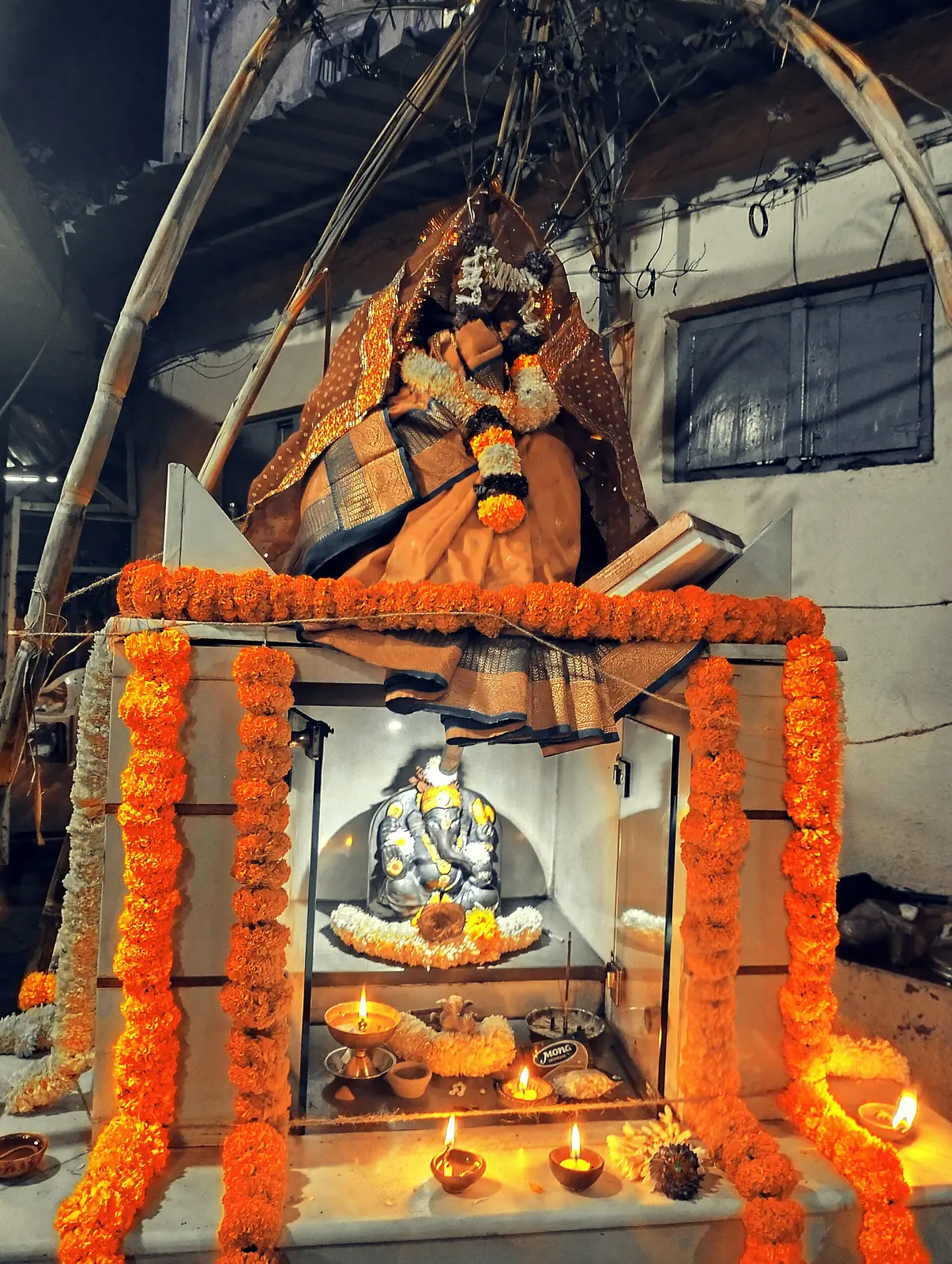
The tulsi plant dressed as a bride and wed to Shaligram or Krishna
- 02
A mandap of sugarcane stalks over the tulsi pot
- 03
Mangalashtaka and showers of akshata
- 04
Fasting on Prabodhini Ekadashi
01Vrinda and the Shaligram
On Devshayani Ekadashi in Ashadha Vishnu lies down on Shesha, and on Prabodhini Ekadashi in Kartika he rises; the four months between are the Chaturmasya, when weddings are not held. The Padma Purana and Shiva Purana tell of Vrinda, the chaste wife of Jalandhara, whose devotion made her husband unconquerable; when it was broken and he fell, she cursed Vishnu to become a stone, the Shaligram, and herself became the tulsi. Vishnu blessed her that he would not accept any offering without a tulsi leaf, and that he would wed her every year.
02A wedding in the courtyard
The tulsi vrindavan, the raised pot in the courtyard, is painted and hung with a mandap of sugarcane stalks. The plant is dressed in a red sari with bangles and a nose-ring; the Shaligram or a small image of Krishna is brought as the groom. A curtain is held between them, mangalashtakas are sung in Maharashtra, and the couple are showered with rice. Families with no daughter sometimes perform the kanyadaan of tulsi themselves. After this evening the first wedding muhurtas of the season fall.
Maharashtra, Gujarat, Rajasthan, Uttar Pradesh, Bihar, Karnataka and Vaishnava homes everywhere