Cite
MLA
“Ram Navami.” Hindu History, 2026, https://www.hinduhistory.in/utsav/ram-navami/. Accessed .
APA
Hindu History. (2026). Ram Navami. Retrieved , from https://www.hinduhistory.in/utsav/ram-navami/
How it is kept
- 01
Fasting until the noon birth, then panakam and panjiri
- 02
Ramcharitmanas or Valmiki Ramayana recited over the nine days
- 03
Bathing in the Sarayu at Ayodhya
- 04
Sita Rama Kalyanam at Bhadrachalam
- 05
Shobhayatras with Rama’s image through the streets
01What Valmiki records
The Valmiki Ramayana (Bala Kanda, sarga 18) gives the moment precisely. Twelve months after King Dasharatha’s putrakameshti yajna, in the month of Chaitra, on the navami tithi, in Punarvasu nakshatra under Aditi, with five planets exalted and Karka rising, Kausalya bore Rama, the joy of the world. Bharata was born to Kaikeyi under Pushya, and Lakshmana and Shatrughna to Sumitra under Ashlesha. The Ramcharitmanas of Goswami Tulsidas sings the same noon: navami tithi madhumas punita, sukal pachchh abhijit hari prita.
02Ayodhya and Bhadrachalam
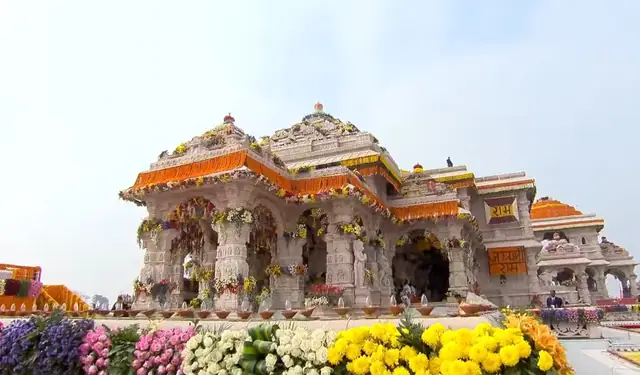
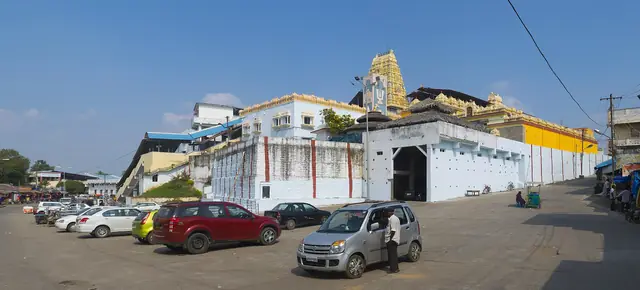
At noon in Ayodhya the temple bells ring together and the cradle is rocked. In the new Ram Janmabhoomi temple, consecrated in January 2024, a system of mirrors and lenses brought sunlight onto the forehead of Ram Lalla at noon on Ram Navami that April, the Surya Tilak. On the Godavari at Bhadrachalam, the temple built by Bhakta Ramadas in the seventeenth century, Ram Navami is the Sita Rama Kalyanam, the divine wedding, with pearls for the talambralu sent by the state government. Many homes read the Ramcharitmanas through in the nine days before.
All of Bharat; Ayodhya above all; Bhadrachalam in Telangana; Ramnavami processions in Bengal and Bihar; Hindu communities of the Caribbean and Fiji