Cite
MLA
“Gangaur.” Hindu History, 2026, https://www.hinduhistory.in/utsav/gangaur/. Accessed .
APA
Hindu History. (2026). Gangaur. Retrieved , from https://www.hinduhistory.in/utsav/gangaur/
How it is kept
- 01
Clay images of Isar and Gauri worshipped for eighteen days
- 02
Wheat and barley sown in pots of Holi ash
- 03
Morning songs and the carrying of water and durva
- 04
A fast on the last day and the procession to the lake
- 05
Ghevar and mehndi
01Gauri goes home
The worship remembers Parvati’s tapas to win Shiva and her return to her father’s house, as daughters return in spring. From the morning after Holika Dahan, women gather ashes of the Holi fire and sow wheat and barley in pots; clay figures of Isar and Gauri are painted and dressed. Each morning the girls go out to bring fresh water and green durva and flowers, singing gor gor gomti, and sprinkle the images. On the last two days the women fast and the images are given a farewell as a daughter is sent to her husband’s home.
02Processions of the royal cities
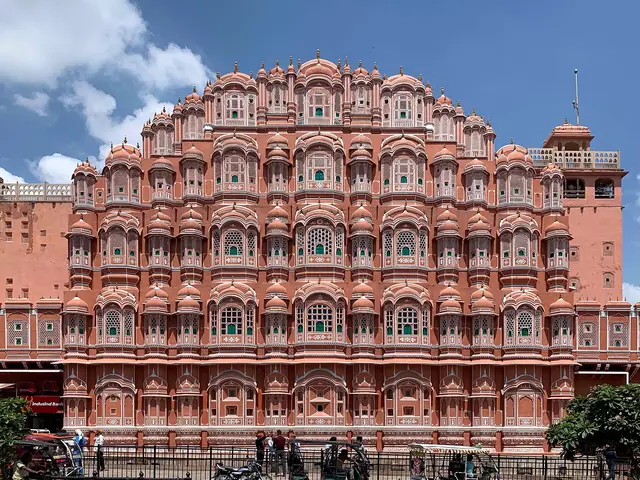
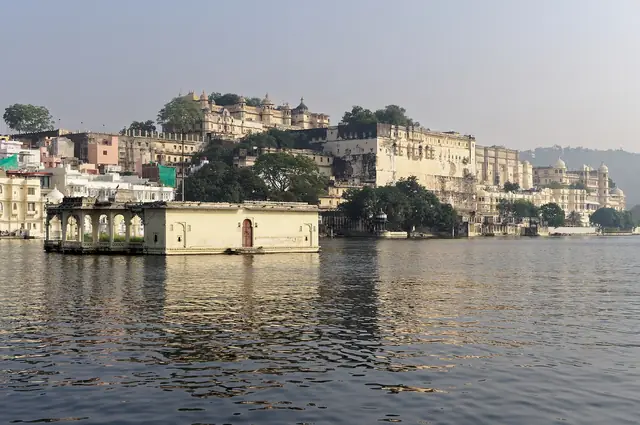
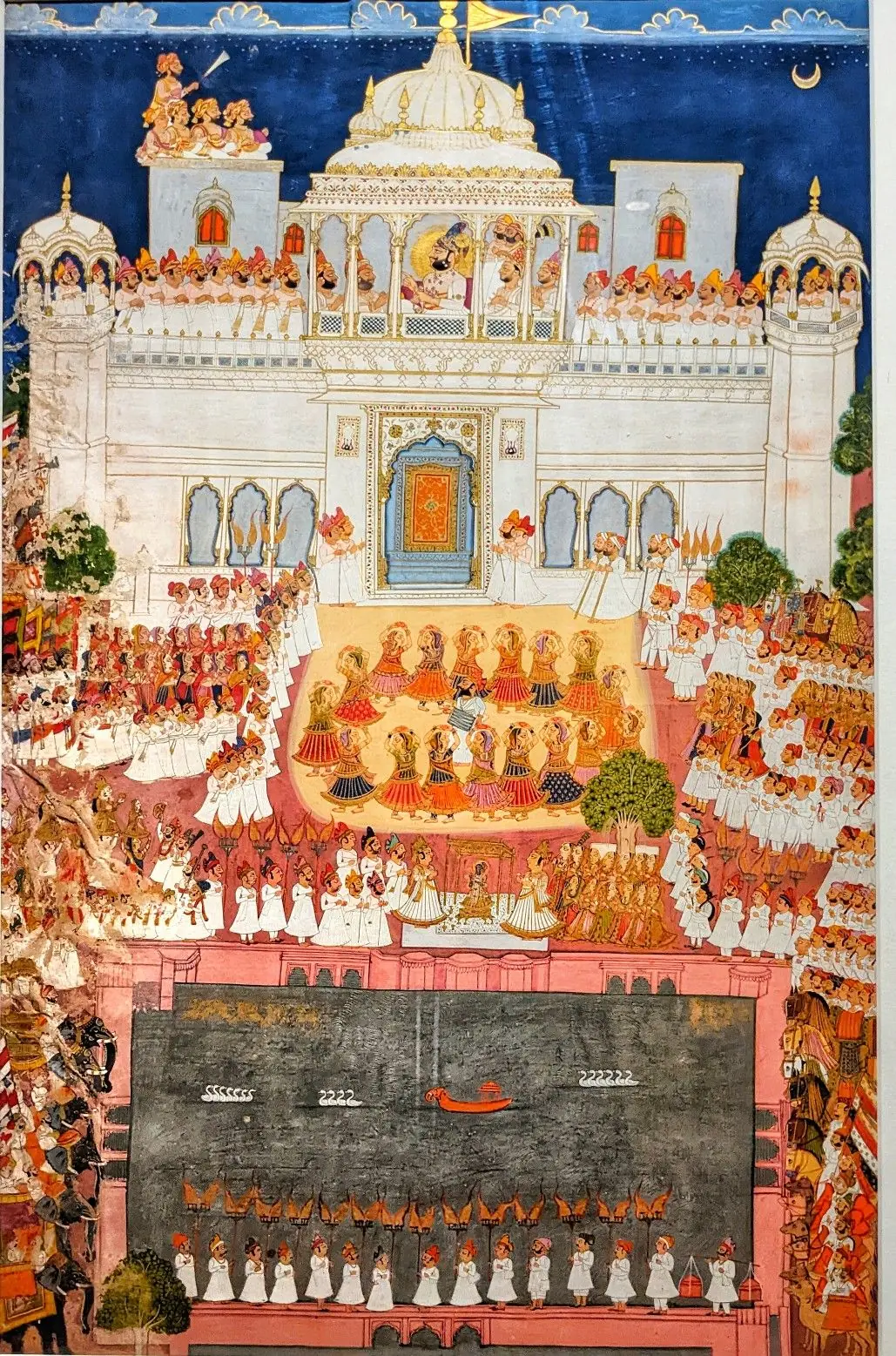
The courts of Rajasthan made Gangaur a state festival, and the paintings of the Jodhpur and Mewar schools show the maharajas watching the women carry Gauri to the water. In Jaipur the Gangaur sawari leaves the City Palace with elephants, bands and palanquins on the evening of Tritiya and the next day. In Udaipur the images are brought to the Gangaur Ghat on Lake Pichola and boats are lit on the water.
Rajasthan above all; Malwa in Madhya Pradesh, Gujarat; Marwari families in Kolkata, Assam and everywhere they settled