
Ghatana: events · 20
Events that shaped Bharat
Not battles but turning points: destructions and rebuildings, massacres and exoduses, martyrdoms and verdicts. Stated plainly, with dates, figures only with their source, and the record for each.
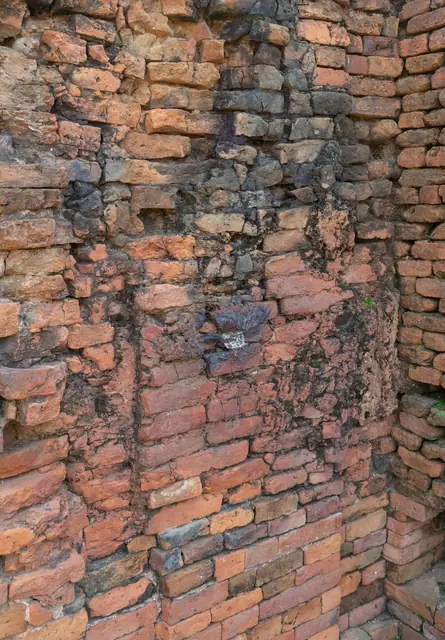 c. 1193–1203 CEDestructionDestruction of Nalanda and the Magadha viharasIn the raids of Bakhtiyar Khalji into Magadha at the close of the 12th century, the great monastic universities of Odantapuri, Nalanda and Vikramashila were sacked and their monks killed or scattered. Learning that had run for some seven hundred years at Nalanda never recovered.
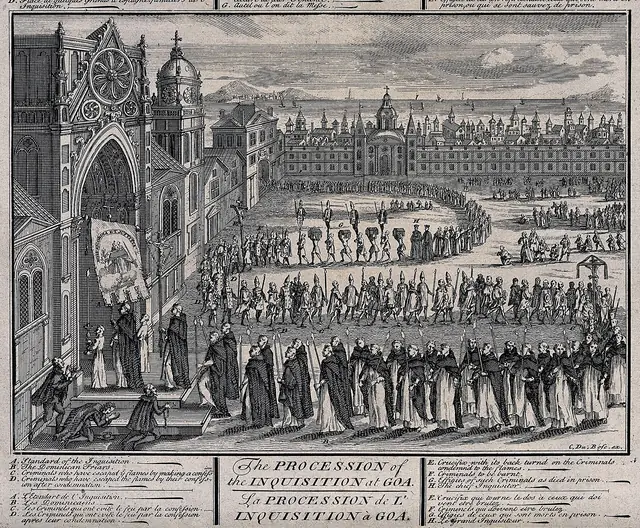 1560–1812 CEPersecutionThe Goa InquisitionA tribunal of the Portuguese Inquisition sat in Old Goa from 1560 to 1812. Alongside it, colonial laws banned Hindu worship, pulled down temples and took orphans for baptism; Hindu families of Goa carried their deities across the border to keep them.
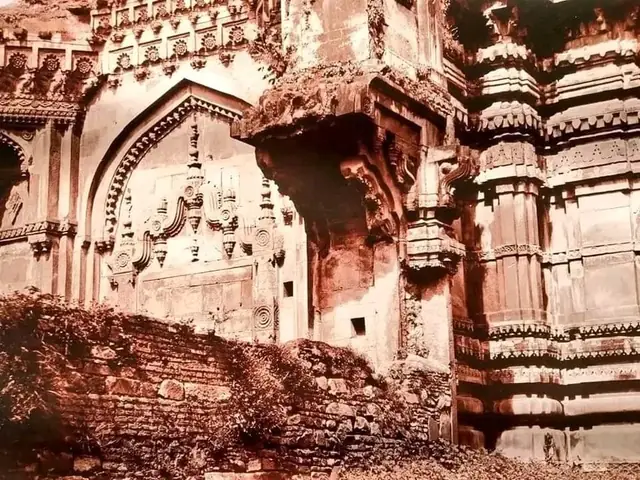 April–September 1669 CEDestructionDestruction of the Kashi Vishwanath temple and Aurangzeb’s order of 1669In April 1669 Aurangzeb ordered the governors of every province to demolish the schools and temples of the Hindus; in September news reached his court that the Vishwanath temple at Kashi had been pulled down. The Gyanvapi mosque was raised on its plinth, and the old temple’s western wall still stands in it.
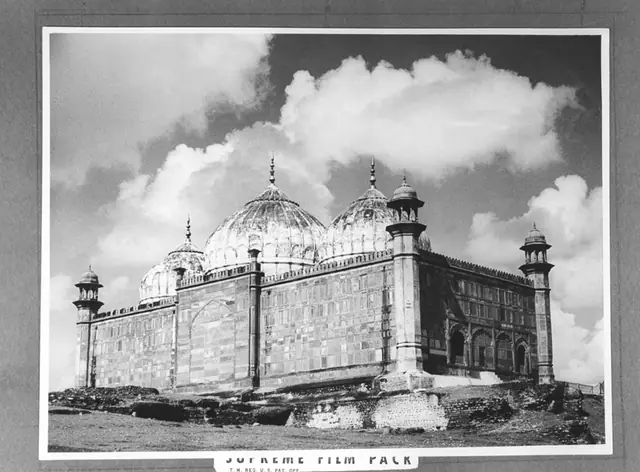 January 1670 CEDestructionDestruction of the Keshava Deva temple, MathuraIn the month of Ramzan of 1670 Aurangzeb’s officers pulled down the great temple of Keshava Deva at Shri Krishna’s birthplace in Mathura, built by Bir Singh Deo Bundela half a century earlier. The Shahi Idgah was raised on the site.
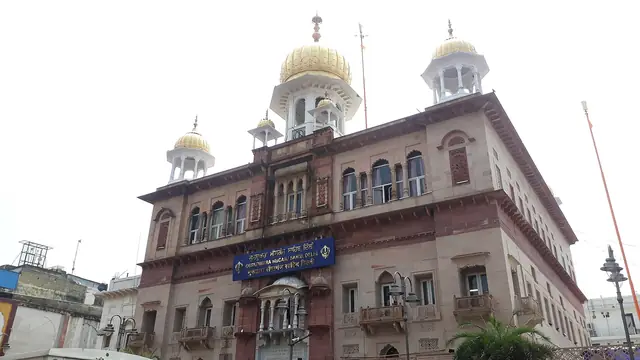 November 1675 CEMartyrdomMartyrdom of Guru Tegh BahadurThe ninth Sikh Guru was beheaded in Chandni Chowk, Delhi, in November 1675 on Aurangzeb’s order, after Kashmiri Pandits had come to him for protection against forced conversion. Three of his companions were killed before him.
- April 1679 CEPersecutionAurangzeb reimposes the jizyaIn April 1679 Aurangzeb brought back the jizya, the poll tax on non-Muslims that Akbar had abolished in 1564. Hindus who protested outside the Red Fort were driven off with elephants.
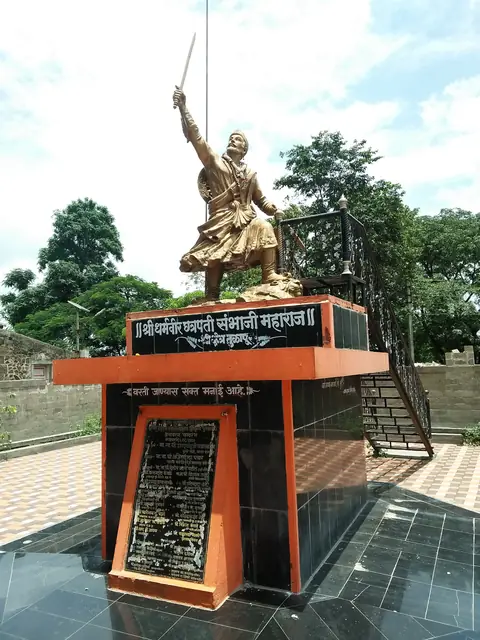 February–March 1689 CEMartyrdomCapture and execution of Chhatrapati SambhajiShivaji’s son and successor was surprised at Sangameshwar in February 1689, tortured for weeks in Aurangzeb’s camp and put to death at Tulapur in March. The Marathas fought on under Rajaram and Tarabai and outlasted the emperor.
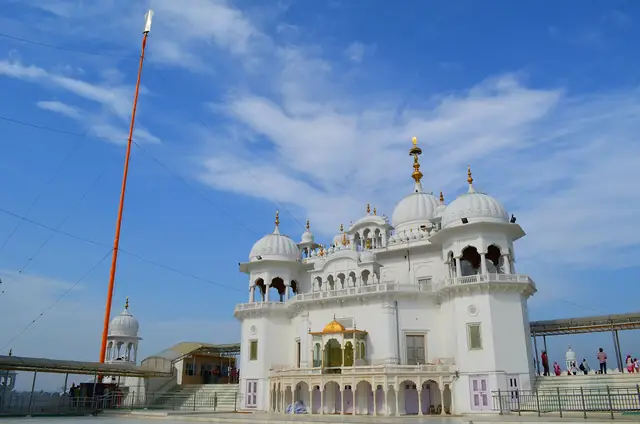 Vaisakhi, 1699 CEFoundingFounding of the KhalsaAt Anandpur on Vaisakhi of 1699 Guru Gobind Singh initiated the Panj Pyare, the five beloved ones, with amrit stirred by the khanda, and then took initiation from them. The Khalsa he founded became the armed order that carried resistance to Mughal and Afghan rule in the Punjab.
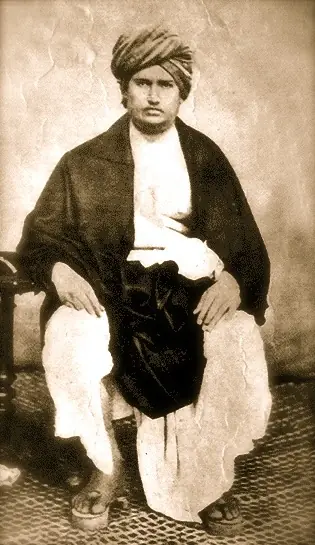 10 April 1875FoundingFounding of the Arya SamajSwami Dayananda Saraswati founded the Arya Samaj in Bombay on 10 April 1875, calling Hindus back to the Vedas. Its schools, its shuddhi work and its members carried it into the freedom movement across north India.
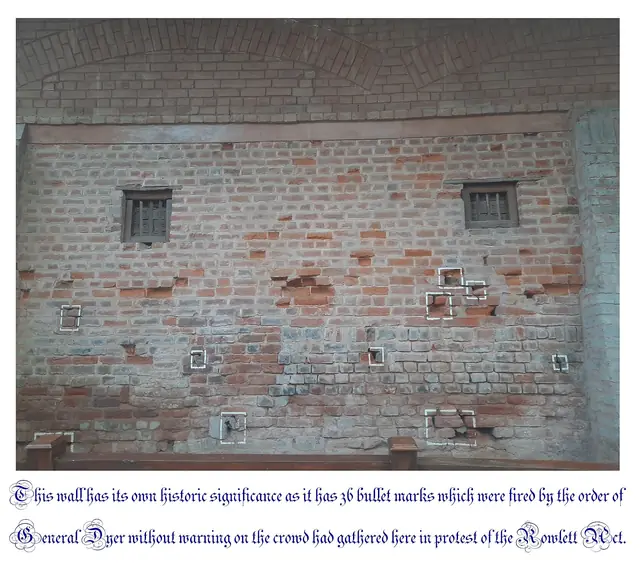 13 April 1919MassacreJallianwala Bagh massacreOn Baisakhi, 13 April 1919, Brigadier-General Reginald Dyer marched troops into the walled Jallianwala Bagh in Amritsar and had them fire into an unarmed crowd without warning until their ammunition ran low. The official count was 379 dead; Indian inquiries put it far higher.
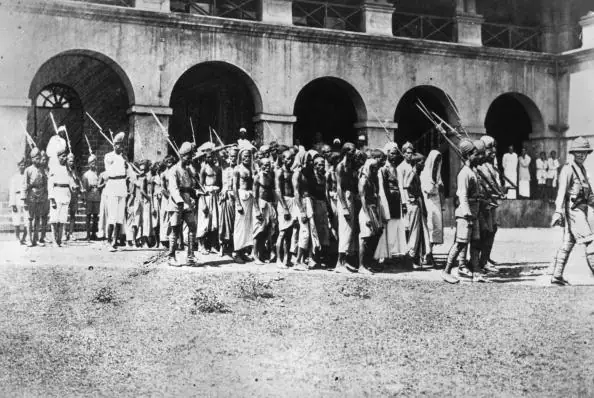 August 1921 – early 1922MassacreMalabar (Moplah) violence of 1921An armed Khilafat rising of Mappila Muslims against British rule in south Malabar in 1921 turned on the Hindus of the region: thousands were killed, forcibly converted or driven from their homes, and temples were desecrated. The British put it down with martial law.
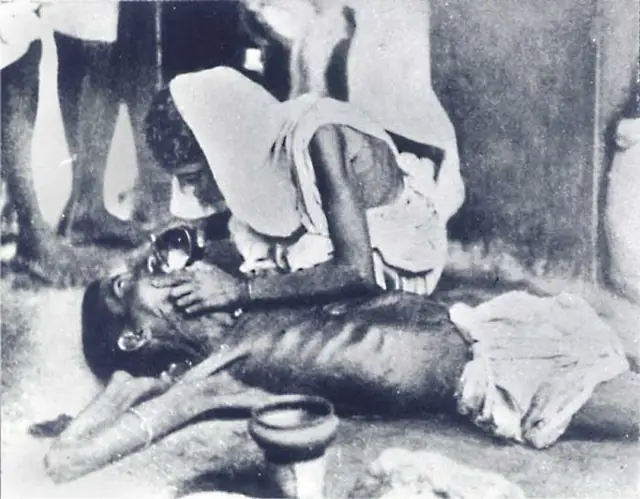 1943–44FamineBengal famine of 1943In 1943, in the middle of the Second World War, famine killed about 15 lakh people in Bengal by the official inquiry’s count, and about 30 lakh by later estimates. It came from war policy, hoarding and a government slow to act, not from a total failure of the harvest.
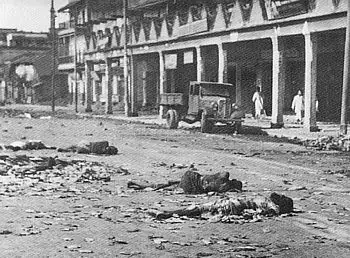 16–19 August 1946MassacreDirect Action Day and the Great Calcutta KillingsThe Muslim League called 16 August 1946 ‘Direct Action Day’ to press for Pakistan. In Calcutta, under a League ministry that had declared the day a holiday, it began four days of killing between Muslims and Hindus in which thousands died. The violence then spread to Noakhali, Bihar and beyond.
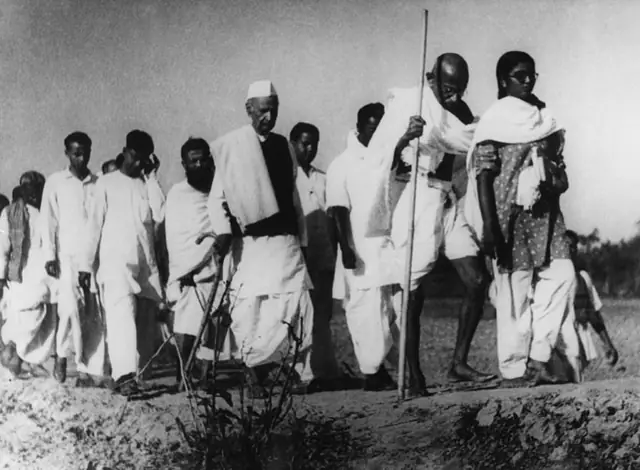 From 10 October 1946MassacreNoakhali and Tippera killingsOn Kojagari Lakshmi Puja, 10 October 1946, organised mobs attacked the Hindu minority of Noakhali and Tippera in east Bengal. Hundreds were killed, thousands forcibly converted, women abducted and homes burnt; Gandhi walked from village to village there for four months.
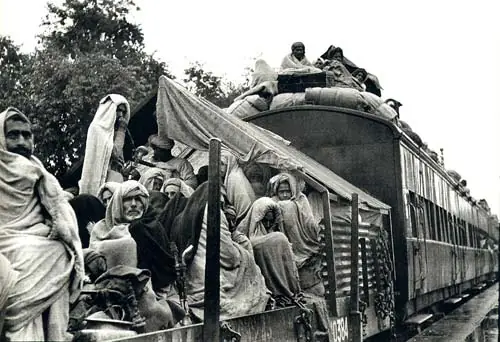 August 1947PartitionPartition of IndiaAt midnight of 14–15 August 1947 British India was divided into India and Pakistan, with Punjab and Bengal cut in two. Between 2 lakh and 20 lakh people were killed in the killings that followed, and more than 1 crore crossed the new borders.
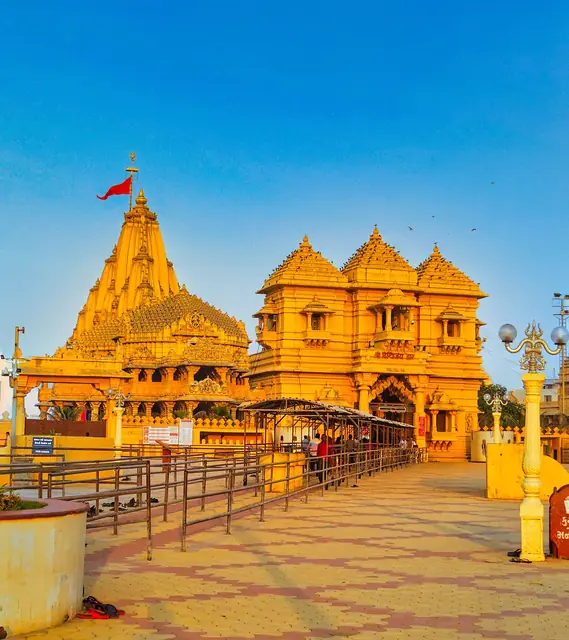 11 May 1951RebuildingRebuilding of SomnathWithin three months of Junagadh joining India, Sardar Patel vowed to rebuild the Somnath temple. On 11 May 1951 President Rajendra Prasad installed the Jyotirlinga in the new temple, on the site that Mahmud of Ghazni had sacked in 1026 and that later rulers had attacked again.
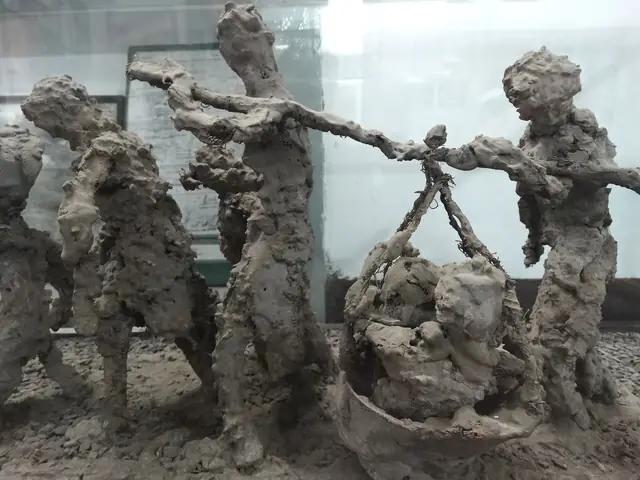 25 March – 16 December 1971MassacreGenocide in East Pakistan, 1971From the night of 25 March 1971 the Pakistan army, in Operation Searchlight, set out to crush the Bengali movement in East Pakistan. Bengali students, intellectuals and nationalists were killed, and Hindus were singled out across the province; about one crore refugees fled to India before the Indian army and the Mukti Bahini ended it in December.
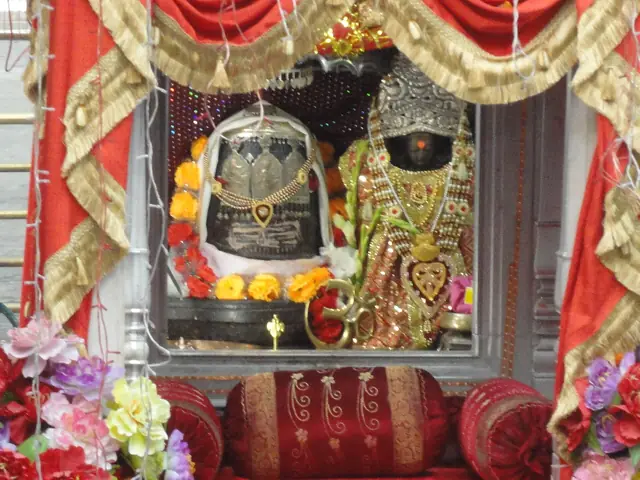 From 19 January 1990ExodusExodus of the Kashmiri PanditsAfter a string of targeted killings and open threats from militant groups, almost the whole Hindu community of the Kashmir Valley fled in the early months of 1990. The Union Home Ministry counts 64,827 Pandit families who left; most have not been able to return.
- 9 November 2019VerdictSupreme Court verdict on Shri Ram JanmabhoomiOn 9 November 2019 a five-judge bench of the Supreme Court unanimously gave the whole disputed 2.77 acres at Ayodhya to the deity Shri Ram Lalla Virajman for a temple, and directed that five acres elsewhere in Ayodhya be given to the Sunni Waqf Board for a mosque. It ended a dispute that had been in the courts since 1885.
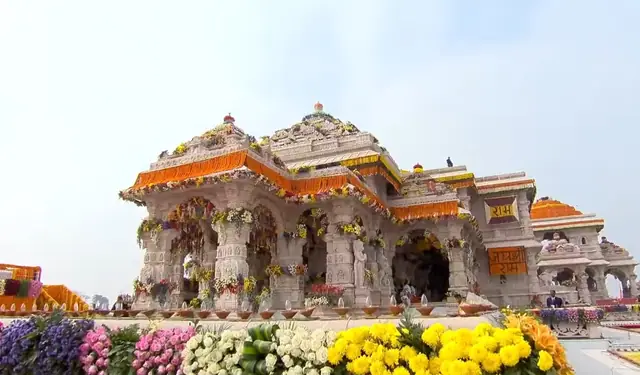 22 January 2024RebuildingPran pratishtha of Shri Ram Lalla at AyodhyaOn 22 January 2024 the new murti of Shri Ram Lalla was consecrated in the garbhagriha of the temple at his birthplace in Ayodhya, nearly five hundred years after the mosque was raised there. That evening homes across Bharat lit lamps.