Cite
MLA
“Rongali (Bohag) Bihu.” Hindu History, 2026, https://www.hinduhistory.in/utsav/rongali-bihu/. Accessed .
APA
Hindu History. (2026). Rongali (Bohag) Bihu. Retrieved , from https://www.hinduhistory.in/utsav/rongali-bihu/
How it is kept
- 01
Goru Bihu: cattle bathed, anointed and given new ropes
- 02
Gamosa given to elders on Manuh Bihu
- 03
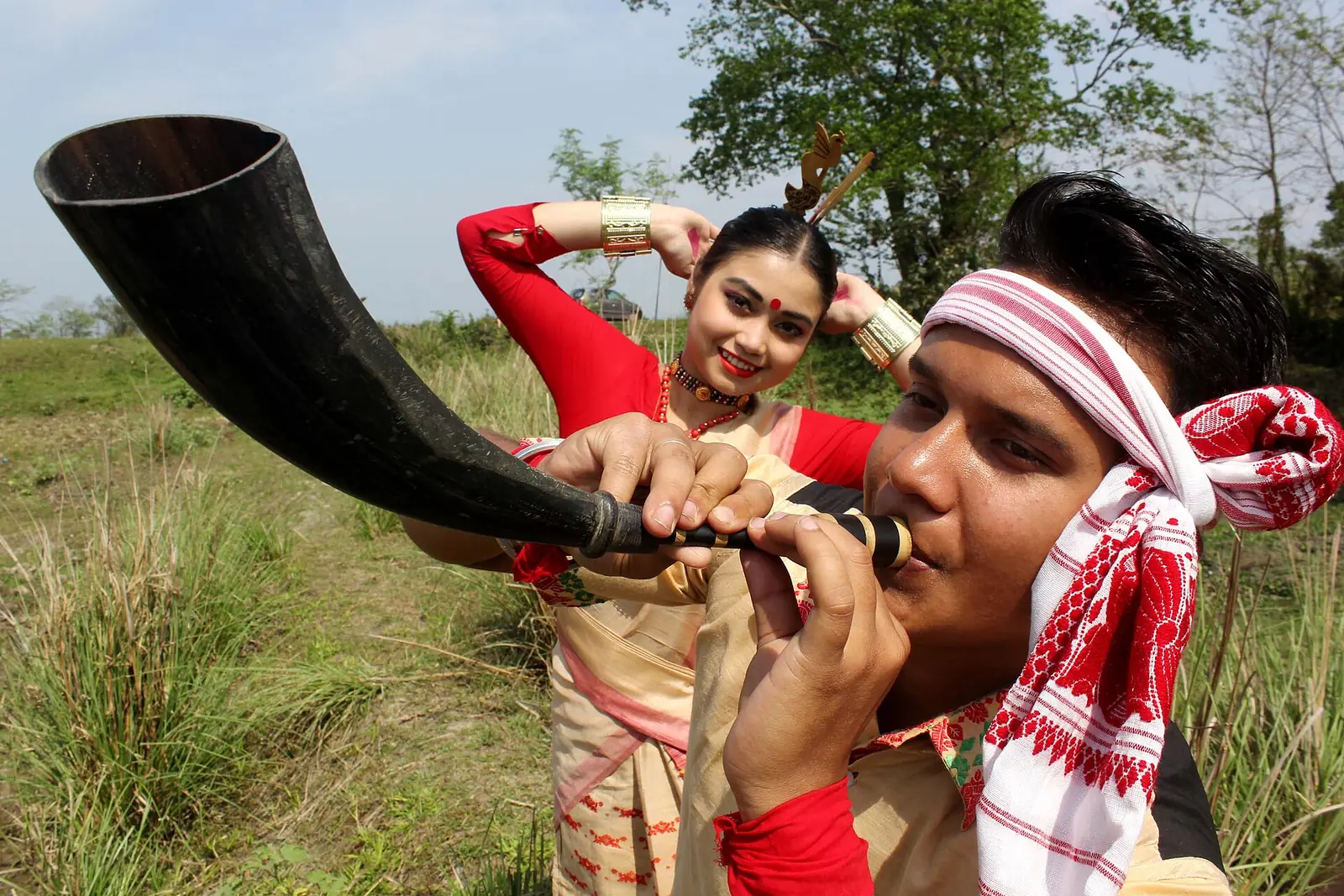
Bihu dance and songs with dhol, pepa and gogona
- 04
Husori carol-singing from house to house
01Goru Bihu and Manuh Bihu
On the last day of Chot, Goru Bihu, the cattle are taken to the river and scrubbed with a paste of black gram and turmeric and struck lightly with sprigs of dighloti and makhioti leaves, while a rhyme wishes them to grow. They are given new ropes. On the first day of Bohag, Manuh Bihu, people bathe, wear new clothes and bow to their elders, who receive a gamosa, the red-bordered hand-woven cloth of Assam. Pitha and laru of rice and coconut fill every kitchen. Assam keeps two other Bihus: Kongali in Kati, when granaries are empty, and Bhogali in Magh, the feast after harvest.
02Bihu under the Ahoms
The Ahom kings made the Bihu a festival of the court as well as the village. The Rang Ghar at Sivasagar, the two-storeyed pavilion built under Swargadeo Pramatta Singha in the eighteenth century, was raised so the king and nobles could watch buffalo fights and games on the field at Rongali Bihu. The husori singers still go from house to house through the first week, singing blessings, and receive betel nut and a small gift.
Assam, and Assamese families across India and abroad