
Cite
MLA
“Lohri.” Hindu History, 2026, https://www.hinduhistory.in/utsav/lohri/. Accessed .
APA
Hindu History. (2026). Lohri. Retrieved , from https://www.hinduhistory.in/utsav/lohri/
How it is kept
- 01
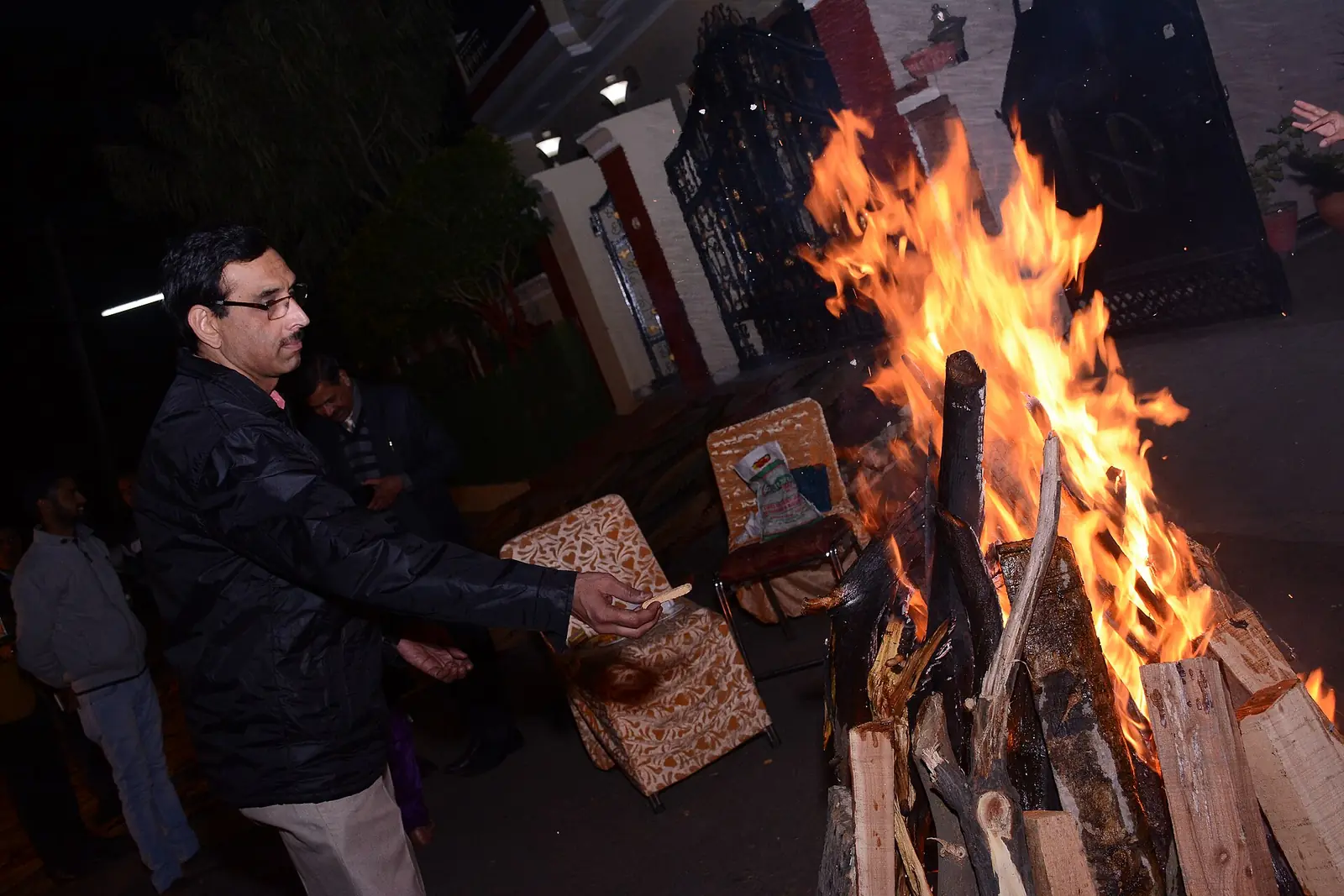
Bonfire at dusk, circled by the family
- 02
Sesame, peanuts, popcorn, gajak and rewri offered to the fire
- 03
Children singing door to door for wood and sweets
- 04
First Lohri for a new bride or newborn
01The fire and the rabi crop
Lohri falls when the sugarcane is being crushed and the winter wheat stands green in the fields of Punjab, and the fire is Agni receiving the first offerings of the season. Children go from house to house in the days before, singing and collecting wood, sweets and coins. At night the fire is lit in the courtyard or the village square, and the elders circle it pouring sesame and rewri into the flames and asking for plenty. Next morning is Maghi, the Sankranti, with a bath and kheer cooked in sugarcane juice.
02Sundar mundriye
The best known Lohri song, Sundar mundriye ho, tells of Dulla Bhatti, a Punjabi outlaw of Akbar’s time, who rescued a poor Hindu girl from being carried off and married her to a boy of her own people, standing as her father and giving a ser of sugar as her dowry. The children sing it at every door. A family that has had a wedding or a birth that year holds a large Lohri, inviting the whole lane to the fire, with gidda and bhangra round it.
Punjab, Haryana, Himachal, Jammu, Delhi, and Punjabi families in Britain, Canada and beyond