Cite
MLA
“Mahalaya.” Hindu History, 2026, https://www.hinduhistory.in/utsav/mahalaya/. Accessed .
APA
Hindu History. (2026). Mahalaya. Retrieved , from https://www.hinduhistory.in/utsav/mahalaya/
How it is kept
- 01
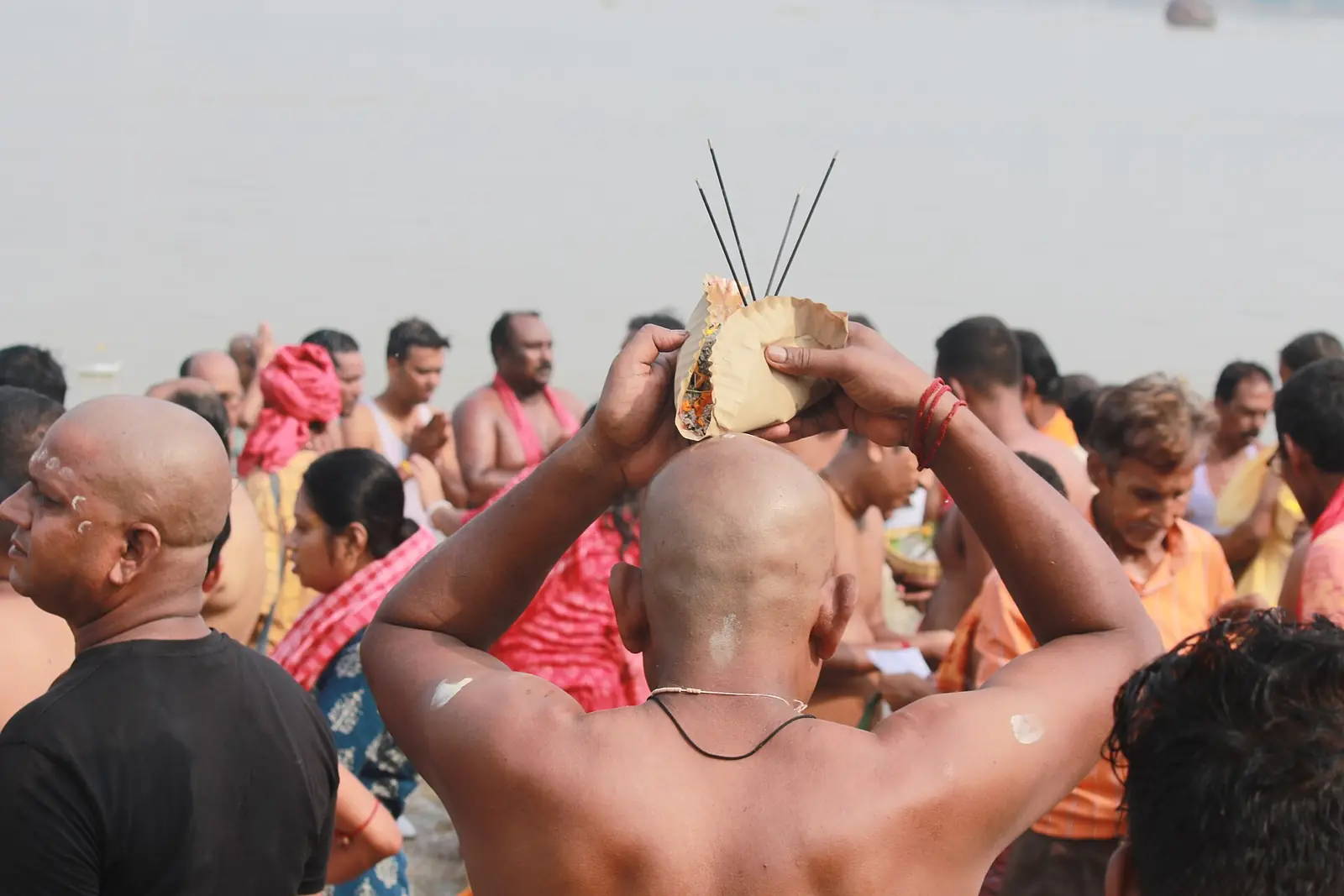
Tarpan for all ancestors in the river before sunrise
- 02
Listening to Mahishasuramardini on the radio at dawn
- 03
Chokkhu daan, painting the Devi’s eyes, in Kumartuli
- 04
Shraddha for ancestors whose tithi is unknown
01From the fathers to the Mother
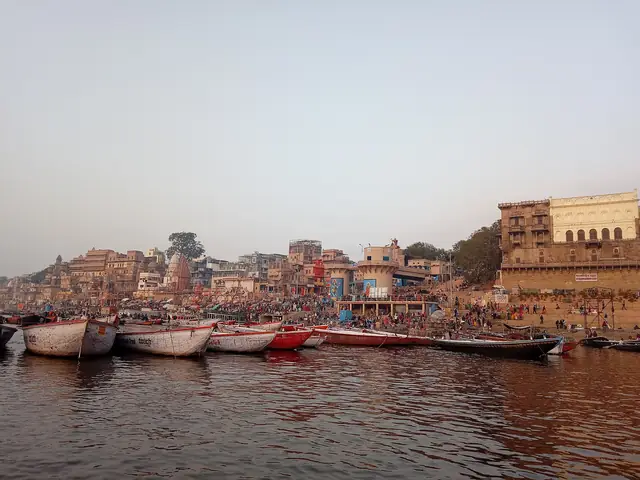
Mahalaya means the great abode, and the day stands at a hinge of the year. It is Sarvapitri Amavasya, the last and most inclusive day of shraddha, when tarpan is offered for every ancestor, named and unnamed, and for those with no one left to remember them. The next morning is the pratipada of Navaratri. On the ghats of the Hooghly at Bagbazar, Ahiritola and Babughat, men in wet dhotis stand waist-deep before sunrise with black sesame, kusha grass and water cupped in the hands.
02Mahishasuramardini at four in the morning
Since the early 1930s All India Radio Calcutta has broadcast Mahishasuramardini before dawn on Mahalaya: Birendra Krishna Bhadra reciting the Chandi in his deep voice, with songs composed by Pankaj Kumar Mallick. The recording made in 1966 is still played every year, and Bengali families wake in the dark to hear it. The same day, in the workshops of Kumartuli in north Kolkata, the craftsmen paint the eyes of the Durga images, the chokkhu daan, and the Devi is said to have set out from Kailash for her father’s house.
Bengal, Odisha, Assam, Tripura and Bengali Hindus everywhere; as Sarvapitri Amavasya across India