Cite
MLA
“Chhath Puja.” Hindu History, 2026, https://www.hinduhistory.in/utsav/chhath/. Accessed .
APA
Hindu History. (2026). Chhath Puja. Retrieved , from https://www.hinduhistory.in/utsav/chhath/
How it is kept
- 01
Nahay-Khay, Kharna, Sandhya Arghya and Usha Arghya over four days
- 02
A 36-hour fast without water after Kharna
- 03
Thekua of wheat and jaggery, sugarcane and fruit in bamboo soups
- 04
Arghya offered standing in the river to the setting and rising sun
- 05
Chhath songs sung by women on the way to the ghat
01Surya and Chhathi Maiya
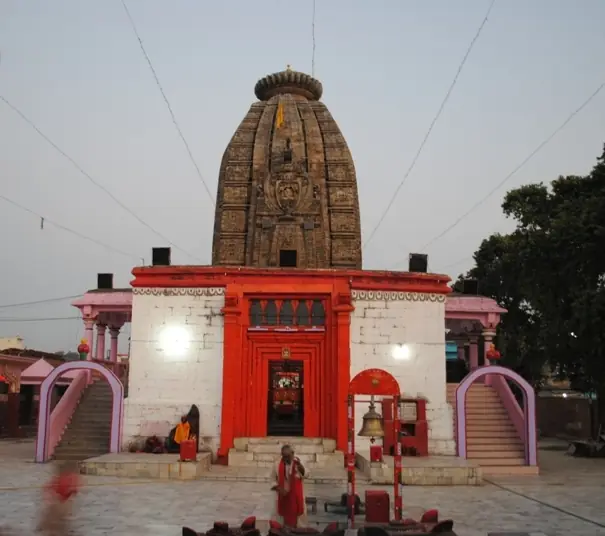
Chhath is worship of Surya, the one god the eye can see, together with Chhathi Maiya, the Shashthi Devi who guards children. In Bihar it is told that Karna, son of Surya, stood waist-deep in water each day to offer arghya, and that Draupadi kept this vrata when the Pandavas had lost their kingdom. Another household katha places Sita’s first Chhath at Munger after the return to Ayodhya. The Deo Surya temple in Aurangabad district is one of the great centres; lakhs gather there.
02The four days
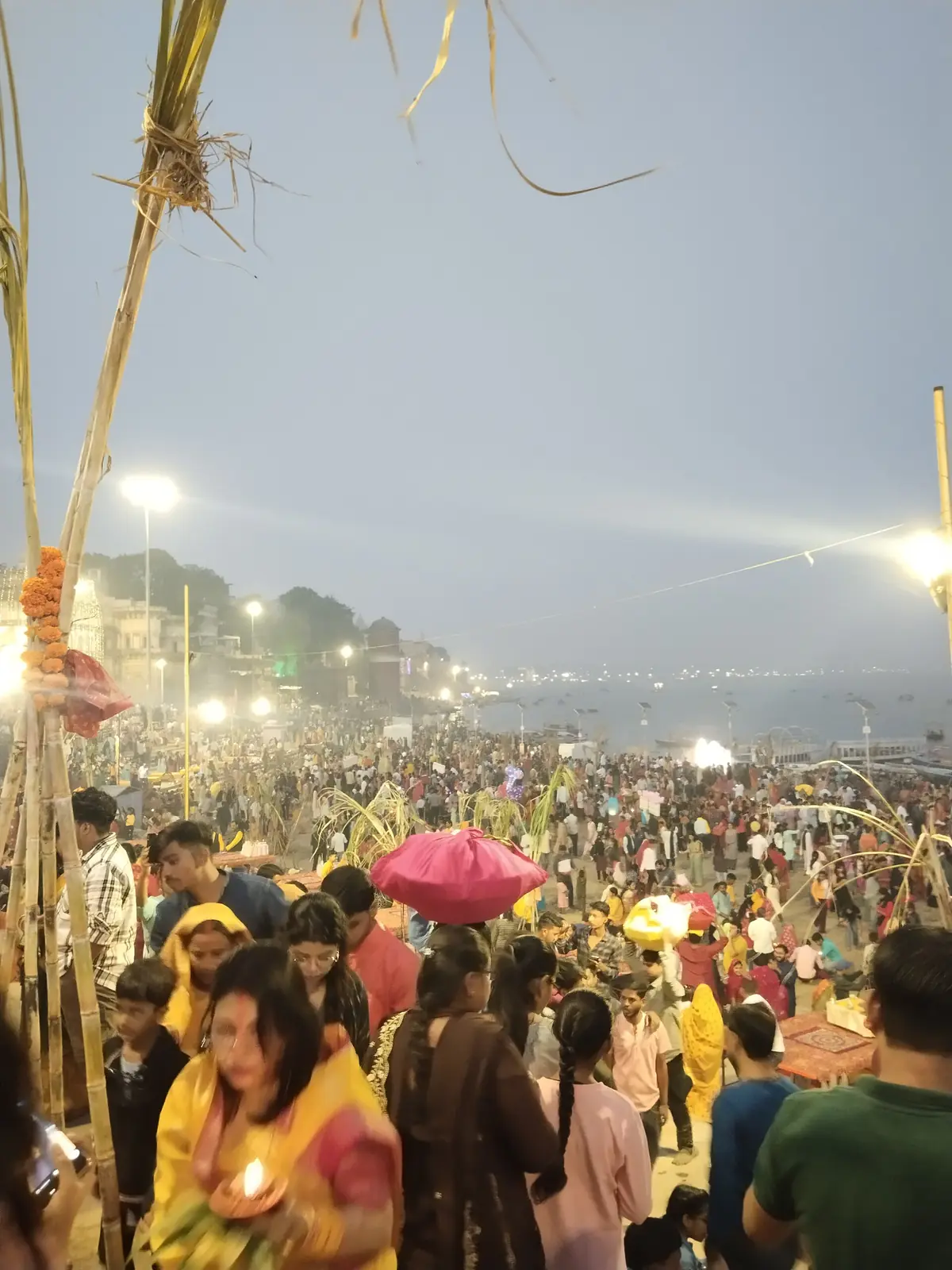
Nahay-Khay on the fourth: the vrati bathes and eats one meal of rice, chana dal and lauki. Kharna on the fifth: a day-long fast broken at night with rasiao-kheer of jaggery and roti, after which no food or water passes until the end. On the sixth evening, Sandhya Arghya, the family carries bamboo soups heaped with thekua, sugarcane, coconut and citrus to the ghat, and the vrati offers milk and water to the setting sun. Before dawn on the seventh they return for Usha Arghya to the rising sun, and only then is the fast broken. No priest is needed; the songs are sung by the women.
Bihar, Jharkhand, eastern Uttar Pradesh, the Nepal Terai; and Bhojpuri and Maithil families in Delhi, Mumbai, Kolkata, Mauritius, Fiji, Trinidad and Suriname