
Cite
MLA
“Bhai Dooj (Yama Dvitiya).” Hindu History, 2026, https://www.hinduhistory.in/utsav/bhai-dooj/. Accessed .
APA
Hindu History. (2026). Bhai Dooj (Yama Dvitiya). Retrieved , from https://www.hinduhistory.in/utsav/bhai-dooj/
How it is kept
- 01
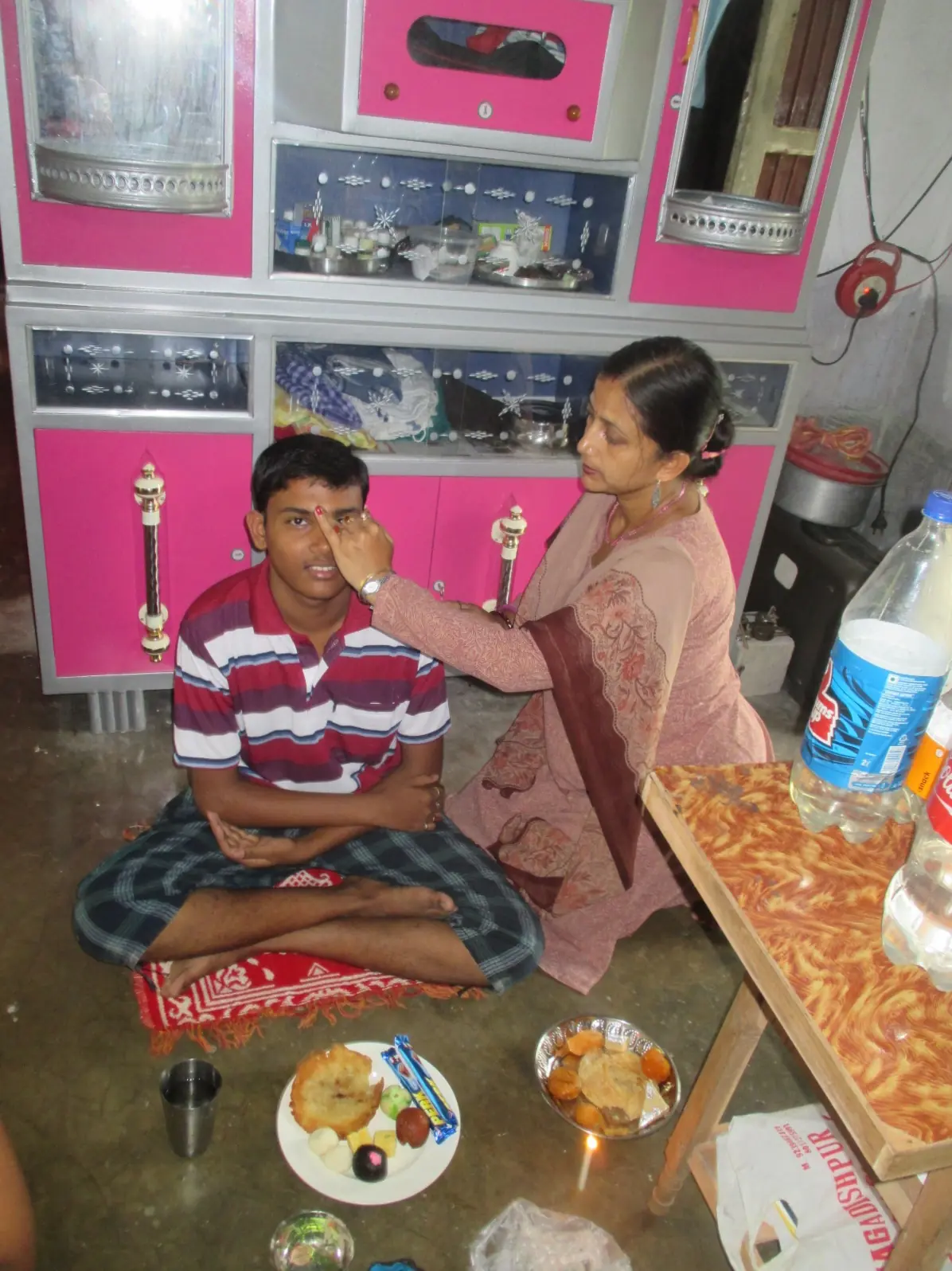
Tilak of roli, rice or sandal paste on the brother’s forehead
- 02
The sister cooks and serves her brother a meal
- 03
Bathing in the Yamuna at Mathura’s Vishram Ghat
- 04
Brothers give gifts and pledge protection
01Yamuna feeds Yama
Yama and Yamuna are the children of Surya. Yamuna had long begged her brother to visit, and on the second day of the bright half of Kartika he came. She bathed him, marked his forehead and fed him, and Yama granted that any brother who eats at his sister’s house on this day, and any who bathes in the Yamuna, will not fear an untimely death. So the day is called Yama Dvitiya, and in Mathura brothers and sisters bathe together at Vishram Ghat.
02Tilak, phonta and tika
In Bengal the sister draws a phonta of sandalwood paste on her brother’s brow while reciting a rhyme that sets a thorn at Yama’s door. In Nepal, on the fifth day of Tihar, the sister lays a seven-coloured tika and a garland of makhamali flowers, which do not wilt quickly, and circles her brother with oil. Brothers give gifts and promise their protection, the same bond Raksha Bandhan keeps in Shravana.
North India as Bhai Dooj, Bengal as Bhai Phonta, Maharashtra and Goa as Bhau Beej, Nepal as Bhai Tika