
Cite
MLA
“Vat Savitri.” Hindu History, 2026, https://www.hinduhistory.in/utsav/vat-savitri/. Accessed .
APA
Hindu History. (2026). Vat Savitri. Retrieved , from https://www.hinduhistory.in/utsav/vat-savitri/
How it is kept
- 01
A fast for the husband’s long life
- 02
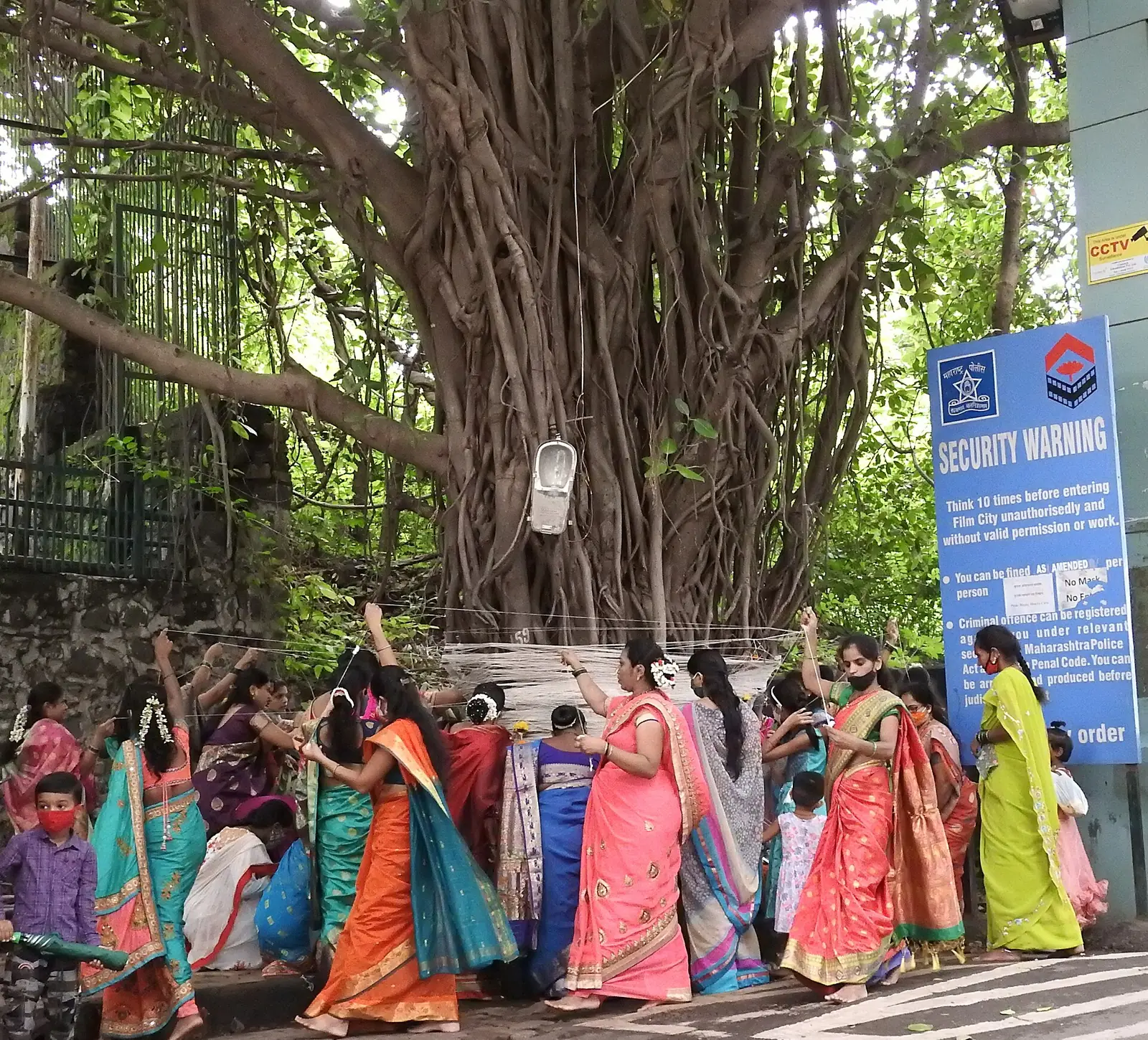
Raw thread wound round the banyan while circling it
- 03
Offerings of soaked gram, fruit, roli and a hand fan
- 04
Hearing the katha of Savitri and Satyavan
01Savitri and Yama
The Mahabharata’s Vana Parva has the rishi Markandeya tell the katha to Yudhishthira. Savitri, daughter of King Ashvapati of Madra, chose for her husband Satyavan, son of a blind king in exile, though Narada warned that he had one year to live. On the fated day she went with him into the forest; he lay down with his head in her lap and Yama came with his noose. She followed Yama, speaking of dharma so well that he granted her boons, one after another, short of her husband’s life, until she asked for sons by Satyavan, and he had to give him back. Satyavan had died beneath a banyan, so the vat tree is worshipped.
02Thread round the banyan
Women in red or yellow saris, in the jewellery of their wedding, gather under the village banyan in the morning. They offer water, roli, soaked gram, fruit and a small fan, wind raw cotton thread round the trunk while circling it seven, twenty-one or a hundred and eight times, and hear the katha of Savitri and Satyavan together. In Maharashtra Vat Purnima falls a fortnight later on the full moon, and in cities where no banyan is near, a branch is brought home and worshipped.
Uttar Pradesh, Bihar, Madhya Pradesh, Odisha (Savitri Brata), Maharashtra, Gujarat, Goa, Karnataka; Mithila and the Nepal Terai