Cite
MLA
“Holi.” Hindu History, 2026, https://www.hinduhistory.in/utsav/holi/. Accessed .
APA
Hindu History. (2026). Holi. Retrieved , from https://www.hinduhistory.in/utsav/holi/
How it is kept
- 01
Holika Dahan bonfire at dusk on the full moon, circled with raw thread
- 02
Roasting new wheat and barley ears in the Holika fire
- 03
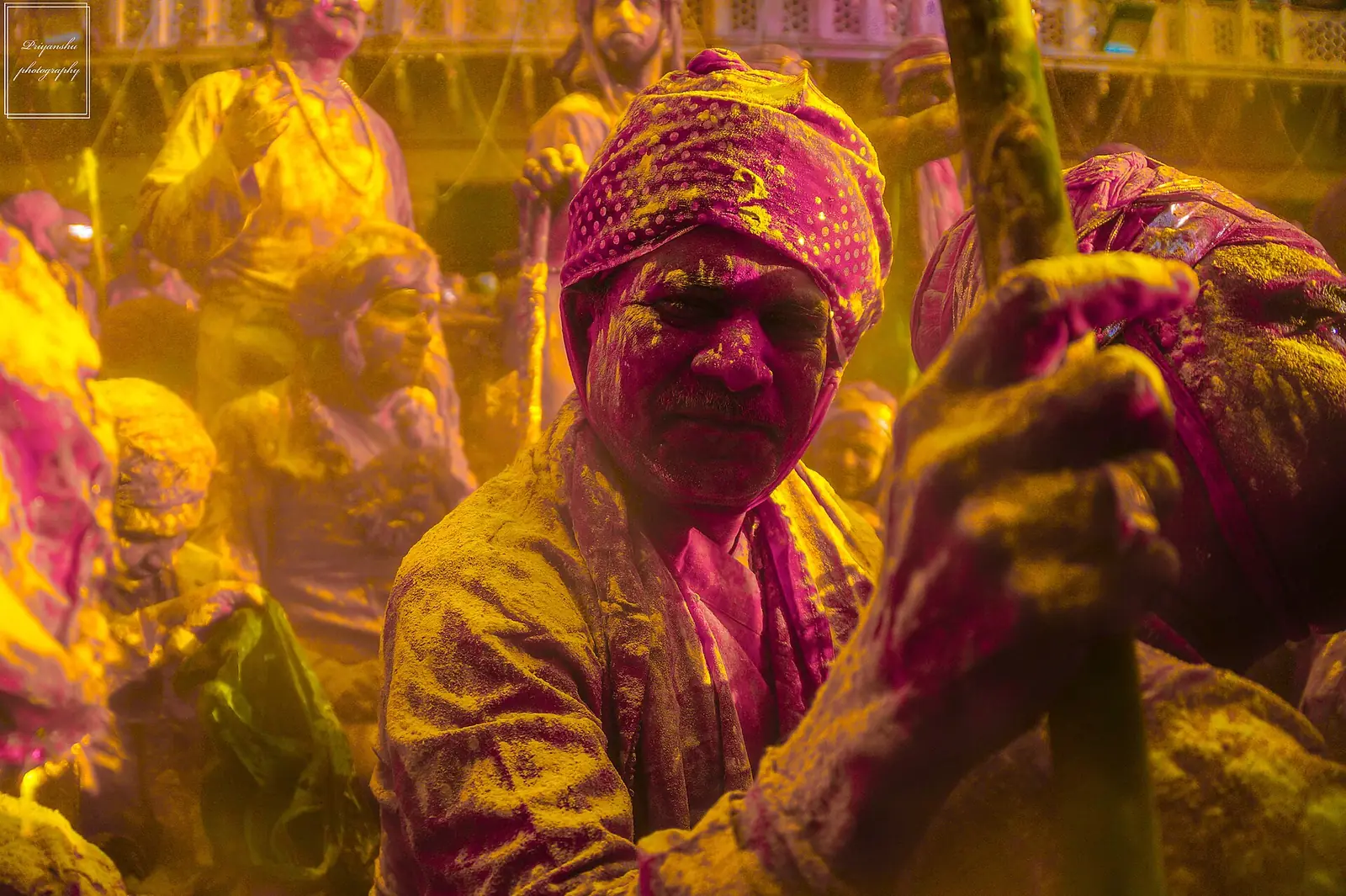
Gulal and coloured water on the morning after
- 04
Lathmar Holi at Barsana and Nandgaon
- 05
Gujiya, thandai and visits to every house in the lane
01Prahlad and Holika
The Bhagavata Purana tells of Hiranyakashipu, who could not bear that his son Prahlad worshipped Vishnu. He had the boy thrown from cliffs, trampled by elephants and given poison, and the boy came to no harm. The katha told at every Holika Dahan adds his sister Holika, who had a boon that fire would not burn her; she took Prahlad in her lap and sat in a blazing pyre, and it was she who burned while Prahlad sat chanting Hari’s name. Narasimha came soon after. On the full-moon evening the women circle the stacked wood with raw thread, and new grain is roasted in its flames.
02Holaka in the old texts
Jaimini’s Purva Mimamsa Sutras and the Kathaka Grihya Sutra name a rite called Holaka, kept on the full moon of Phalguna, and P. V. Kane gathered these references in his History of Dharmashastra. King Harsha’s play Ratnavali, of the seventh century, opens in the spring festival of Madana in Kaushambi, with townsfolk spraying one another with coloured water from syringes. Rajput and Pahari painters of the seventeenth and eighteenth centuries painted Krishna and Radha at Holi again and again, with pichkaris and clouds of gulal.
03Holi in Braj
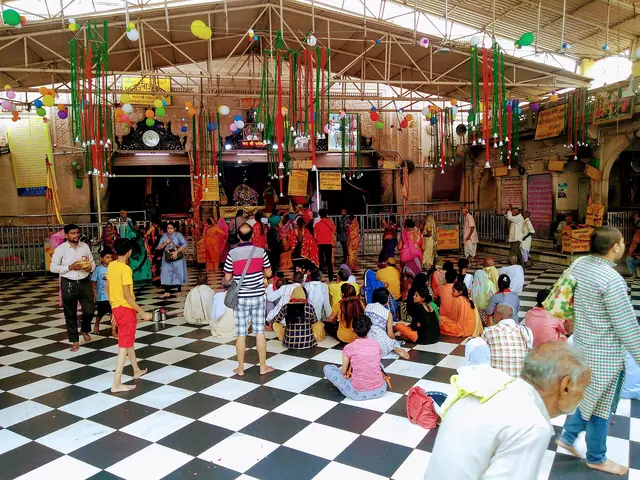
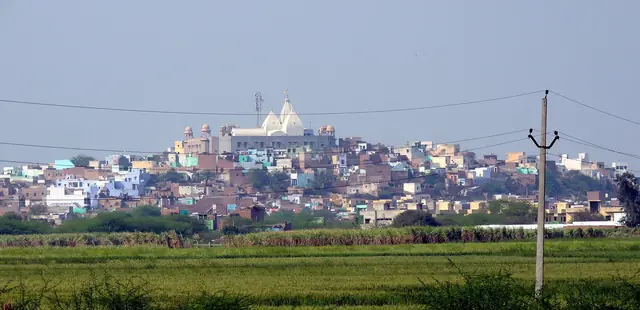
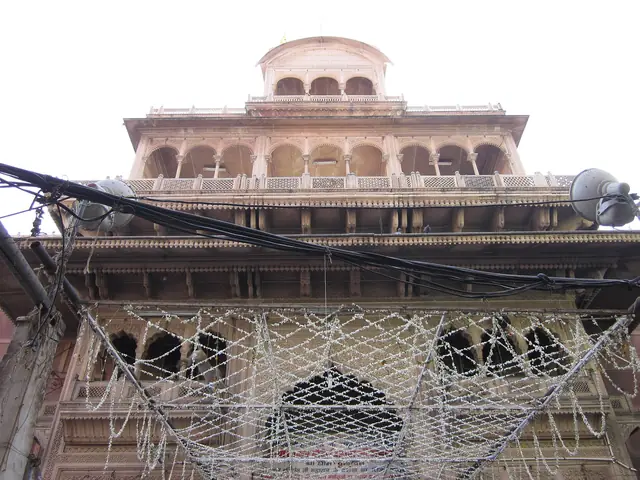
Braj begins on Basant Panchami, when the Holi pole is planted, and plays for forty days. At Barsana, Radha’s village, the women meet the men of Nandgaon with lathis, and the men shelter under leather shields; the next day Nandgaon returns the visit. Vrindavan throws flowers on Rangbhari Ekadashi, and at Banke Bihari the priests drench the crowd with saffron water. In Bengal the same full moon is Dol Purnima, the birthday of Sri Chaitanya, with Radha-Krishna swung in a palanquin.
North and central India above all, Braj most of all; Bengal and Odisha as Dol Jatra; Nepal; Phagwa in Trinidad, Guyana, Suriname and Mauritius