
Cite
MLA
“Dhanteras (Dhanatrayodashi).” Hindu History, 2026, https://www.hinduhistory.in/utsav/dhanteras/. Accessed .
APA
Hindu History. (2026). Dhanteras (Dhanatrayodashi). Retrieved , from https://www.hinduhistory.in/utsav/dhanteras/
How it is kept
- 01
Buying a new brass, copper or steel vessel, or a coin of gold or silver
- 02
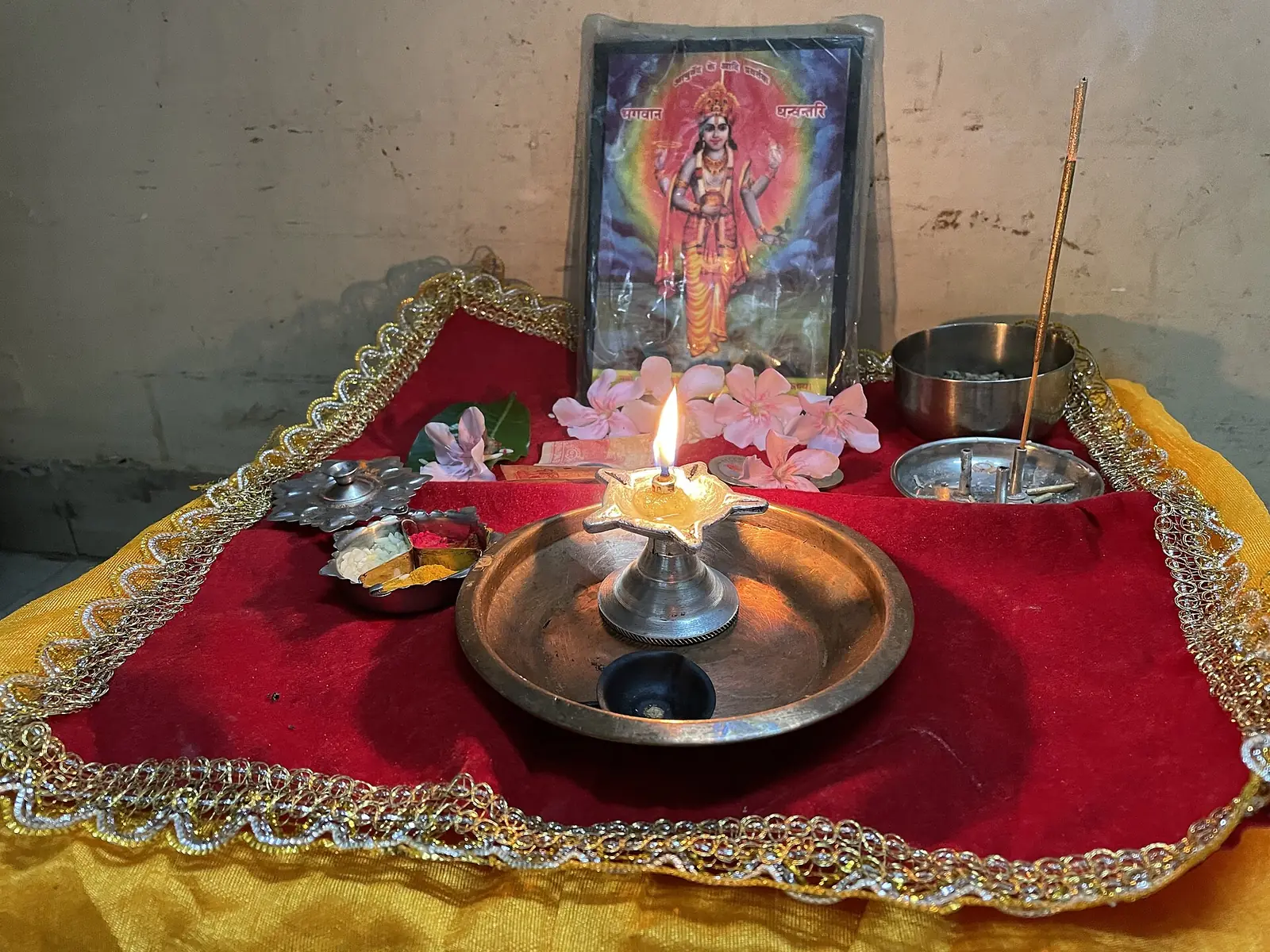
Dhanvantari puja by vaidyas and Ayurvedic households
- 03
Yamadeepa: a four-wicked lamp set outside facing south at dusk
- 04
Cleaning and lighting the house for the coming Lakshmi Puja
01Dhanvantari and the amrit
The Bhagavata Purana, in its eighth skandha, tells how the devas and asuras churned the ocean of milk with Mandara as the rod and Vasuki as the rope. Last of all rose Dhanvantari, dark, wearing yellow, carrying the kalasha full of amrit; the Purana counts him among the avatars of Vishnu and names him the giver of Ayurveda. Vaidyas worship him on this trayodashi, and since 2016 the Government of India has kept the day as National Ayurveda Day.
02The lamp for Yama
At dusk a four-wicked lamp of flour or clay is set outside the door, its flame turned south, the direction of Yama. The household katha tells of King Hima’s son, fated to die of snakebite on the fourth night of his marriage; his bride heaped her jewels and coins at the door, lit lamps all round and sang through the night, and Yama, come as a serpent, was so dazzled that he went away at dawn. Hence the gold, the new vessel and the Yamadeepa.
North and west India, Gujarat, Maharashtra; observed as Dhanvantari Jayanti by Ayurvedic vaidyas everywhere