Cite
MLA
“Vesara: the Deccan blend.” Hindu History, 2026, https://www.hinduhistory.in/sthapatya/vesara-style/. Accessed .
APA
Hindu History. (2026). Vesara: the Deccan blend. Retrieved , from https://www.hinduhistory.in/sthapatya/vesara-style/
What defines it
- 01
Dravida tiers sharpened with Nagara projections
- 02
Texts allow round, apsidal or mixed plans
- 03
Stellate (star-shaped) sanctum plans
- 04
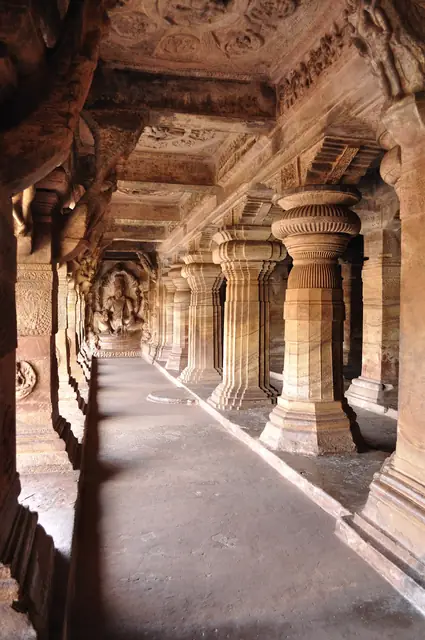
Ornate doorways, lathe-turned pillars, domed ceilings
01What the texts say
The southern shilpa texts name three kinds of temple: Nagara, Dravida and Vesara. The Manasara places Nagara in the north, Dravida in the south and Vesara in between. The Kamika Agama also calls it sankara, the mixed one. The texts do not agree on its plan: some describe a round shrine, others allow round, elliptical or apsidal plans, or a square base with a rounded top. Northern texts do not use the word at all. Modern scholars argue over the label rather than the buildings. Adam Hardy avoids it and speaks of Karnata Dravida; others say Chalukyan or Deccan architecture. Ajay Sinha argues it was a deliberate synthesis, not a casual mixture.
02Aihole, Pattadakal and the Kalyani Chalukyas
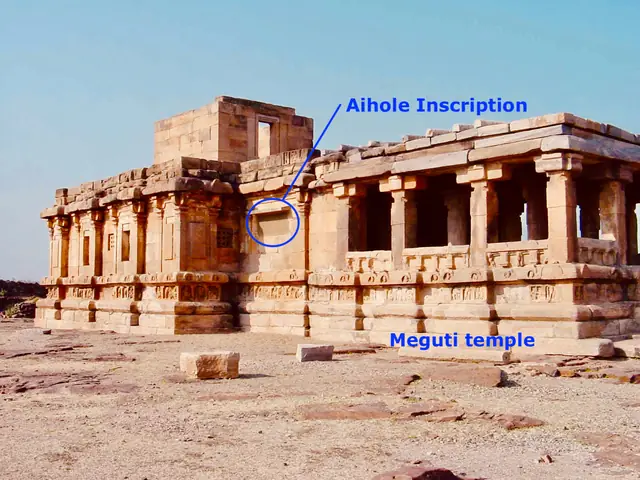
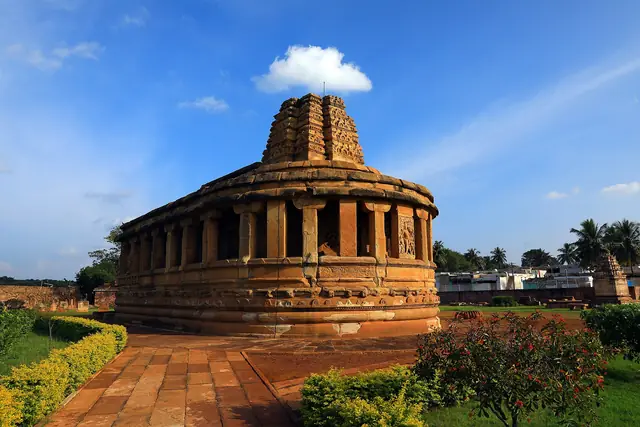
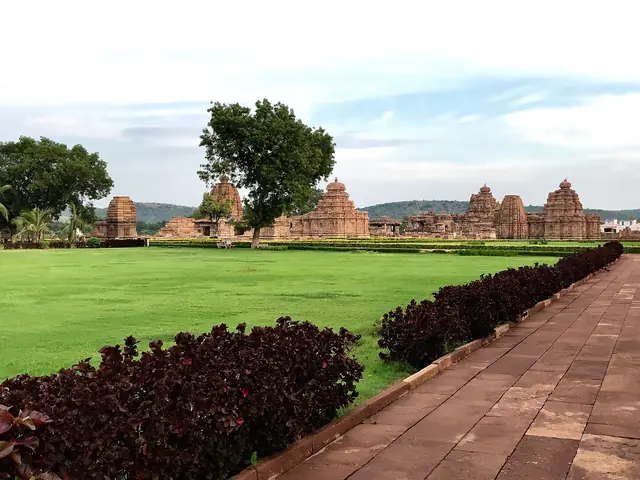
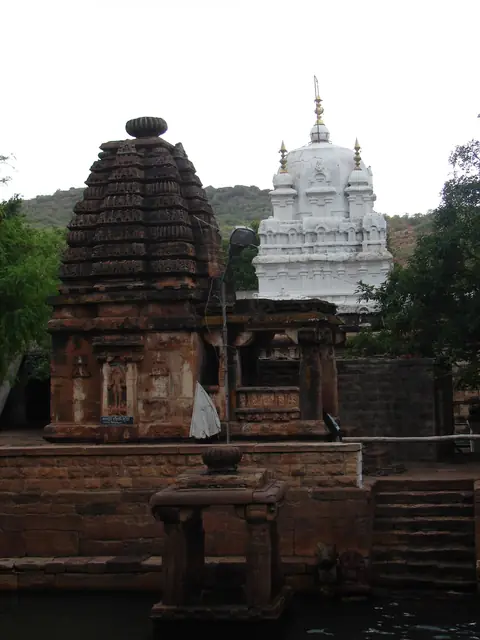
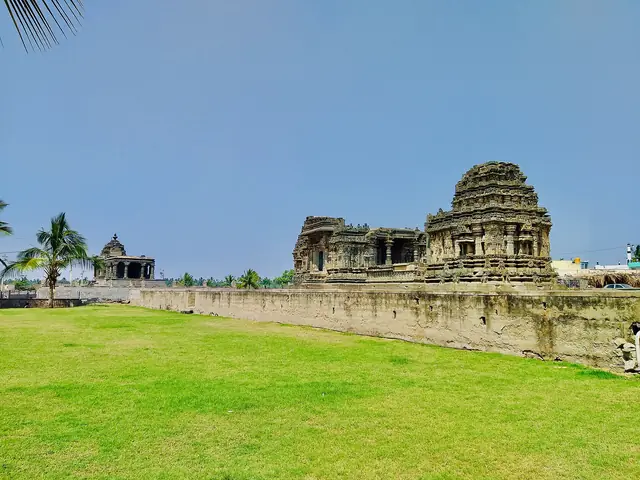
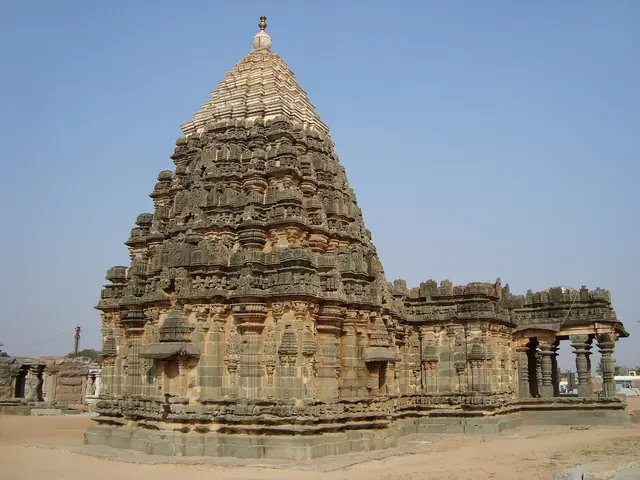
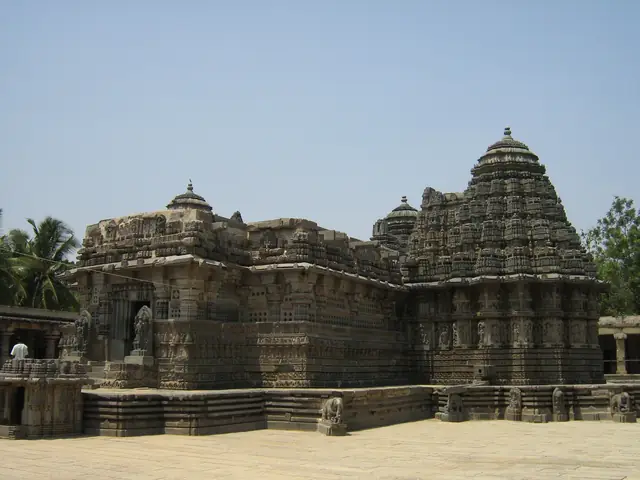
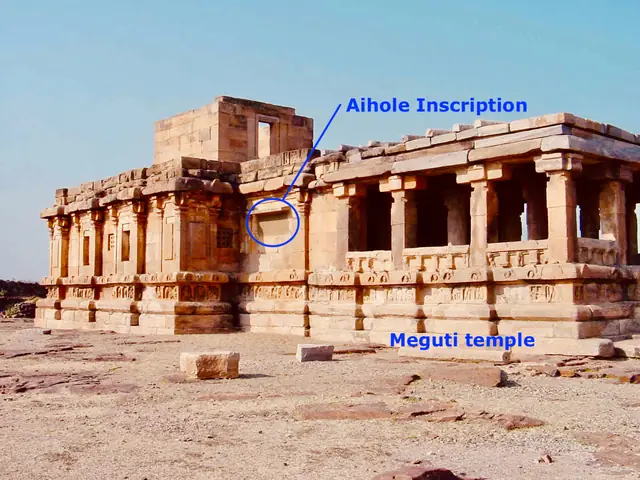
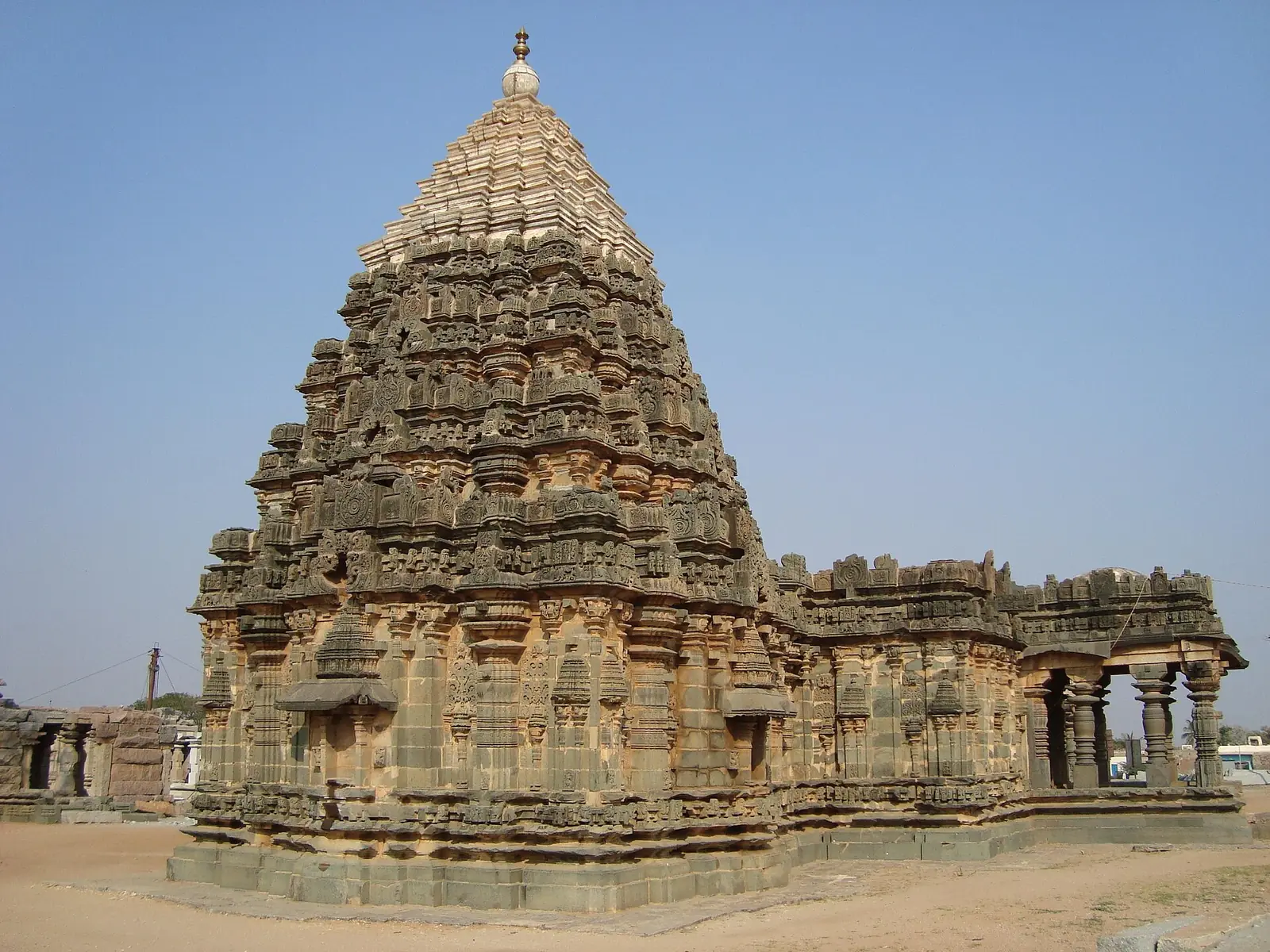
At Aihole, Badami, Mahakuta and Pattadakal the Badami Chalukyas built Nagara and Dravida temples side by side, sometimes in the same courtyard, and many historians see the roots of the blend there. The Kalyani or Western Chalukyas, ruling from about 973, turned it into a style. The Kallesvara temple at Kukkanur, of about 1000–1025, is the earliest surviving example, still mostly Dravida above. The Joda Kalasha temple at Sudi followed around 1060. The Kasivisvesvara at Lakkundi, of about 1075, is counted a high point, and the Mahadeva temple at Itagi belongs to the same school. Their towers keep the southern tiers but sharpen them with northern projections and miniature spires.
03The star plan
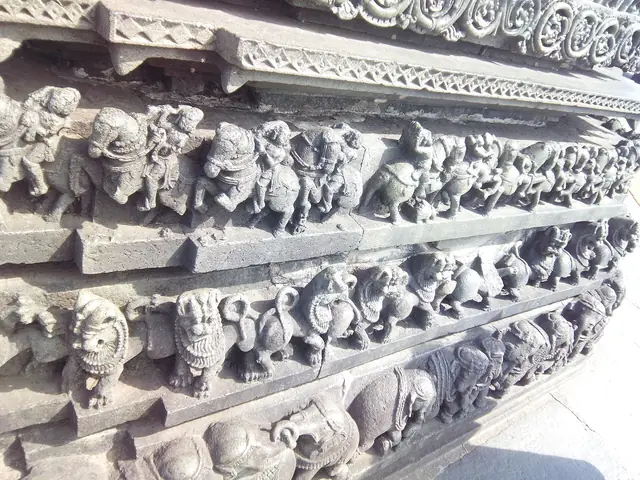
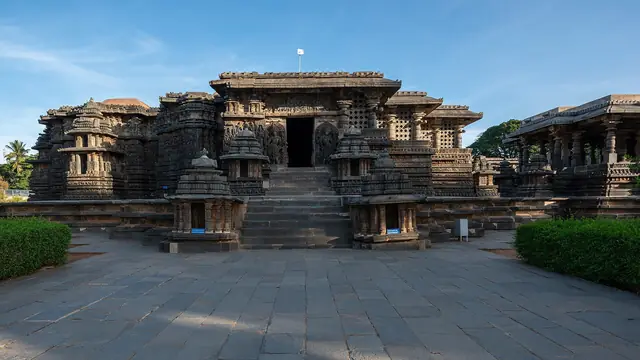
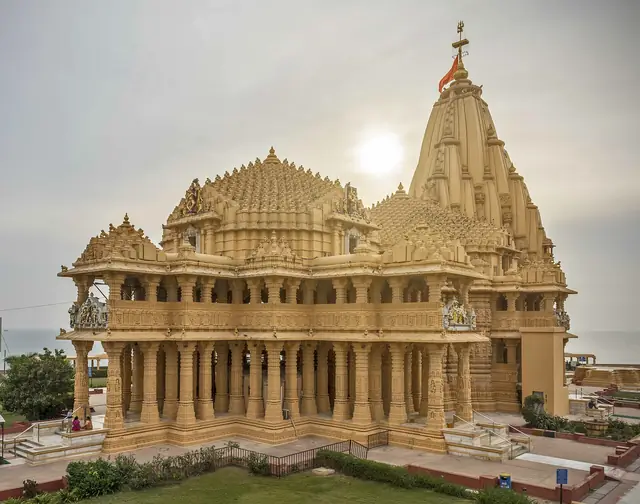
The most striking Deccan invention was the stellate plan. Instead of a square with projections, the sanctum walls are turned into a star, so that light catches a hundred edges as the sun moves. The Dodda Basappa temple at Dambal, of the 12th century, has a 24-pointed star plan, and the Brahmadeva temple at Savadi is fully stellate. The Hoysalas took this star further at Belur, Halebidu and Somanathapura. So the Vesara story runs from the experiments of 7th-century Aihole to the soapstone temples of the 13th century, a single regional line in which builders borrowed freely from both north and south while keeping the canon of the shilpa texts.
Family tree
In the texts
- Manasara
- Kamika Agama