01Sala and the tiger
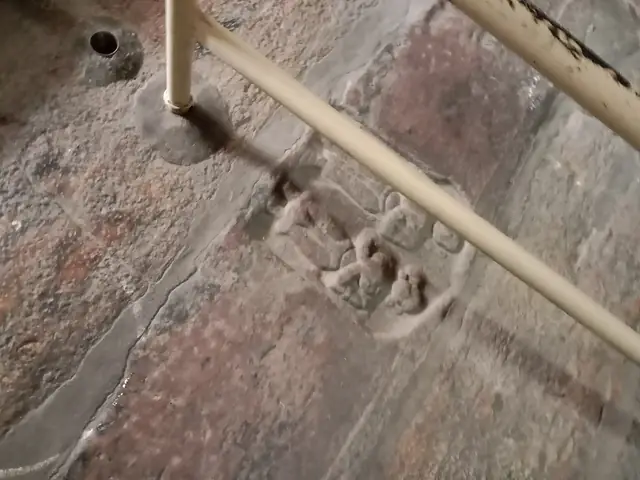
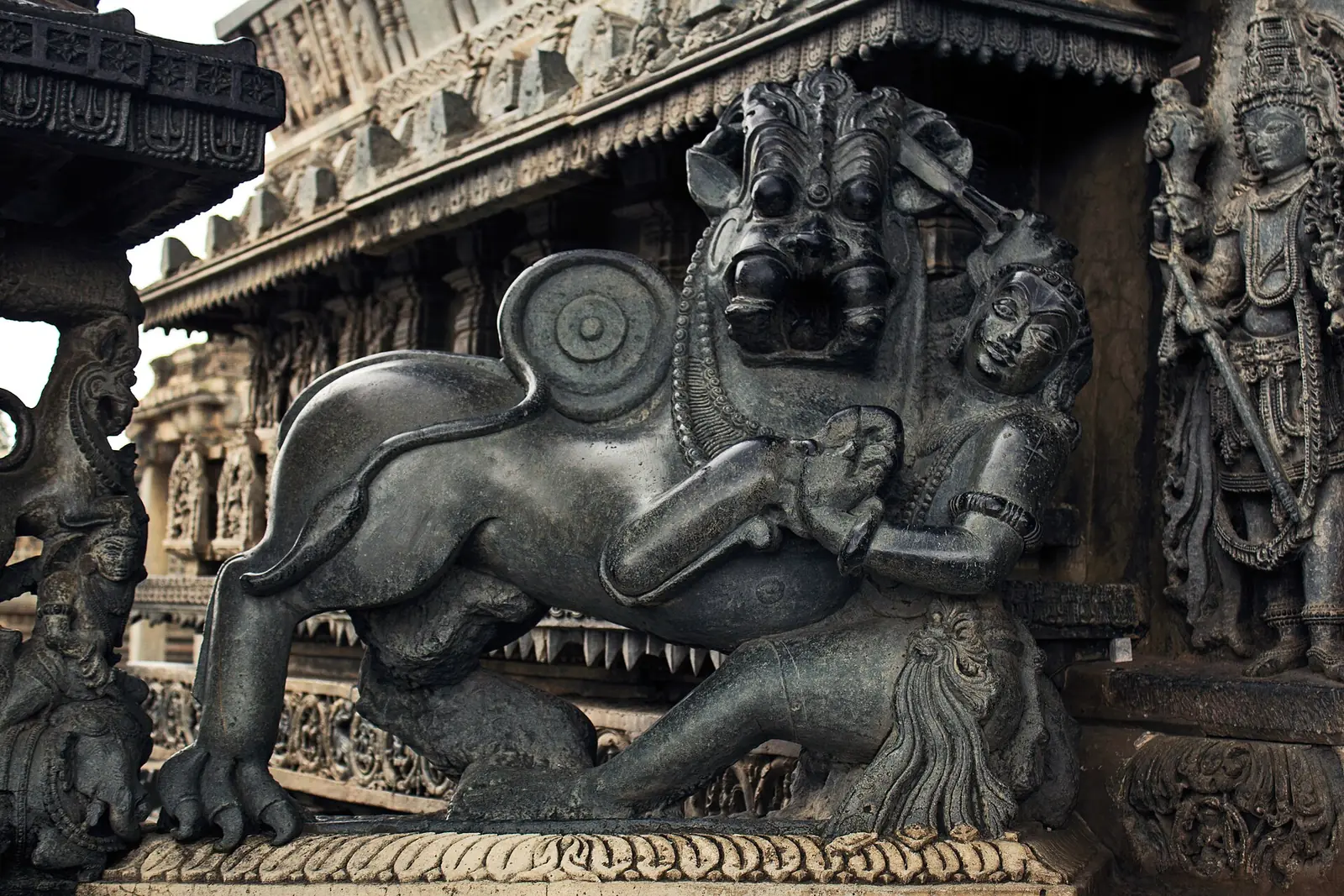
The dynasty’s crest shows a young man striking a tiger. The family katha, carved at Belur and Halebidu, tells that a Jain teacher at Sosevur was attacked by a tiger and called out "Hoy, Sala!", strike, Sala, and the youth killed it. From that cry came the name. The early chiefs ruled from the hill country of Malnad as Chalukya feudatories, and Nripa Kama II is the first ruler the inscriptions place firmly.
02Vishnuvardhana’s temples
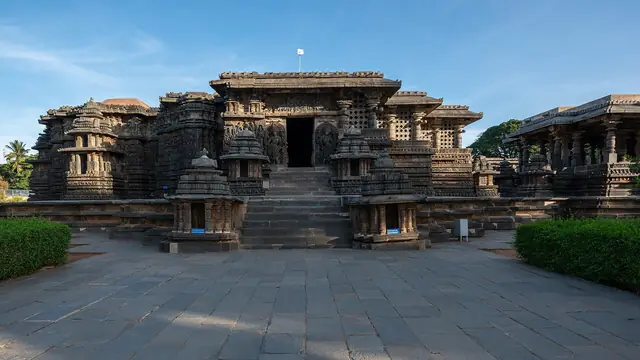
Bittideva, born a Jain, took the name Vishnuvardhana; Shrivaishnava tradition credits the change to Ramanujacharya, who lived in the Hoysala country for years. In 1116 his general Gangaraja drove the Cholas out of Talakad, and in 1117 the king consecrated the Chennakeshava temple at Belur. His queen Shantala Devi, a famed dancer, remained a Jain. Around 1121 work began on the Hoysaleshvara temple at Dwarasamudra, which was never finished. Inside, the sculptors signed their names.
03Ballala III, the last stand
In 1311 Malik Kafur, Alauddin Khalji’s general, sacked Dwarasamudra and Ballala III had to submit and pay tribute. He rebuilt his strength, moved his base to Tiruvannamalai in the Tamil country, and kept fighting the Sultanate garrisons of Madurai. In 1343 he was captured in battle near Tiruchirappalli and killed. The men he had trained, among them the Sangama brothers, carried the struggle into the founding of Vijayanagara.
The rulers
- 1Nripa Kama IIc. 1026–1047
- 2Vinayadityac. 1047–1098
- 3Ereyangac. 1098–1102
- 4Veera Ballala Ic. 1102–1108
- 5VishnuvardhanaTook Talakad from the Cholas; built Belurc. 1108–1152
- 6Narasimha Ic. 1152–1173
- 7Veera Ballala IIThrew off Chalukya overlordship; full sovereigntyc. 1173–1220
- 8Vira Narasimha IIc. 1220–1235
- 9Vira Someshvarac. 1235–1263
- 10Narasimha IIISomanathapura temple built in his reign, 1268c. 1263–1292
- 11Veera Ballala IIIFought the Sultanate to the endc. 1292–1343
What they left
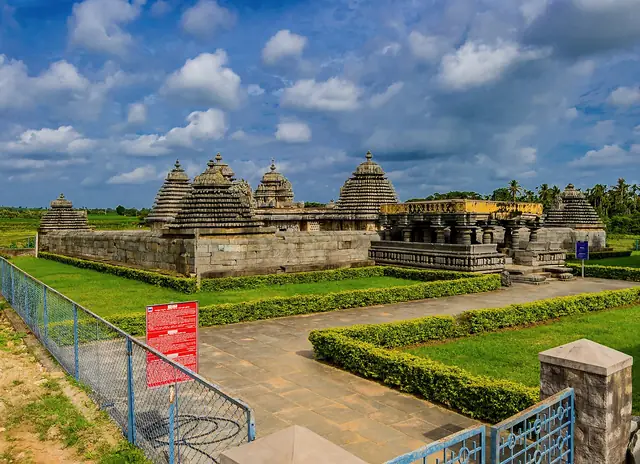
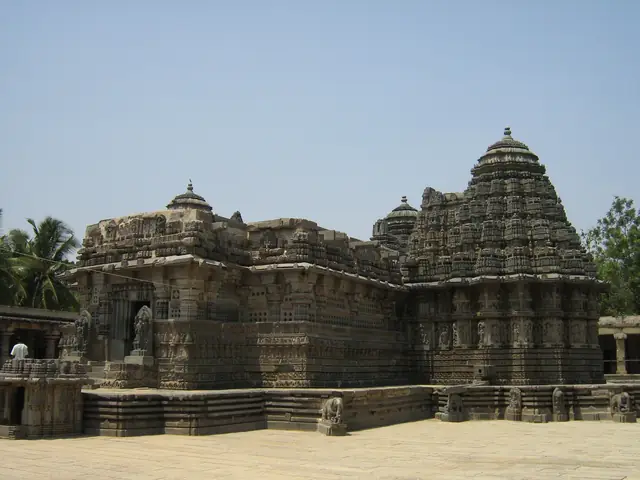
- Chennakeshava temple, Belur (1117)
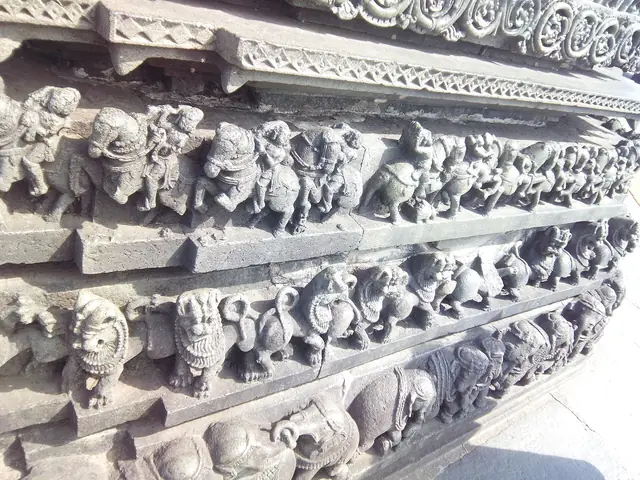
- Hoysaleshvara temple, Halebidu
- Keshava temple, Somanathapura (1268)
- "Sacred Ensembles of the Hoysalas", inscribed as a UNESCO World Heritage Site in 2023
- A flowering of Kannada literature, including Harihara and Raghavanka