Cite
MLA
“Kashmir: temples of pediment and peristyle.” Hindu History, 2026, https://www.hinduhistory.in/sthapatya/kashmir-style/. Accessed .
APA
Hindu History. (2026). Kashmir: temples of pediment and peristyle. Retrieved , from https://www.hinduhistory.in/sthapatya/kashmir-style/
What defines it
- 01
Trefoil arch set in a tall triangular pediment
- 02
Steep pyramidal roof, often in two storeys
- 03
Fluted columns
- 04
Peristyle courtyard ringed by small cells
- 05
Some shrines set in a tank of water
01A mountain way of building
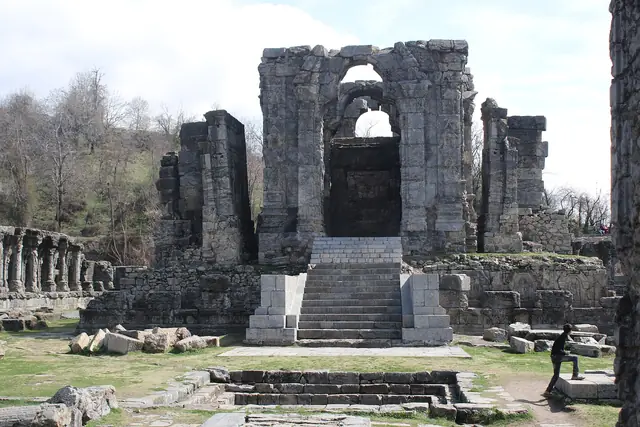
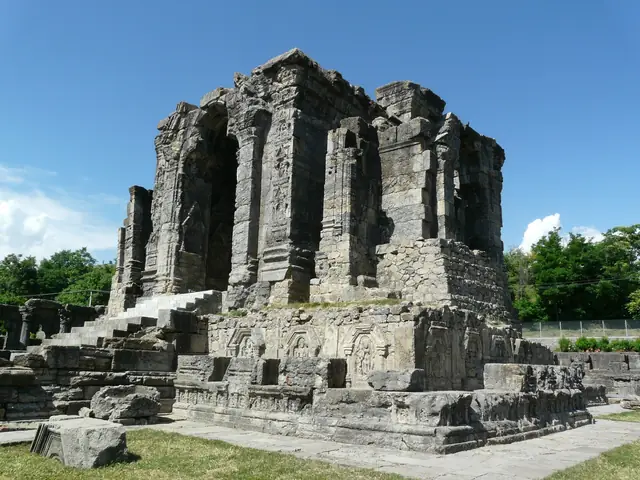
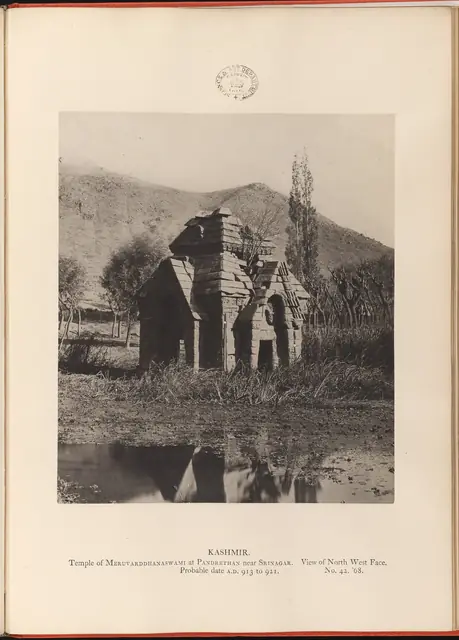
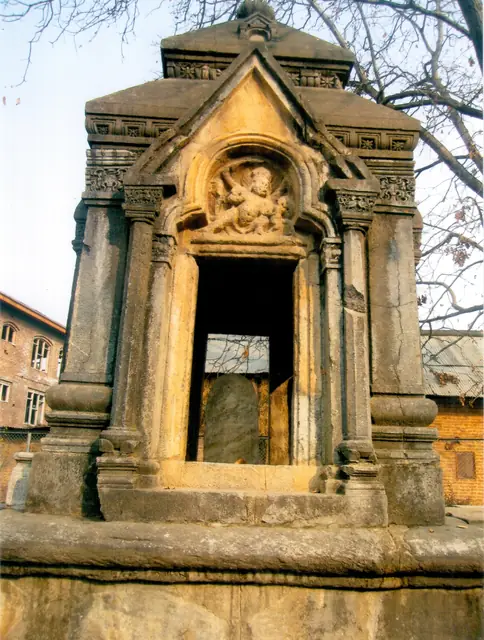
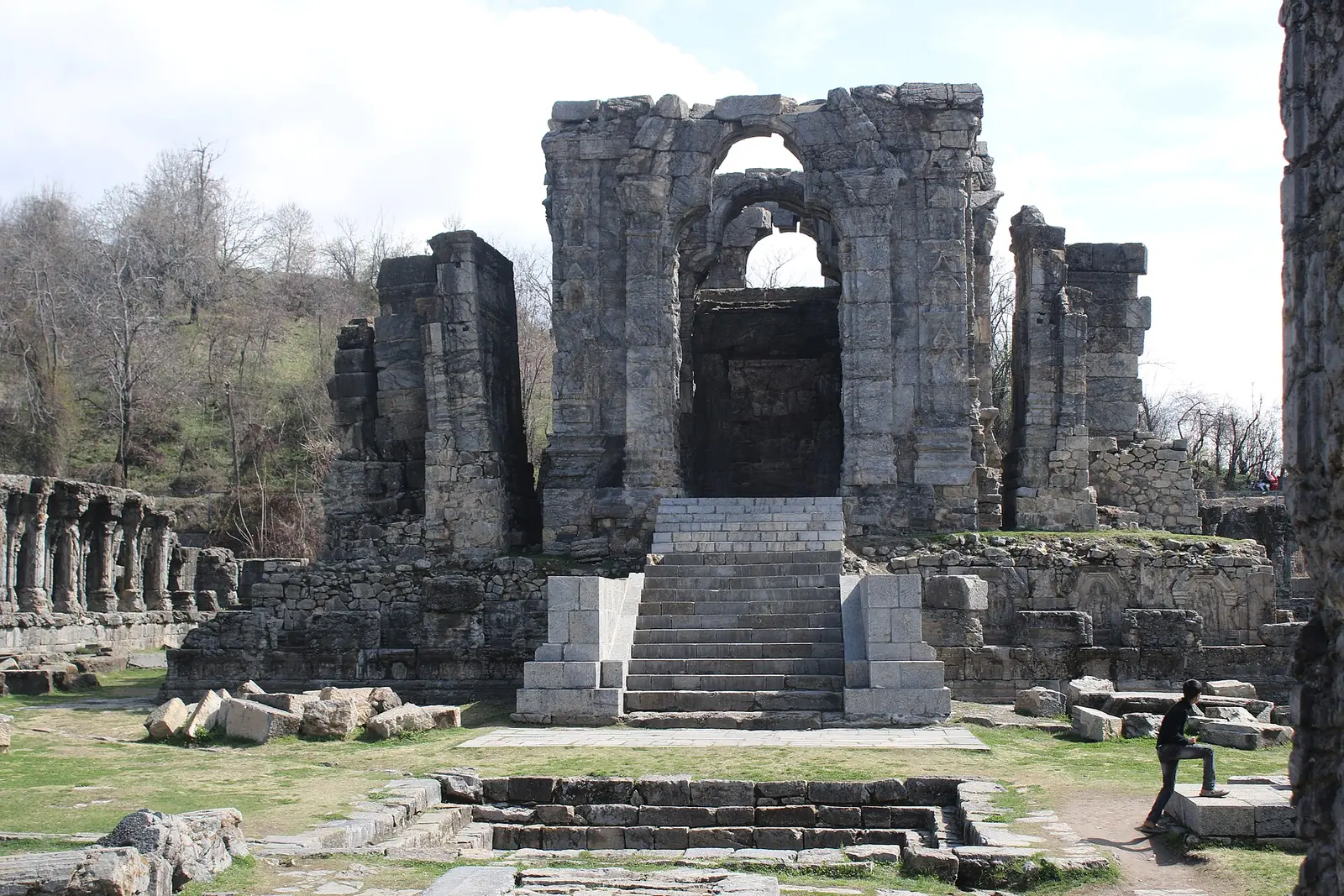
The Kashmir temple looks unlike any other in Bharat. Its doorway and niches carry a trefoil arch, a three-lobed curve, set inside a high-pitched triangular pediment. The roof was a steep pyramid, often in two storeys, made to shed snow, and the columns are fluted. Many temples stood inside a peristyle, a courtyard ringed by a colonnade of small cells, and some, like Pandrethan near Srinagar, rose from the middle of a shallow tank of water. Scholars have seen Gandharan and Gupta forms in it, and even echoes from further west. Adam Hardy has shown that it can still be read with the same aedicular logic as the Nagara temple of the plains.
02Martand of Lalitaditya
Kalhana's Rajatarangini names Lalitaditya Muktapida of the Karkota line, who ruled in the 8th century, as the builder of the Surya temple at Martand. Its central shrine stood in a courtyard ringed by 84 smaller shrines, the largest peristyle in Kashmir, and its form became the model for later Brahmanical temples of the valley. Alexander Cunningham, who described it in 1848, noted the fluted pillars of the colonnade with trefoil-headed recesses between them. Later chroniclers, Jonaraja among them, put its destruction in the reign of Sikandar Shah Miri (1389–1413); earthquakes did further damage. The ASI protects the ruins.
03Avantipur and Pandrethan
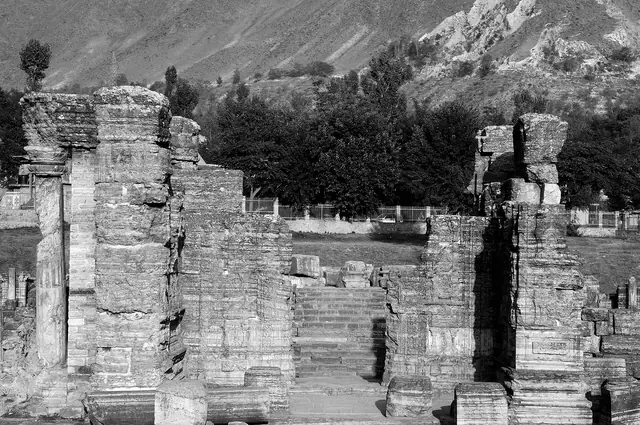
In the next century Avantivarman, founder of the Utpala line, built a new town at Avantipur and in it two temples, the Avantiswami for Bhagwan Vishnu and the Avantishvara for Mahadev; the Avantiswami is dated to about 853–855 and follows Martand's plan on a smaller scale. Local people call its ruins Pandav Lari, the house of the Pandavas. Near Srinagar, the small Shiva temple at Pandrethan, dated by different scholars to the 8th–9th or the 10th century, has kept much of its stone pyramidal roof, a rare survival, and its four doorways still show the pediment-and-trefoil design. Small temples at Payar and elsewhere carry the same forms.
In the texts
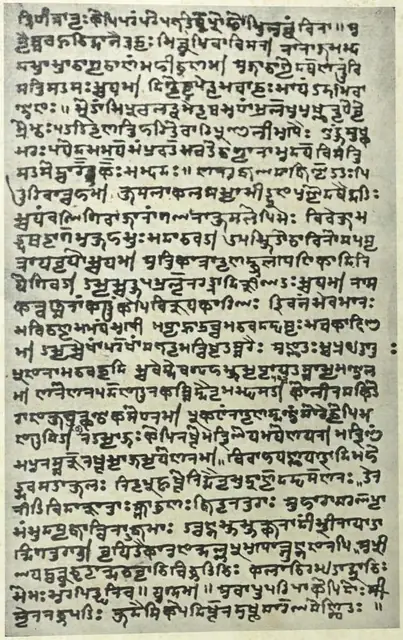
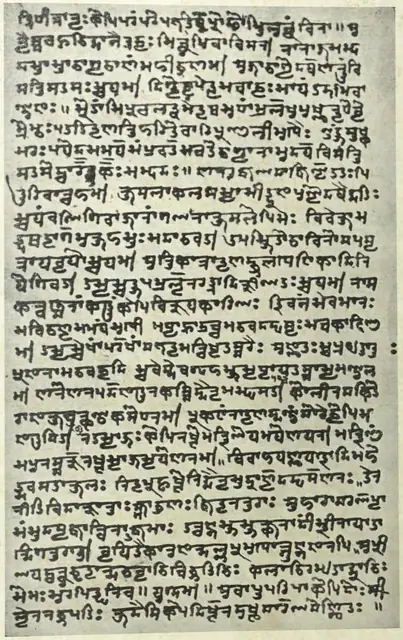
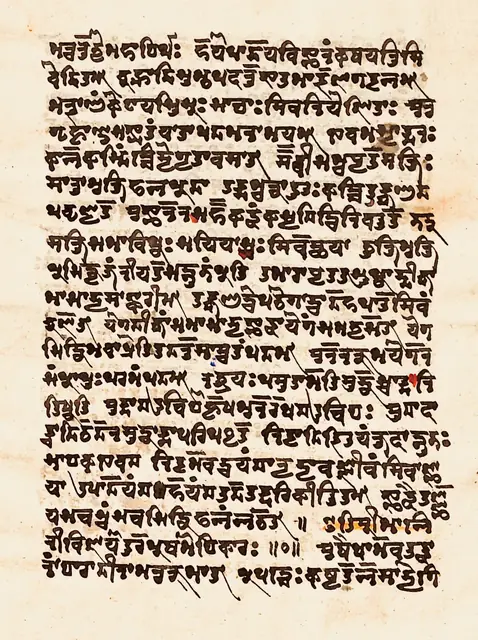
- Rajatarangini of Kalhana