Cite
MLA
“Telugu-Kannada script.” Hindu History, 2026, https://www.hinduhistory.in/lipi/telugu-kannada-script/. Accessed .
APA
Hindu History. (2026). Telugu-Kannada script. Retrieved , from https://www.hinduhistory.in/lipi/telugu-kannada-script/
01Kadamba and Chalukya letters
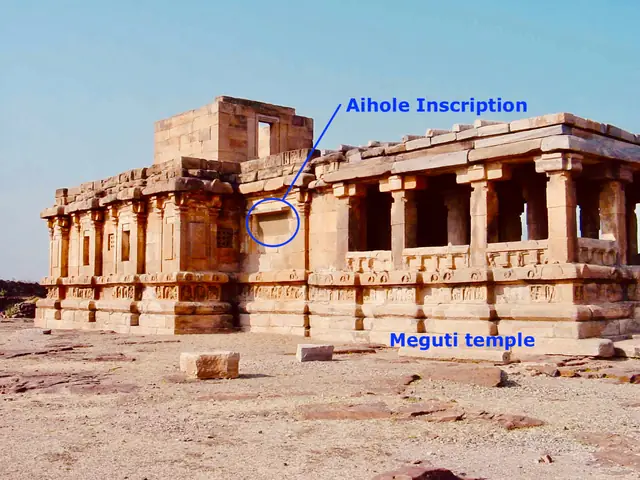
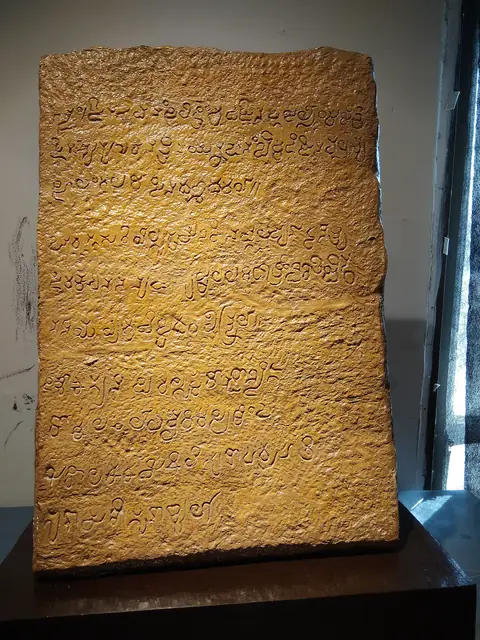
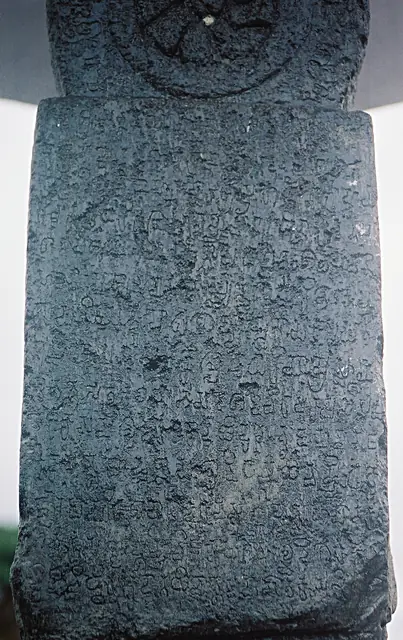
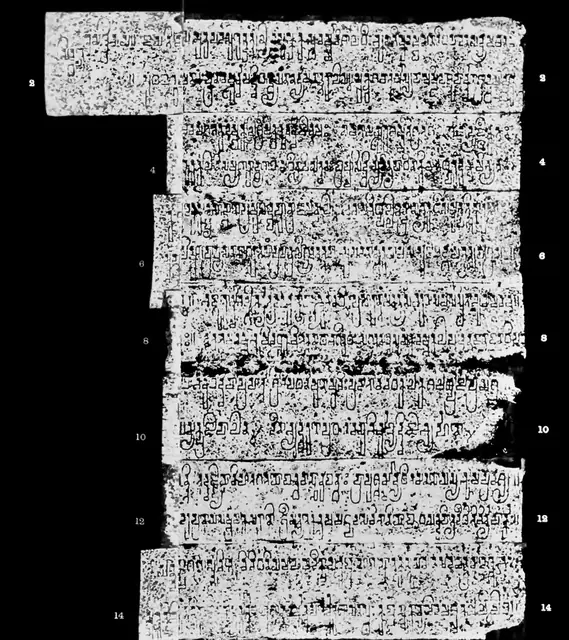
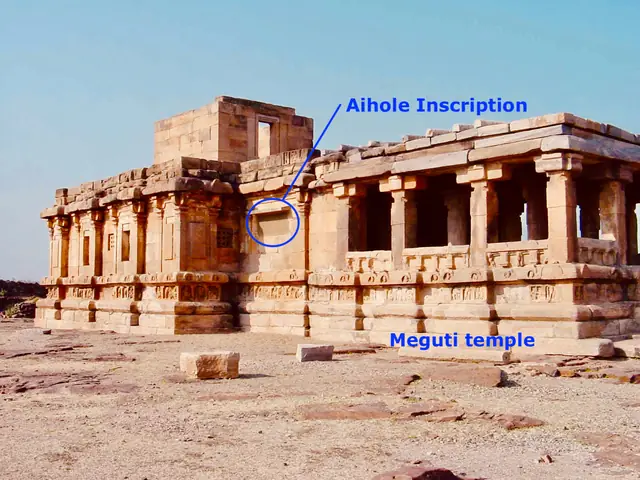
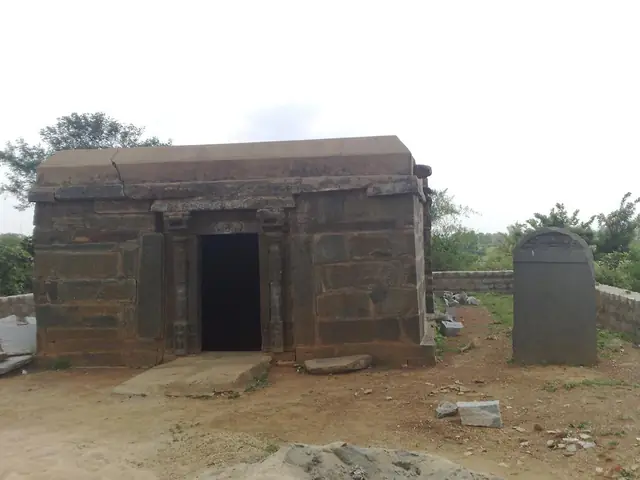
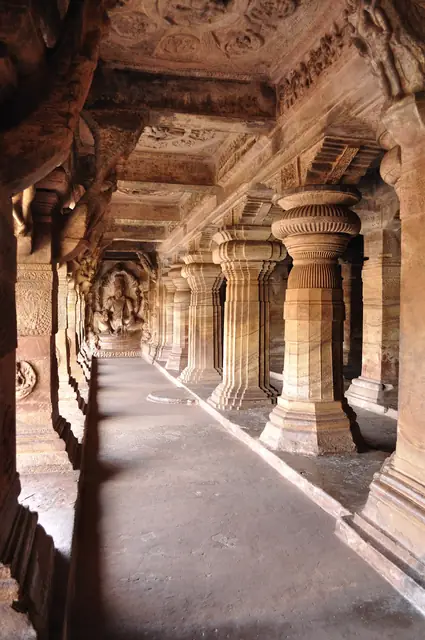
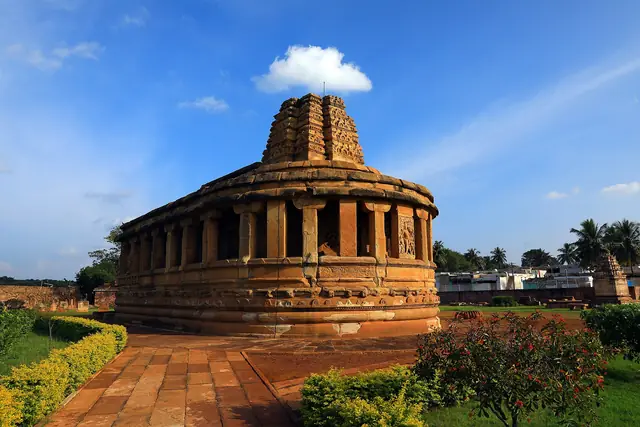
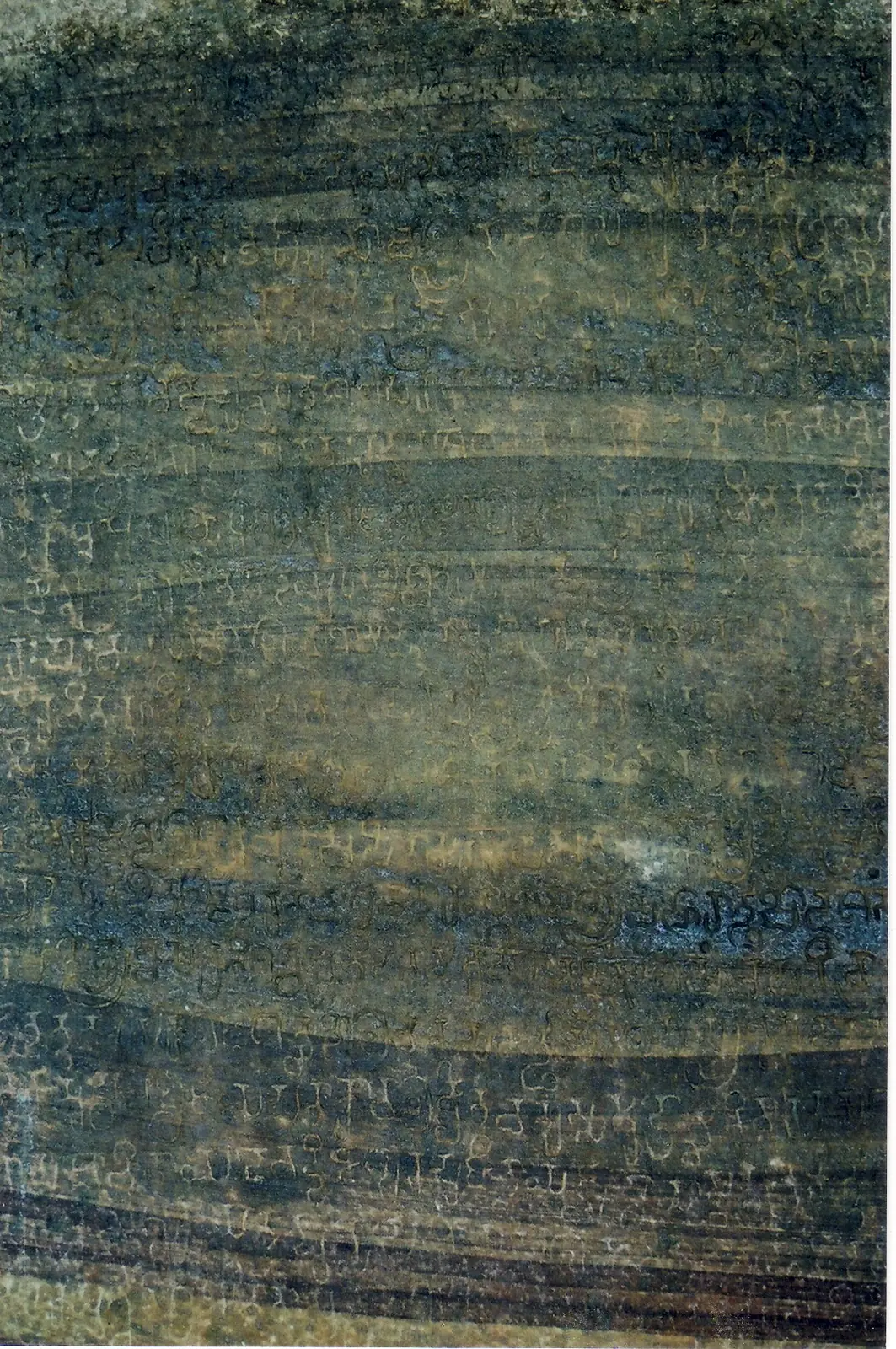
Southern Brahmi in the Deccan grew rounder as scribes wrote on palm leaf, and by the 5th century the Kadambas of Banavasi were using a distinct regional form. The Talagunda pillar, a Sanskrit poem on the founding of the dynasty, and the Halmidi stone, the earliest full inscription in the Kannada language, are both in it. At Badami a Chalukya inscription in cave 3 records the cave’s dedication to Bhagwan Vishnu in 578 CE, and Ravikirti’s Aihole prashasti of 634 CE uses the same script.
02Two scripts from one
Under the Eastern Chalukyas of Vengi in Andhra and the Rashtrakutas and later Chalukyas in Karnataka, the same letters served both Telugu and Kannada; Nannaya in the 11th century and Pampa in the 10th wrote in closely related hands. Over the following centuries the scripts drew apart, the Telugu letters taking the small tick-mark on top that sets them apart. Even now a reader of one can often make out words in the other.
03Today
The Kannada script writes Kannada, and also Tulu, Kodava and Konkani in Karnataka; the Telugu script writes Telugu in Andhra Pradesh and Telangana. Together they serve more than twelve crore speakers, and both were among the first Indian scripts printed by the missionary presses of the early 19th century. Kannada and Telugu signboards, film titles and newspapers keep both scripts in front of millions of eyes every day.