Cite
MLA
“Kath-kuni: Himalayan temples of wood and stone.” Hindu History, 2026, https://www.hinduhistory.in/sthapatya/himalayan-kath-kuni-style/. Accessed .
APA
Hindu History. (2026). Kath-kuni: Himalayan temples of wood and stone. Retrieved , from https://www.hinduhistory.in/sthapatya/himalayan-kath-kuni-style/
What defines it
- 01
Alternating courses of deodar timber and dry stone
- 02
No mortar; beams locked at the corners and pegged with kadil
- 03
Double-faced walls with rubble infill
- 04
Slate roofs and carved timber balconies
01Wood at the corner
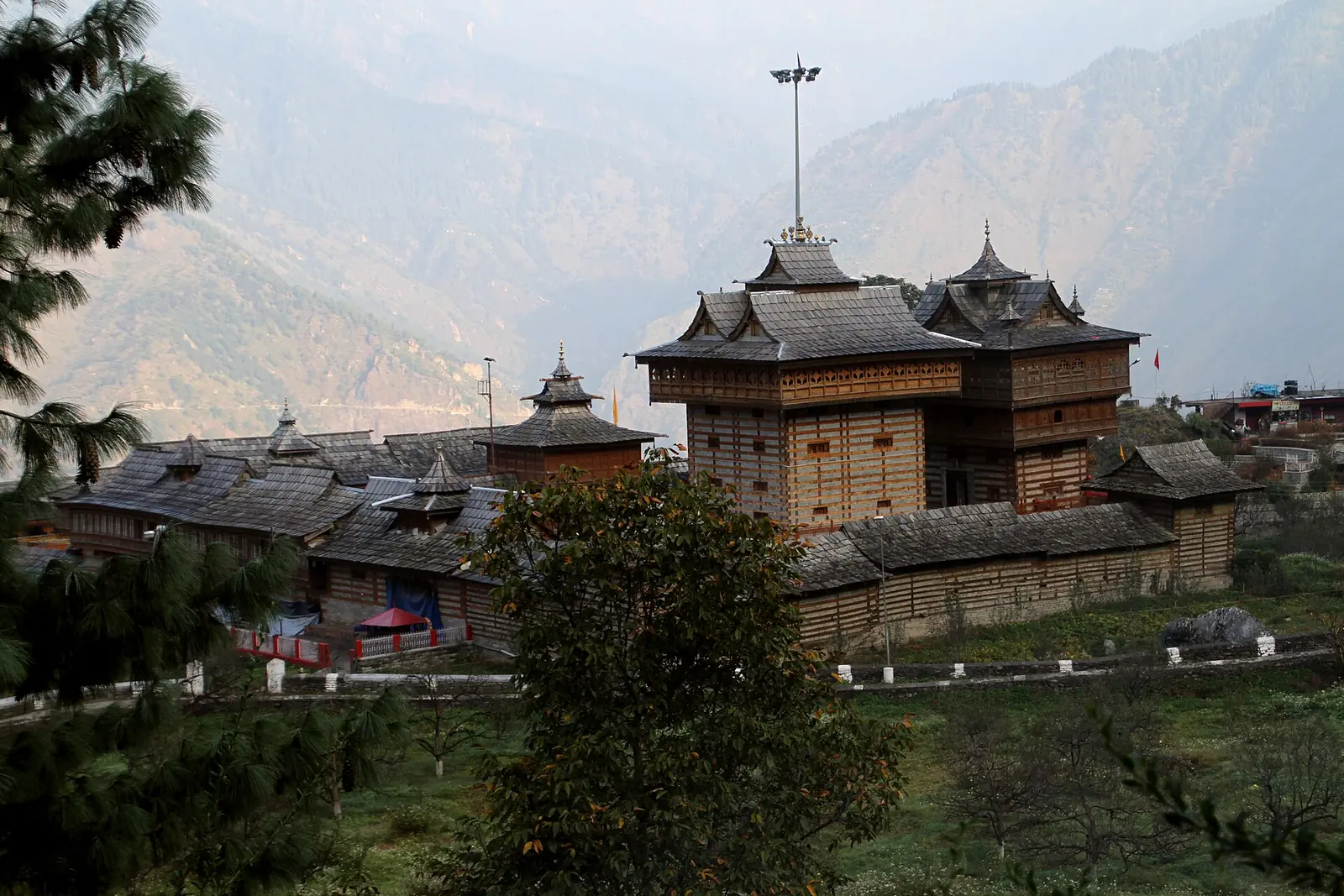
Kath-kuni is usually explained from kashth, wood, and kona, corner, for the way the timbers lock at the corners. A wall is built in courses: first two long deodar beams laid parallel along the wall's two faces, the gap between them packed with loose stone; then a course of dry stone masonry; then timber again, and so on upward. No mortar holds it. Wooden pegs called kadil fix the beams, and cross pieces or dovetails tie the two faces together. As the wall rises the stone courses thin and the timber thickens. The foundation is a trench of loose stone forming the plinth, the inner walls are plastered with mud, and the roof is laid with slate.
02Bhimakali and the devta temples
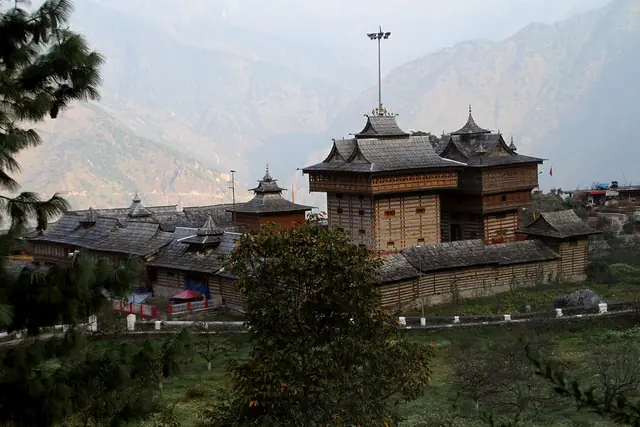
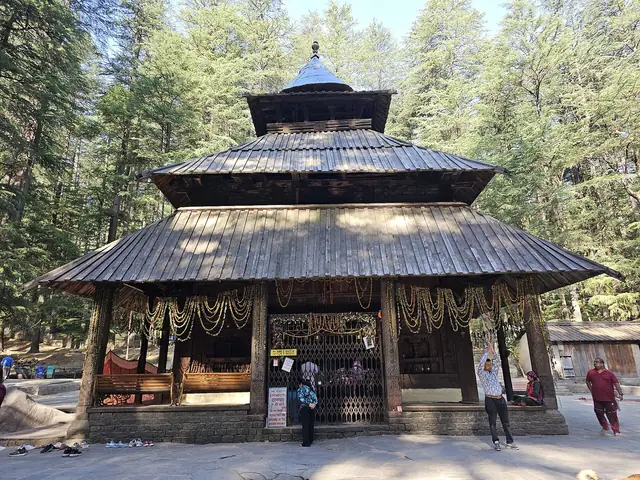
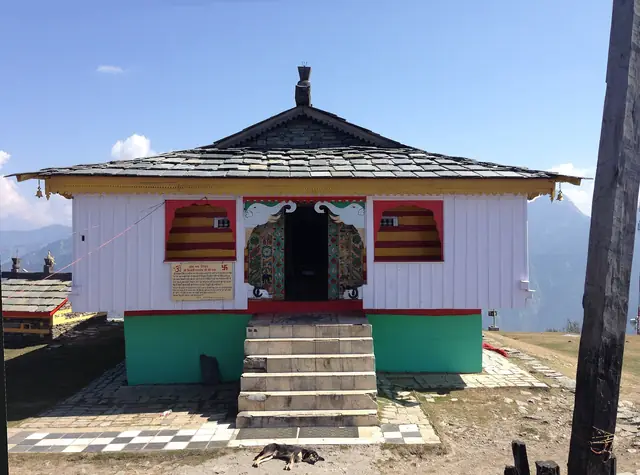
Temples in these valleys follow the same method as houses but in other proportions, and some rise as towers several storeys high. The Bhimakali temple at Sarahan is the best-known shrine built in kath-kuni, with carved timber balconies and slate roofs stacked above stone-and-wood walls. The Prashar temple above Prashar lake in Mandi district is another. Across Kullu, Mandi, Shimla and Kinnaur the local devta lives in such a shrine, and the same hands that build the village houses build his temple. The skill was handed down by word of mouth and long apprenticeship, not from a written shastra.
03Built for shaking ground
These valleys lie in high seismic zones, and the kath-kuni wall is often praised for riding out earthquakes. Writers point to the timber joints, without nails, that let the wall flex and rock, to the heavy stone that holds it down, and to the custom of setting the long side towards the valley with the mountain behind. Some of these claims are well argued, others are repeated without study, and they should be taken as the craftsmen's own understanding rather than tested engineering. What is certain is that deodar is strong and long-lasting, that many such buildings have stood for generations, and that cement and concrete are now replacing the old craft in many villages.