01The fort on the cliff
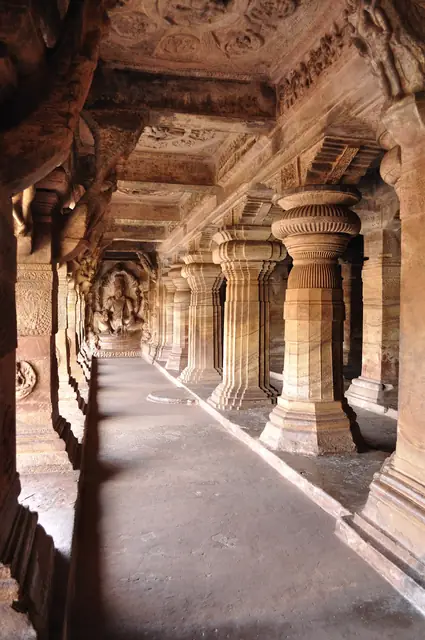
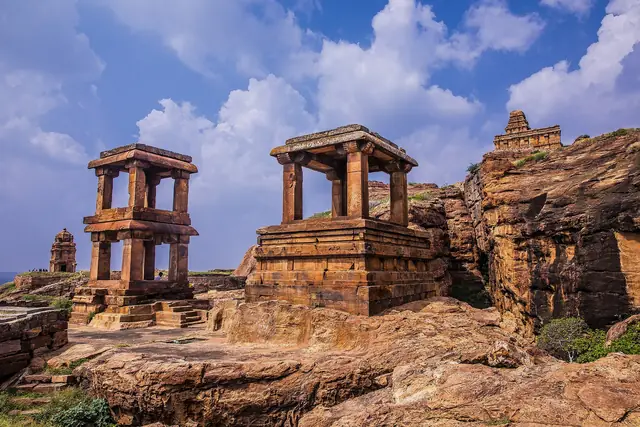
Pulakeshin I fortified the hill of Vatapi and recorded it on the cliff there in Shaka 465, that is 543 CE. He performed the Ashvamedha, the horse sacrifice that only a sovereign could offer. His sons Kirtivarman I and Mangalesha pushed the kingdom outward, and in 578 Mangalesha dedicated Cave 3 at Badami to Vishnu, with an inscription that dates it to the year. The caves are still there, cut into the red cliff above the Agastya lake: Vishnu seated on Shesha, Trivikrama striding across the worlds, Narasimha, and Shiva dancing with eighteen arms.
02Pulakeshin II and Harsha
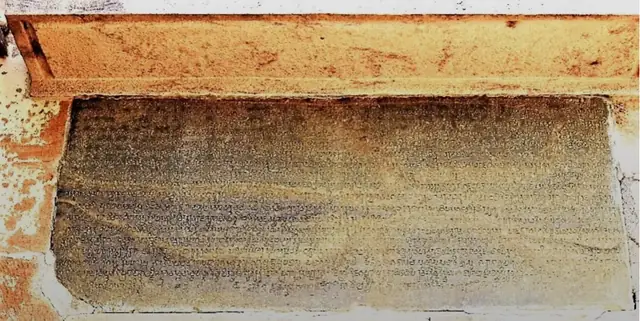
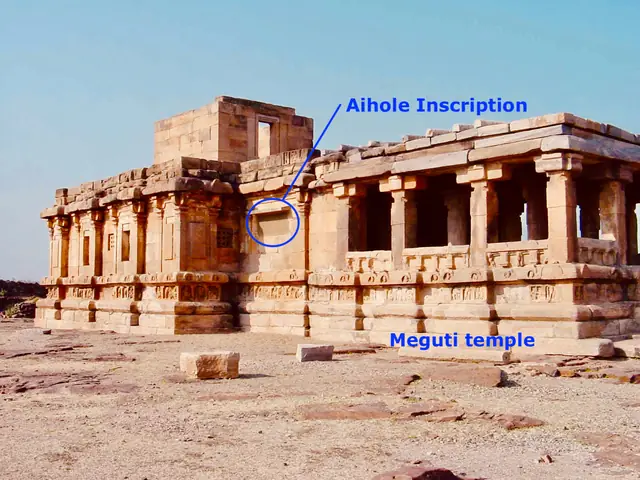
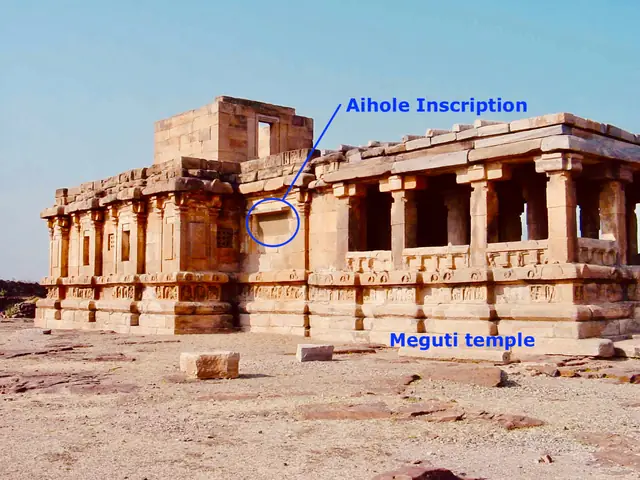
Pulakeshin II took the throne around 610 after a civil war with his uncle Mangalesha. The poet Ravikirti, a Jain, wrote his praise in 634 on the Meguti temple at Aihole, and that inscription is our main record: Harsha of Kannauj, lord of the north, came south and lost his joy when his elephants fell in battle on the Narmada. Xuanzang, who passed through his kingdom, wrote that Pulakeshin’s men were proud and fearless in war. In 642 the Pallava Narasimhavarman I took and burned Vatapi, and Pulakeshin died in that war. His son Vikramaditya I won the city back.
03Pattadakal and the end
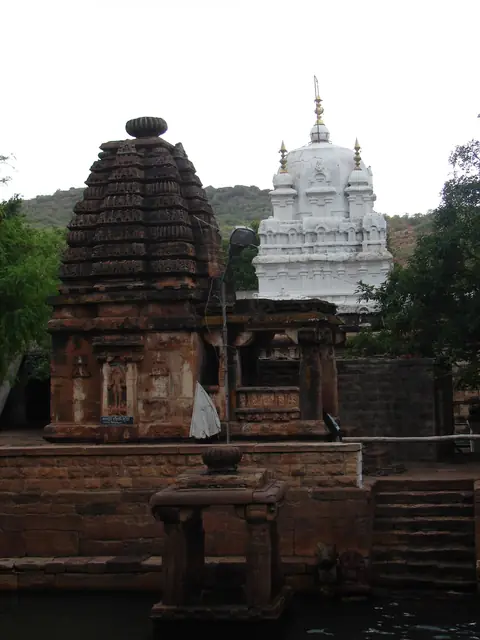
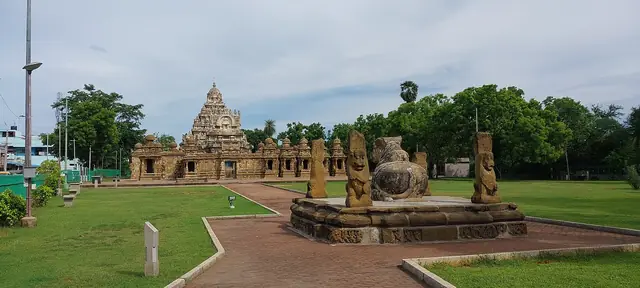
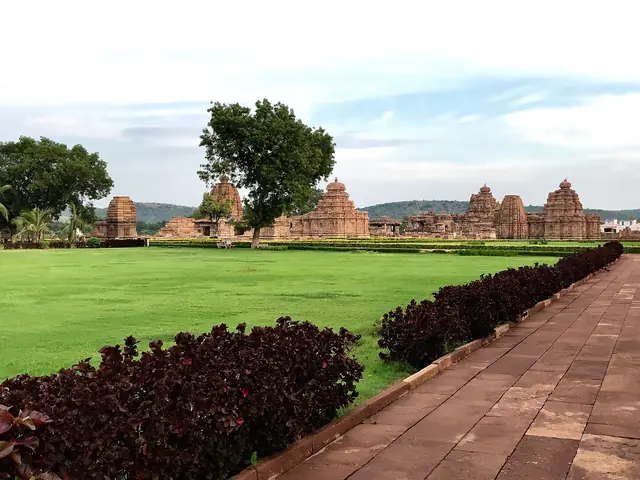
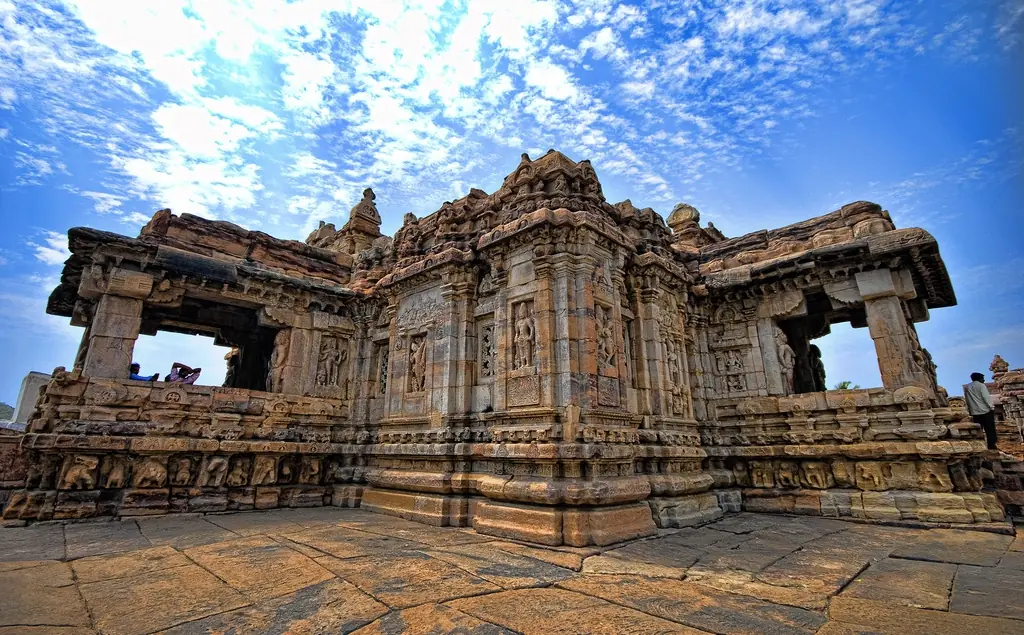
Vikramaditya II entered Kanchipuram as a victor, and instead of looting the Kailasanatha temple he gave gifts to it, a fact recorded in a Kannada inscription on the temple itself. At home his queen Lokamahadevi built the Lokeshvara temple, now called Virupaksha, at Pattadakal to mark the victory, and her sister Trailokyamahadevi built the Mallikarjuna beside it. Pattadakal was where the Chalukyas were crowned, and its temples stand in both the northern and the southern style side by side. Around 753 Dantidurga, a Rashtrakuta feudatory, overthrew Kirtivarman II and the Badami line came to an end.
The rulers
- 1Pulakeshin IFortified Vatapi; performed the Ashvamedhac. 543–566
- 2Kirtivarman Ic. 566–597
- 3MangaleshaDedicated Badami Cave 3 in 578c. 597–609
- 4Pulakeshin IIDefeated Harsha on the Narmadac. 610–642
- 5Vikramaditya IWon Vatapi back from the Pallavasc. 655–680
- 6Vinayadityac. 680–696
- 7Vijayadityac. 696–733
- 8Vikramaditya IIEntered Kanchi; endowed the Kailasanatha templec. 733–746
- 9Kirtivarman IIOverthrown by Dantidurgac. 746–753
What they left
- The Badami cave temples, Cave 3 dated 578 CE
- Virupaksha and Mallikarjuna temples, Pattadakal
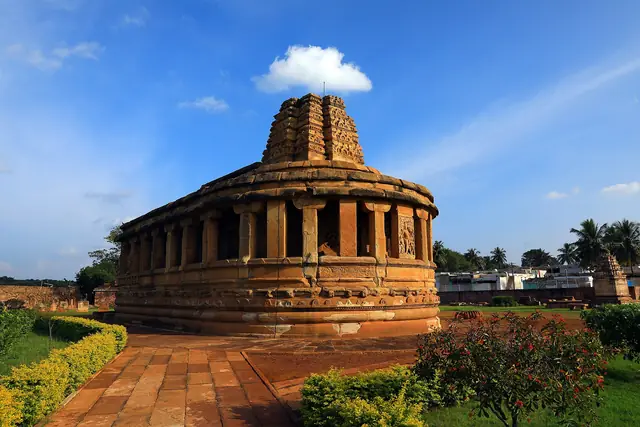
- The temples of Aihole, among them the Durga and Meguti temples
- The Aihole inscription of Ravikirti, 634 CE