Cite
MLA
“Xuanzang (Hiuen Tsang).” Hindu History, 2026, https://www.hinduhistory.in/sakshi/xuanzang/. Accessed .
APA
Hindu History. (2026). Xuanzang (Hiuen Tsang). Retrieved , from https://www.hinduhistory.in/sakshi/xuanzang/
in all the highways of the towns and villages throughout India he erected hospices, provided with food and drink, and stationed there physicians, with medicines for travellers and poor persons round about, to be given without any stint
The route
What defines it
- 01
About five years at Nalanda under Shilabhadra
- 02
Harsha’s assemblies at Kanyakubja and Prayag, 643
- 03
Pulakeshin II’s Maharashtra unconquered by Harsha
- 04
Alphabet of 47 letters; education in five vidyas
- 05
Buddhist lens; temples treated briefly
01Out of China without leave
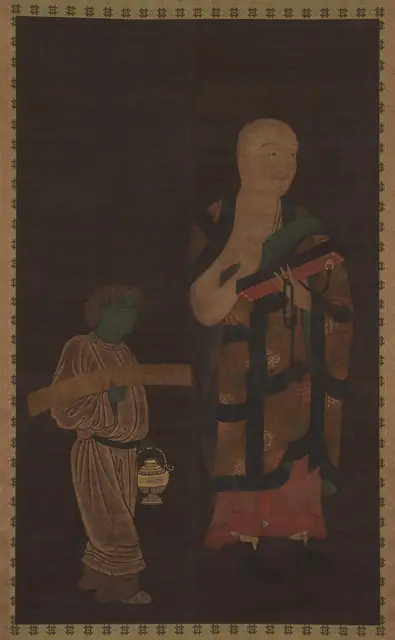
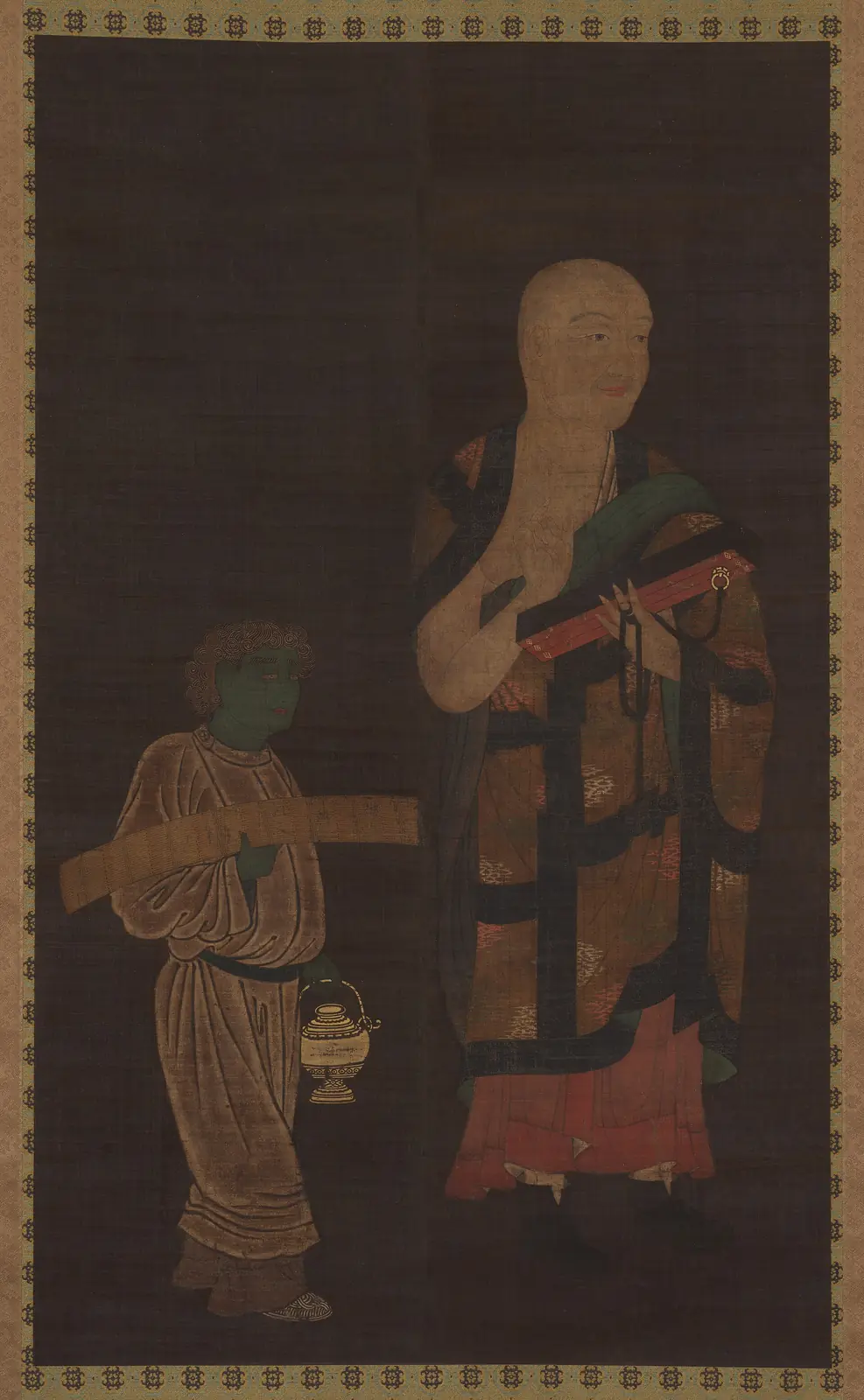
Xuanzang left Chang’an in 629 against an imperial ban on travel, crossed the deserts and the Tian Shan, and entered the Indian world through Kapisa and Gandhara around 630. He spent two years in Kashmir reading with its teachers, then moved through Mathura, Thanesar and Kanyakubja to the Buddhist holy places of the Gangetic plain. At Nalanda he became the pupil of the aged abbot Shilabhadra and stayed about five years. After that he went round the whole of Bharat: east to Tamralipti, down the coast through Kalinga and Andhra to Kanchipuram, the Pallava capital, then up the west through Maharashtra, Valabhi and Sindh. He reached Chang’an again in 645 with hundreds of manuscripts, and spent the rest of his life translating them.
02Harsha and the assemblies
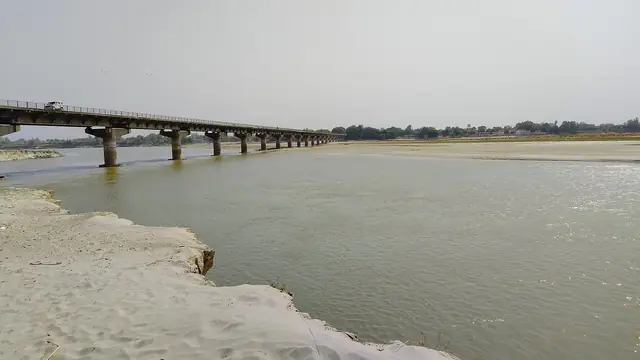
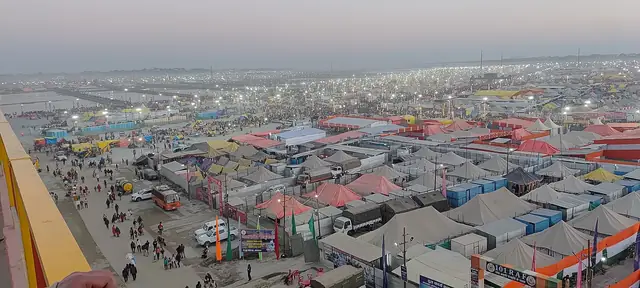
Xuanzang describes Harsha, whom he calls Shiladitya, as a king who divided his day into three parts, one for government and two for religious works, and travelled among his people in a moving camp except in the three months of the rains. He says Harsha built hospices with food, drink and physicians along the roads, and held a great assembly every five years at which he gave away his treasury. In 643 he took part in two of them: a debate at Kanyakubja before the king and many vassals, and the great distribution at Prayag, where the Ganga and Yamuna meet. He also met Bhaskaravarman of Kamarupa, who had first invited him east. Banabhatta’s Harshacharita and Harsha’s own copper plates of Banskhera and Madhuban fill out the same king from inside.
03Nalanda and the land of the Brahmins
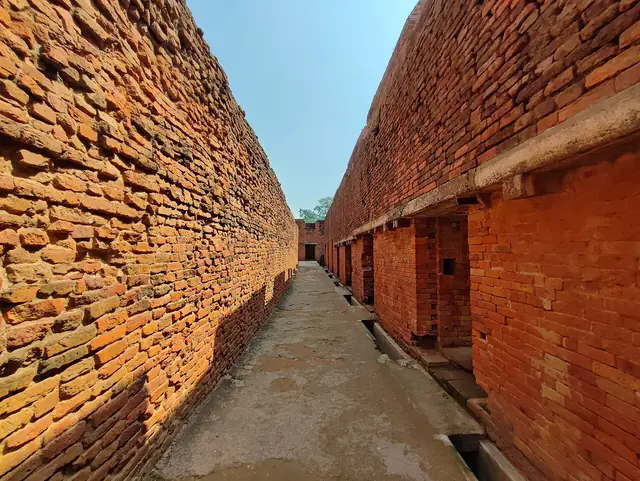
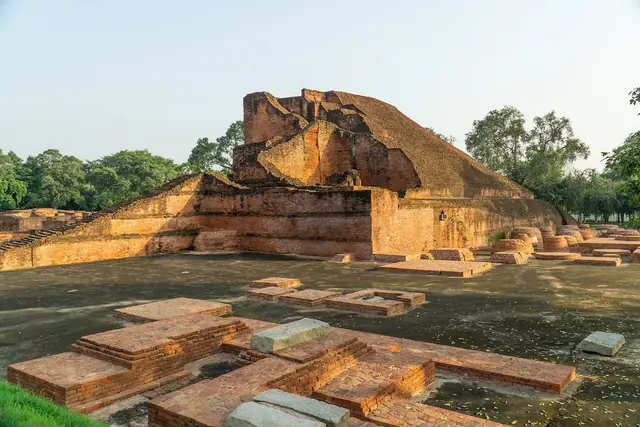
His description of India opens with the name Indu, the moon, and a long account of the people: the four varnas, the purity rules of the Brahmins, bathing before worship, an alphabet of forty-seven letters, provincial officials who kept written records of good and bad events, and teaching that begins with a first book of twelve chapters and moves on, from the age of seven, to the five vidyas of grammar, crafts, medicine, logic and inner knowledge. Brahmins, he says, study the four Vedas. His Nalanda is a cluster of monasteries built by a line of kings beginning with Shakraditya, and his biographer Huili adds the famous picture of learned debate there from morning to night. Excavations by the Archaeological Survey since 1915 have uncovered rows of monasteries and temples on the scale he describes.
04Testing the pilgrim
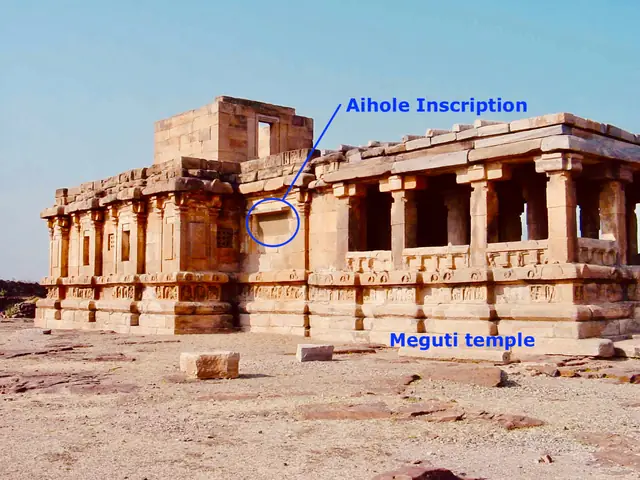
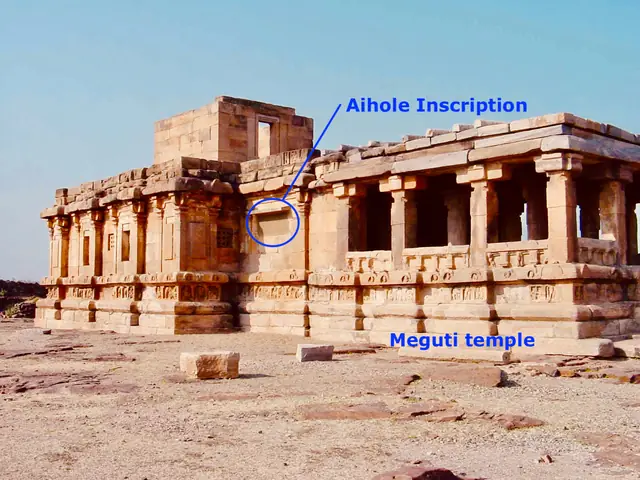
Two checks show how good he can be. He says Harsha had conquered from east to west but the people of Maharashtra under Pulakeshin alone had not submitted; Ravikirti’s Aihole inscription of 634 says the same from the Chalukya side, punning that Harsha’s harsha, his joy, melted away in defeat. And his account of Harsha’s gifts matches the copper plates. His bias is just as clear. He was a Mahayana monk, and he made Harsha more of a Buddhist than the king’s own plates, which call him paramamaheshvara, a supreme devotee of Mahadev. He counts monasteries and monks in each country with care but passes over temples quickly, and his tales of miracles at stupas are a pilgrim’s faith, not a survey.
In the texts
- Da Tang Xiyu ji, Record of the Western Regions (646 CE)
- Huili, Life of Xuanzang
- Translations by Samuel Beal (1884) and Thomas Watters (1904–05)