Cite
MLA
“When was the Mahabharata war?.” Hindu History, 2026, https://www.hinduhistory.in/vimarsha/mahabharata-war-date/. Accessed .
APA
Hindu History. (2026). When was the Mahabharata war?. Retrieved , from https://www.hinduhistory.in/vimarsha/mahabharata-war-date/
What defines it
- 01
Kali Yuga begins 3102 BCE (Aryabhata)
- 02
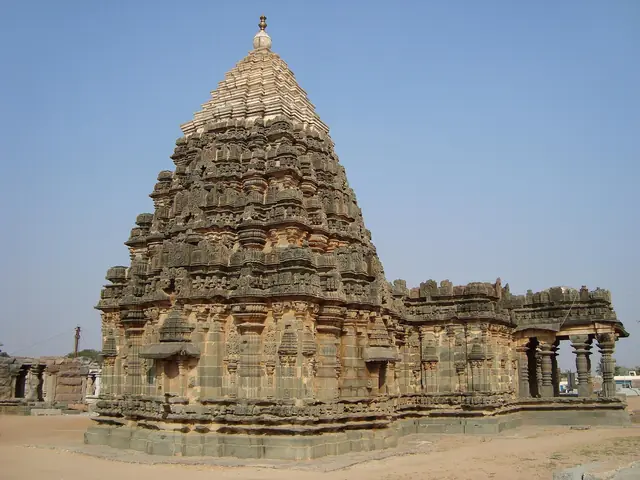
Aihole: 3,735 years after the Bharata war = Shaka 556
- 03
Mausala Parva: thirty-six years after the war
- 04
Planetarium dates from 3067 BCE to 1793 BCE and later
- 05
Painted Grey Ware and the flood at Hastinapura
01What the Itihasa gives
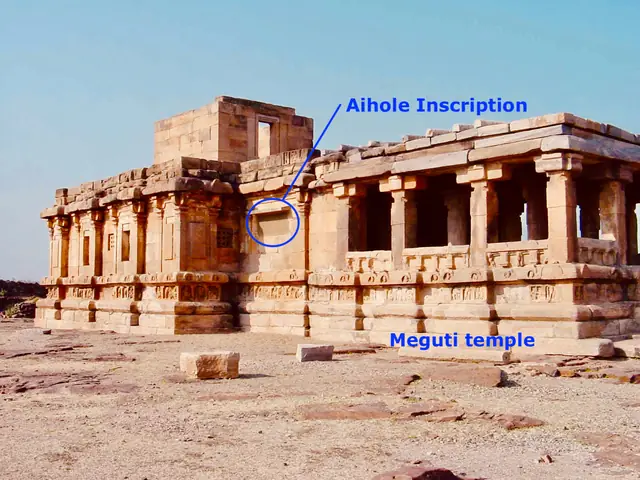
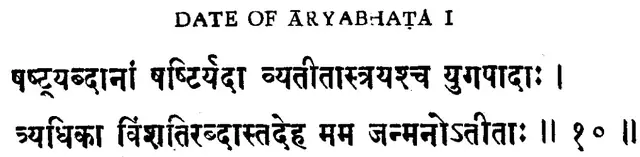
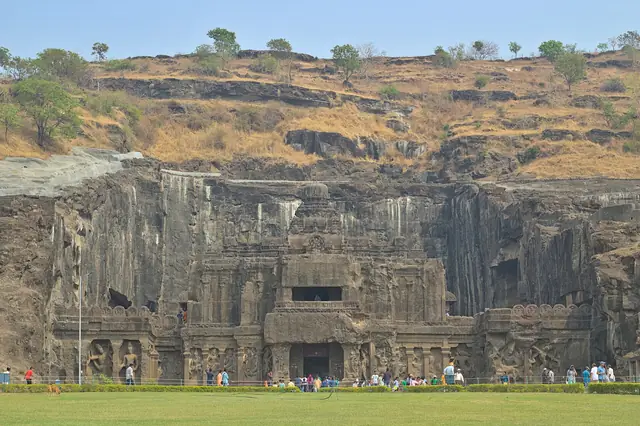
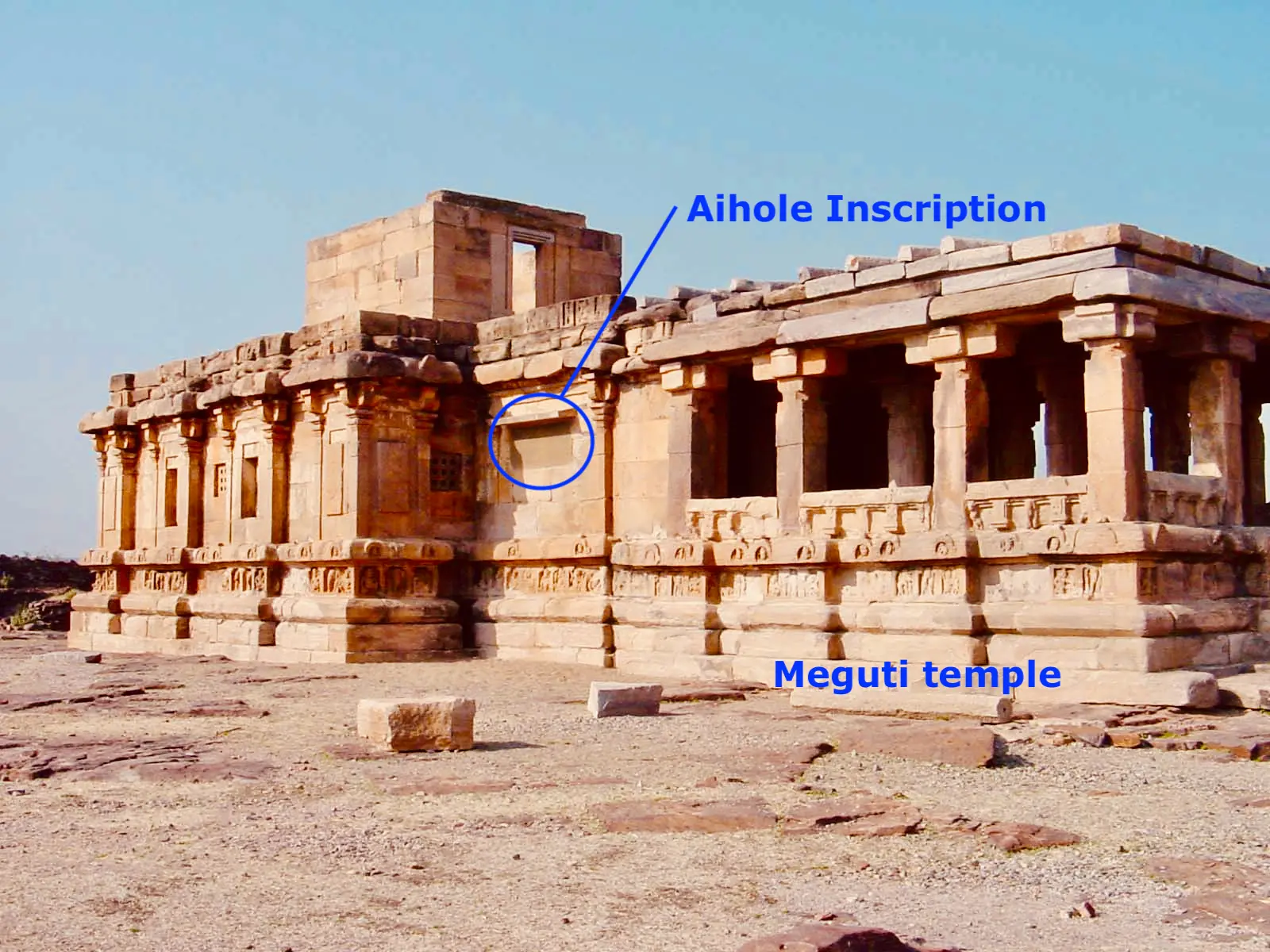
The Udyoga and Bhishma Parvas describe planets, eclipses and nakshatras around the war, and Bhishma lies on his bed of arrows waiting for the sun to turn north, uttarayana, before he leaves his body. The Mausala Parva opens in the thirty-sixth year after the war, when the Yadavas destroy one another, and tradition holds that the Kali Yuga began when Shri Krishna left the world. Aryabhata, writing in 499 CE, fixed the start of the Kali Yuga at 3102 BCE. In 634 CE the Chalukya court poet Ravikirti dated his inscription at Aihole by two eras at once: 3,735 years after the Bharata war, and Shaka 556. These are the first fixed points of the whole debate.
02Why the answers differ
Each school trusts a different kind of evidence. Some trust the yuga reckoning, others the astronomical verses, others the king lists of the Puranas, others the spade. The sky descriptions in the epic do not all agree with one another, so an astronomer must choose which to follow, and planetarium software has produced dates from the fourth to the second millennium BCE. The Puranic lists count reigns from the war to the Nanda kings, and their totals vary between Puranas. Archaeology can say when the towns named in the epic, Hastinapura, Indraprastha, Kurukshetra, were lived in, but it cannot find a battle fought on an open plain.
The positions
The Kali reckoning: c. 3138 BCE
Aryabhata’s yuga reckoning; the Aihole inscription (634 CE); the panchang tradition
If the Kali Yuga began in 3102 BCE with Shri Krishna’s departure, and that came thirty-six years after the war, the war falls near 3138 BCE. Ravikirti’s inscription at Aihole, cut in 634 CE, counts 3,735 years from the Bharata war, which puts the war at the Kali epoch itself; so by the seventh century this reckoning was public, official and carved in stone. Every Hindu panchang still counts the Kali years from 3102 BCE, and 2026 CE is Kali 5127.
Aihole places the war at the Kali epoch itself, not thirty-six years before it, so even the tradition’s witnesses differ by a generation. Aryabhata’s epoch is a calculated moment when the planets were held to be in conjunction, which some historians think astronomers fixed rather than inherited. Archaeology has not yet found towns of that age in the Kuru country.
Astronomical reconstructions: 3067 BCE, 1793 BCE and others
B. N. Narahari Achar (3067 BCE), Ashok Bhatnagar (1793 BCE), R. N. Iyengar (c. 1493–1443 BCE)
These researchers take the epic’s descriptions of planets, eclipses and solstices and search the sky backwards with planetarium software. Narahari Achar, a physicist at the University of Memphis, chose the references he judged most reliable and argued for 3067 BCE, a year others had also reached. Ashok Bhatnagar, a retired astronomer of the India Meteorological Department, traced solstice and eclipse references within a thousand-year window and proposed that the war began in October 1793 BCE. Each claims a sky that matches the text.
The results disagree by more than a thousand years, because the verses conflict and each researcher must choose which to trust. Subhash Kak has noted that astronomical dates are subjective and may rest on verses added later. A sky that fits some verses does not prove those verses were observations rather than calculation or poetry.
King lists and the spade: second to early first millennium BCE
F. E. Pargiter (Ancient Indian Historical Tradition, 1922); B. B. Lal (Hastinapura excavation, 1950–52)
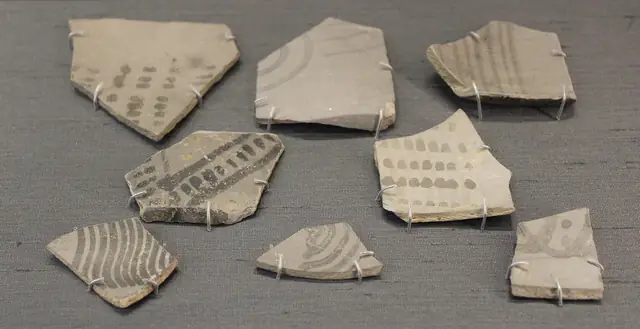
The Puranas count the kings of Magadha from the war to the Nandas, and read as a span of about a thousand years before the Nanda dynasty they give a war near 1400 BCE; Pargiter, using generations and average reigns, came later still. B. B. Lal dug Hastinapura and found Painted Grey Ware, which he dated about 1100–800 BCE, and a flood layer that matches the Puranic account of the Ganga carrying away the city in Nichakshu’s reign. He argued that around 3000 BCE none of the epic’s sites was yet settled.
The Puranas disagree with one another on the numbers, and average reign lengths are assumptions. Painted Grey Ware shows when these towns were lived in, not when a war was fought, and Lal himself called his conclusions provisional. A war remembered in the Itihasa could be older than the earliest layer yet dug.
An inscription or record from before Ashoka that counts years from the war; dated excavation at Kurukshetra or Indraprastha that reaches a level matching the epic; or an agreed, published method for choosing among the epic’s astronomical verses. Until then the Kali epoch of 3102 BCE remains the reference point that Indian calendars actually use.
Great masters
In the texts
- Mahabharata (Bhishma, Udyoga and Mausala Parvas)
- Aryabhatiya (499 CE)
- B. B. Lal (ed.), Historicity of the Mahabharata (2013)