01Vijayanarayana
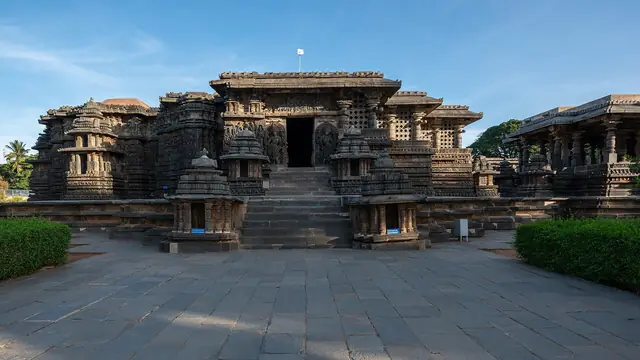
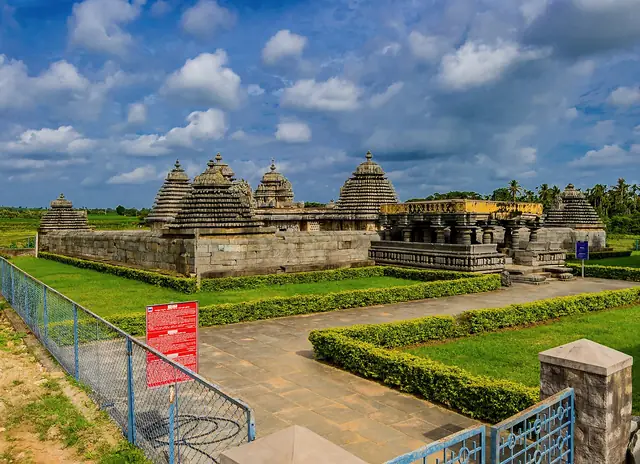
In 1116 the Hoysala king Bittideva, who took the name Vishnuvardhana, drove the Cholas out of Talakad. The next year he consecrated this temple to Vishnu as Vijayanarayana, the Narayana of victory, and the inscriptions say it was built on the guidance of his acharya. The murti is a standing Keshava, about 3.7 m high, with conch, discus, mace and lotus. His queen Shantala Devi, celebrated as a dancer, is remembered in the bracket figures, and nearby is the Kappe Chennigaraya shrine that tradition gives to her. The temple has been in unbroken worship, with Vijayanagara gifts and Mysore patronage later.
02Madanikas
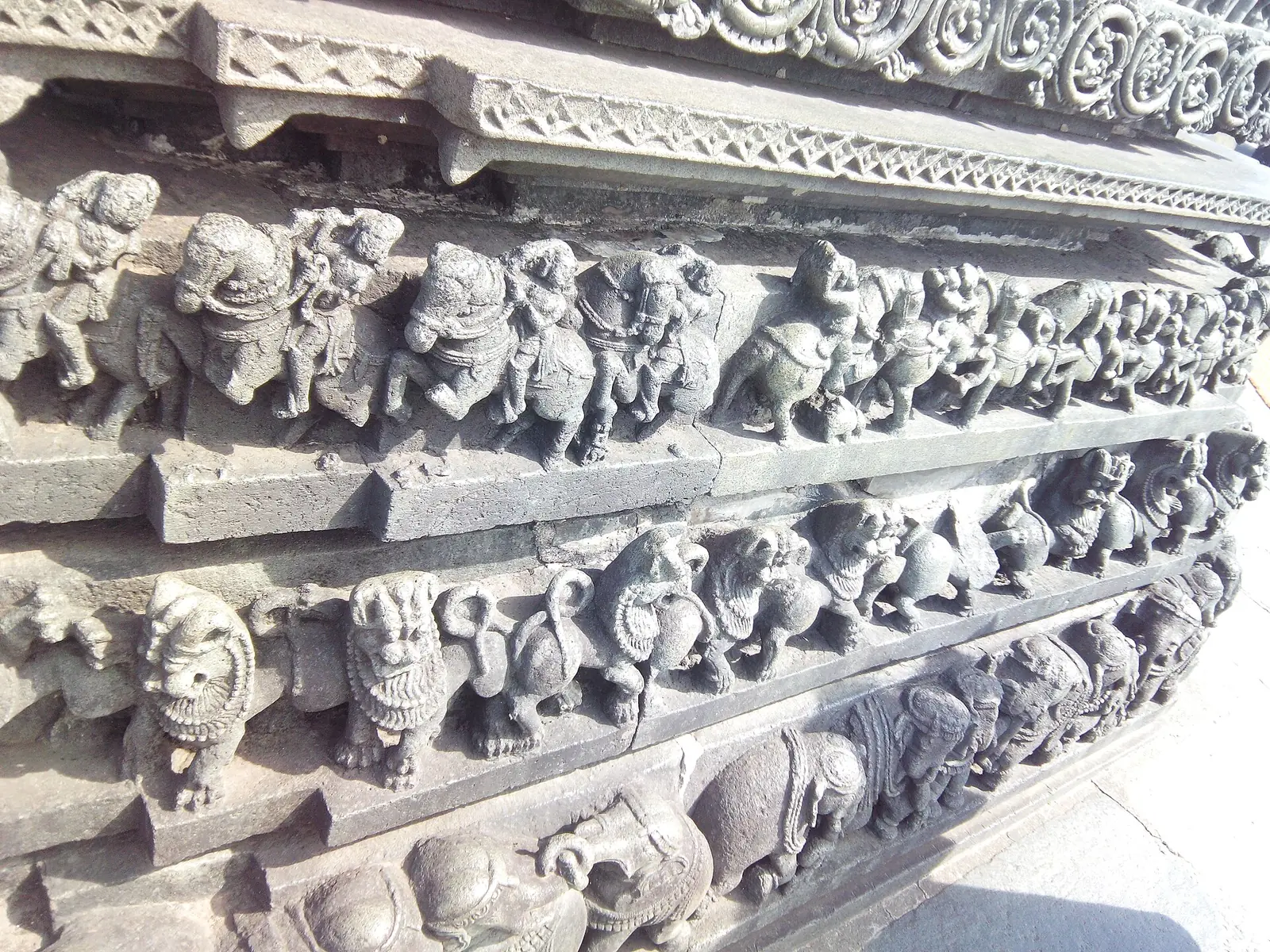
Under the eaves of the outer wall stand the madanikas, bracket figures of women carved in soapstone, thirty-eight outside and four within. One looks into a mirror, one plays a drum, one has just shot a bird, one wrings water from her hair after bathing. The walls below run with friezes of elephants, lions, horsemen and scenes from the Ramayana, Mahabharata and Puranas, and the lathe-turned pillars inside, especially the Narasimha pillar, show how far Hoysala craftsmen took the soft stone, which hardens in the air after carving. The tall entrance gopuram is a later Vijayanagara addition. In 2023 UNESCO listed Belur with Halebidu and Somanathapura as the Sacred Ensembles of the Hoysalas.
The life of this place
- 1116Vishnuvardhana defeats the Cholas at Talakad.
- 1117The temple is consecrated to Vijayanarayana.
- 2023UNESCO lists the Sacred Ensembles of the Hoysalas.
Belur is 16 km from Halebidu and about 40 km from Hassan. The temple is in worship; guides at the gate explain the madanikas.