Cite
MLA
“Kalinga: the deulas of Odisha.” Hindu History, 2026, https://www.hinduhistory.in/sthapatya/kalinga-style/. Accessed .
APA
Hindu History. (2026). Kalinga: the deulas of Odisha. Retrieved , from https://www.hinduhistory.in/sthapatya/kalinga-style/
What defines it
- 01
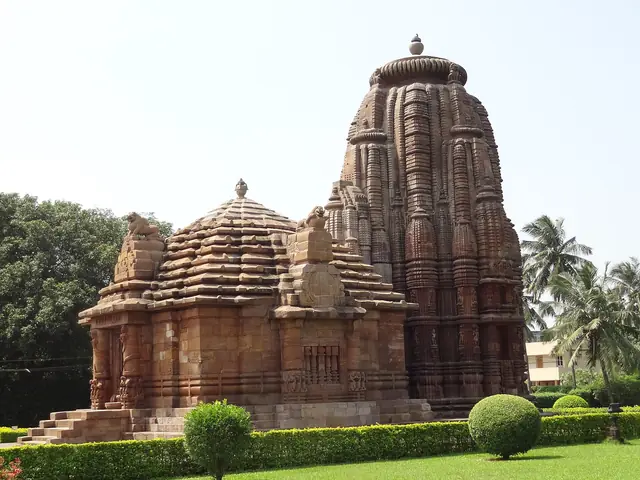
Rekha deula: curved tower over the sanctum
- 02
Pidha deula: tiered pyramid over the jagamohana
- 03
Khakhara deula: barrel-vaulted shrine of the Devi
- 04
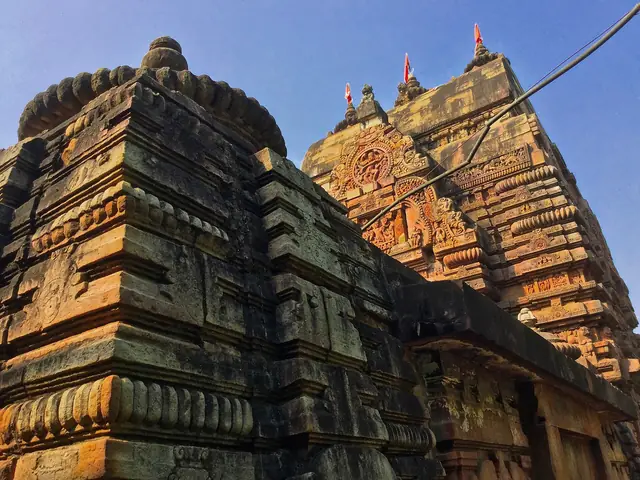
Bada, gandi, mastaka: wall, tower body, head
- 05
Deula, jagamohana, natamandira, bhoga-mandapa on one axis
01Three kinds of deula
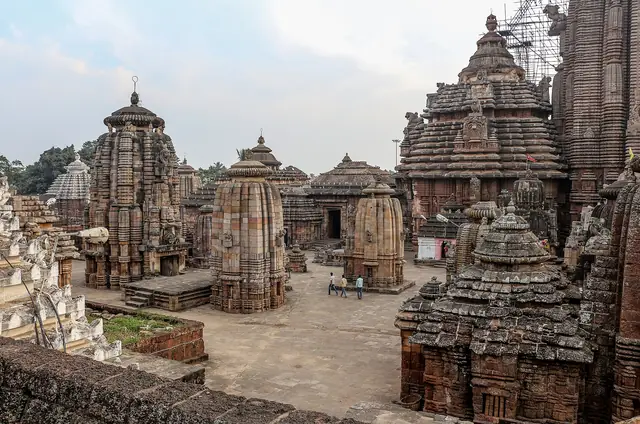
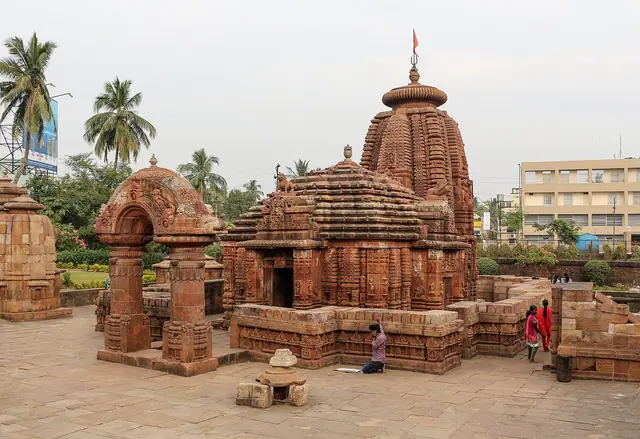
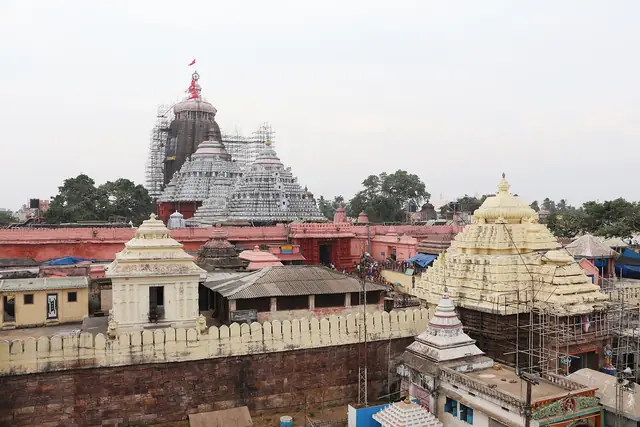
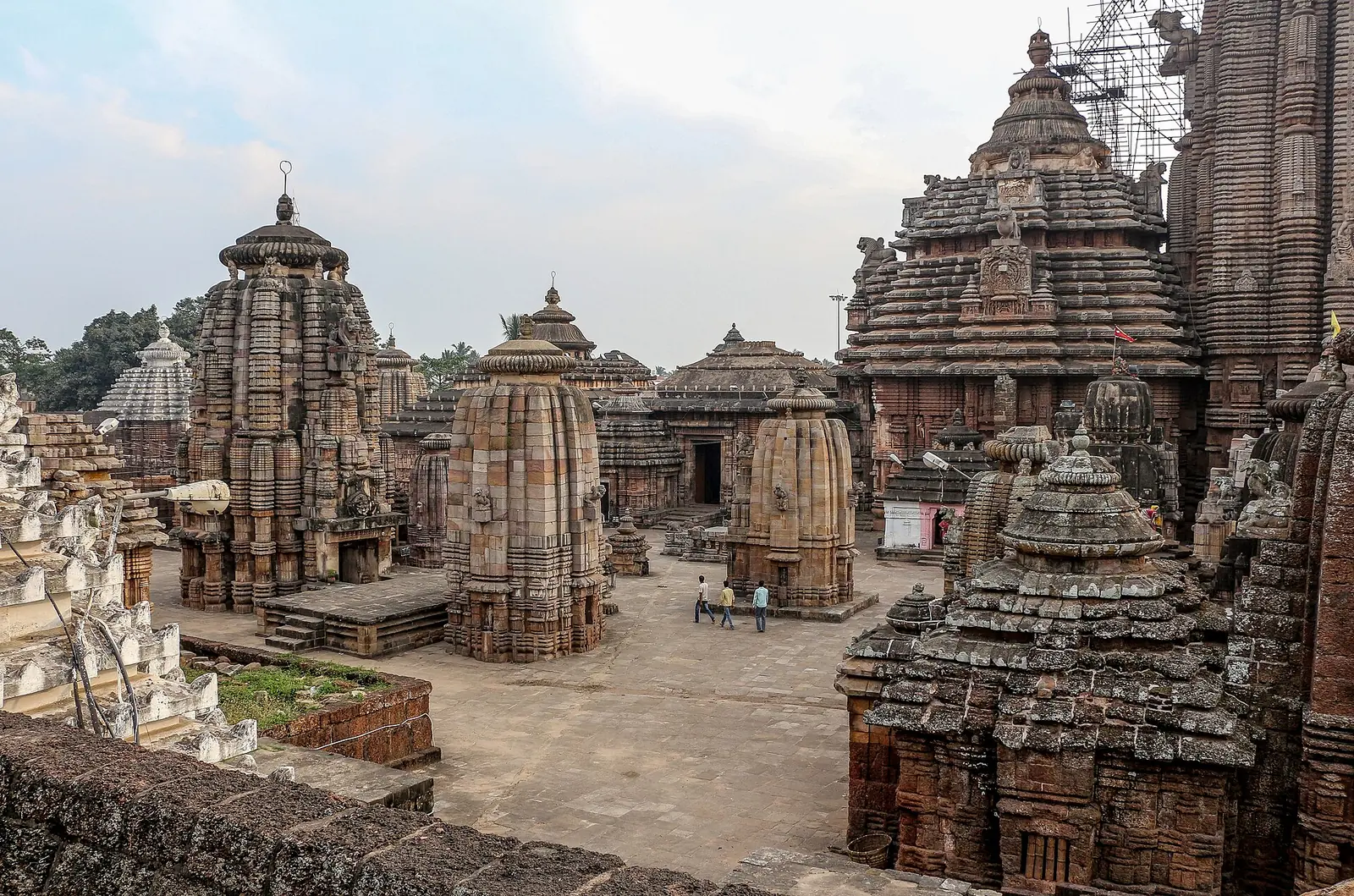
In Odisha the temple is a deula, and the builders knew three kinds. The rekha deula has the tall curved tower and houses the sanctum, mostly of Vishnu, Surya and Shiva. The pidha deula has a pyramid of horizontal tiers and roofs the halls in front. The khakhara deula, with an oblong barrel-vaulted top, is used mainly for Chamunda and Durga. A full temple is a line of buildings on one axis. At the Lingaraja in Bhubaneswar there are four: the deula over the sanctum, the jagamohana or assembly hall, the natamandira for dance, and the bhoga-mandapa for offerings, each lower than the one behind it, so the roofs climb towards Bhagwan.
02Foot, body and head
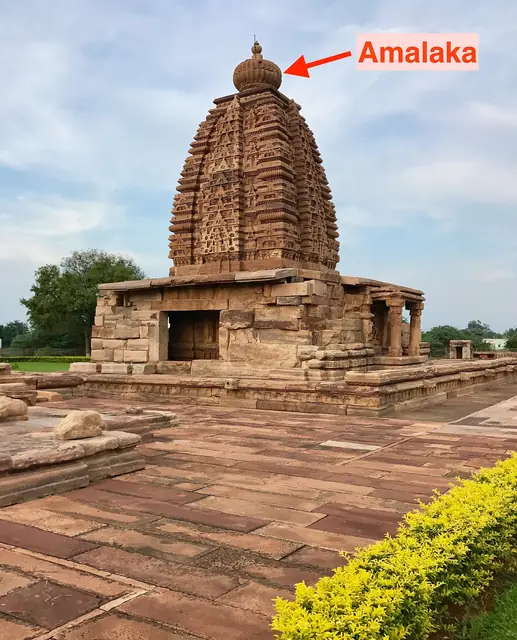
Odia builders speak of the deula as a body. Above the optional platform, the pishta, comes the bada or wall, then the gandi or tower body, then the mastaka, the head. In early temples the bada has three parts, pabhaga, jangha and baranda; later ones have five, with the jangha split by a band of mouldings. The mastaka is a stack of its own: the beki or neck, the great ribbed amla or amalaka, the khapuri, the kalasa and the ayudha, the emblem of the deity. In Odisha the amalaka is often huge and is held up by four seated lions. The texts name the team: the patron, the mukhya sthapati or chief architect, the sutragrahi, masons and sculptors.
03Bhubaneswar to Konark
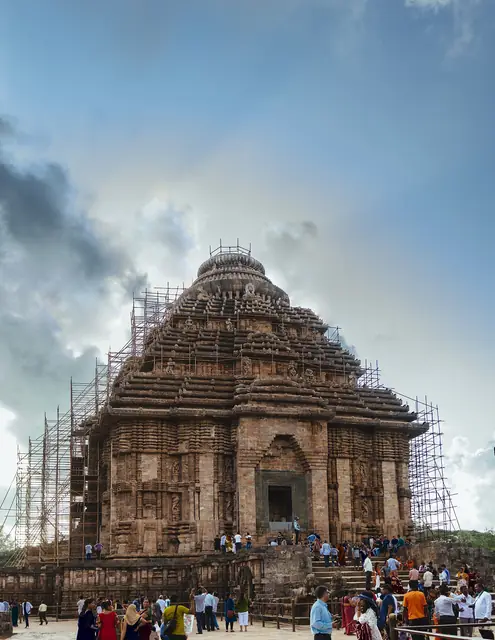
The Parashurameshvara at Bhubaneswar, of the 7th century and the Shailodbhava age, is one of the oldest standing temples of the line, its tower squat and its jagamohana a simple hall. The Mukteshvara, Rajarani and Vaital deulas of the same city carry the line forward. The Lingaraja reached its present form in the last decade of the 11th century under the Somavamshis, though parts may be older; its tower is given as 45 metres in some accounts and 55 in others. In the 13th century Narasimhadeva I of the Eastern Gangas built the Surya temple at Konark as a stone chariot on wheels. Its jagamohana, a pidha deula, still stands.
Great masters
In the texts
- Shilpa Prakasha of Ramachandra Kaulachara
- Shilpa Chandrika