Cite
MLA
“Hoysala: the star-plan temples of soapstone.” Hindu History, 2026, https://www.hinduhistory.in/sthapatya/hoysala-style/. Accessed .
APA
Hindu History. (2026). Hoysala: the star-plan temples of soapstone. Retrieved , from https://www.hinduhistory.in/sthapatya/hoysala-style/
What defines it
- 01
Star-shaped (stellate) jagati platform
- 02
Chloritic schist (soapstone) carving
- 03
Lathe-turned pillars with madanika brackets
- 04
Horizontal friezes below niches of large devata images
- 05
Signed sculpture
01Star platform, zigzag wall
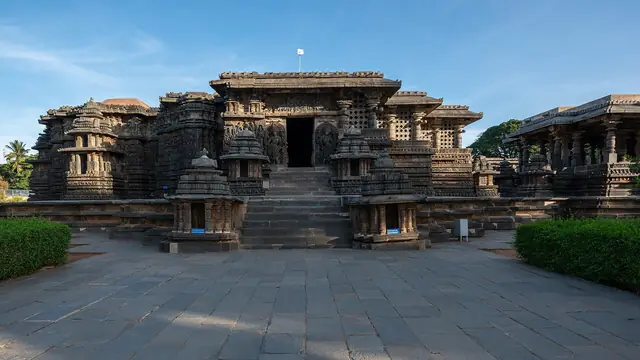
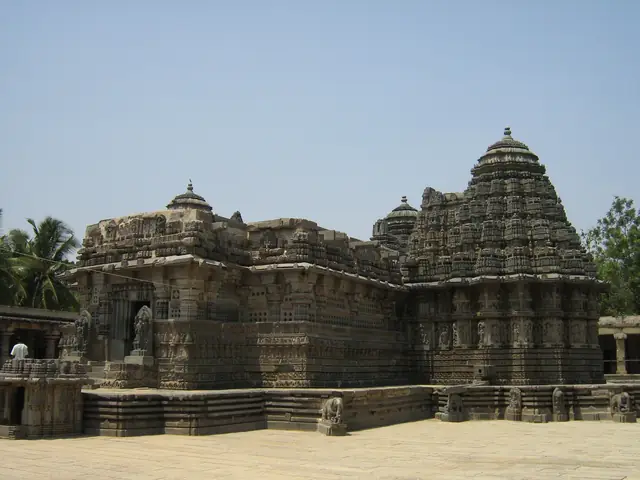
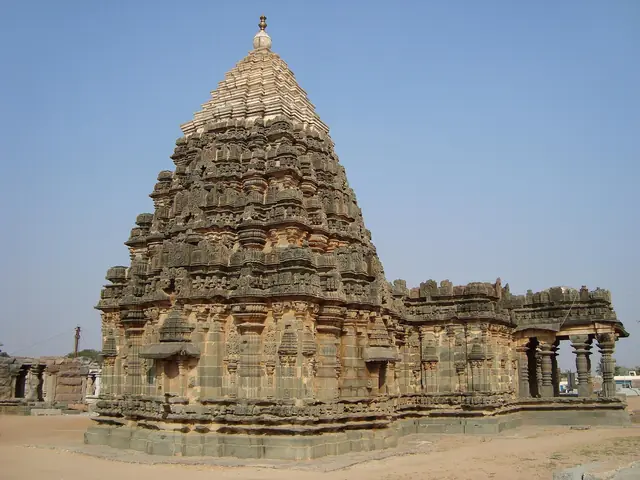
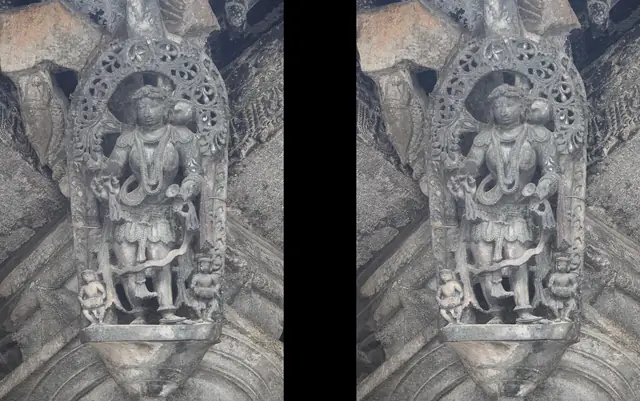
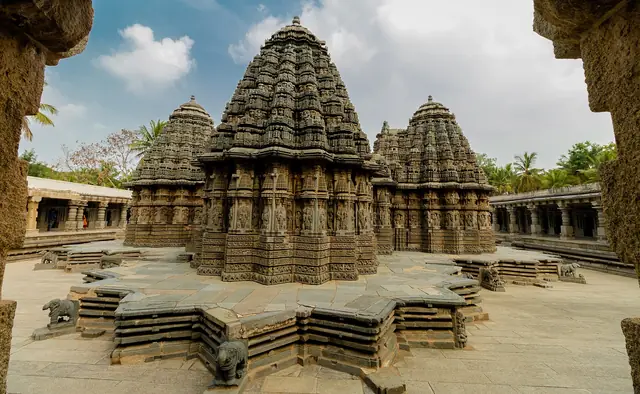
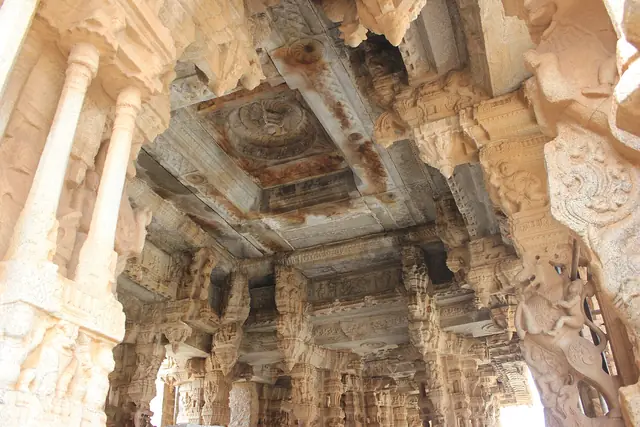
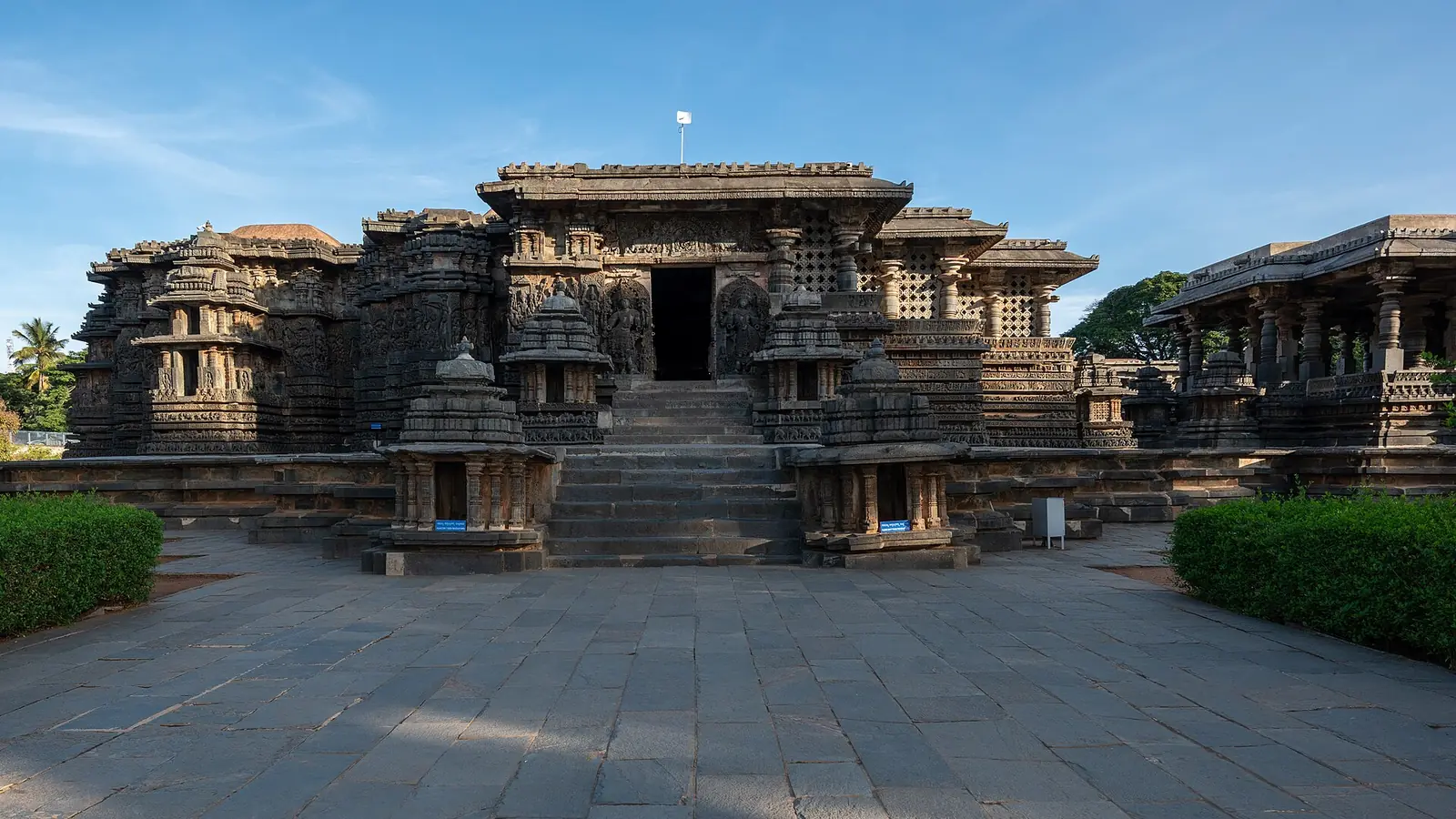
The Hoysala temple stands on a jagati, a raised platform wide enough to walk around, and that platform follows the star shape of the shrine, so that the pilgrim's path zigzags with the walls. The material is chlorite schist, the soft greenish-grey stone called soapstone, which takes the finest detail. Inside, the pillars were turned on a lathe into bell and ring shapes with 16, 32 or 64 points, no two quite alike, and their brackets carry madanikas, the celestial dancers. Hardy places the style within the Karnata Dravida tradition of the Deccan, and its towers are often shaped by Nagara and bhumija ideas.
02Belur, Halebidu, Somanathapura
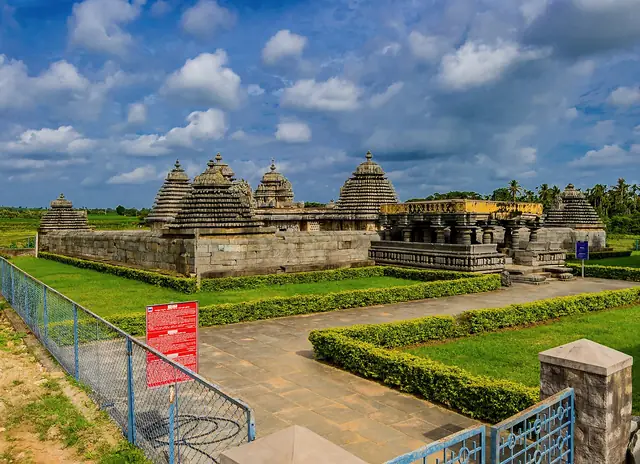
King Vishnuvardhana had the Chennakeshava temple at Belur built for Bhagwan Vishnu, dated 1117. The Hoysaleswara at Halebidu was raised for Mahadev from about 1120 under the same king, its chief architect named in the stone. The Keshava temple at Somanathapura belongs to the reign of Narasimha III; the date is usually given as 1268, though some writers say 1258. In 2023 UNESCO inscribed the three as the Sacred Ensembles of the Hoysalas. Some three hundred Hoysala temples are said to survive in Karnataka, though estimates of the documented number differ.
03Names in the stone
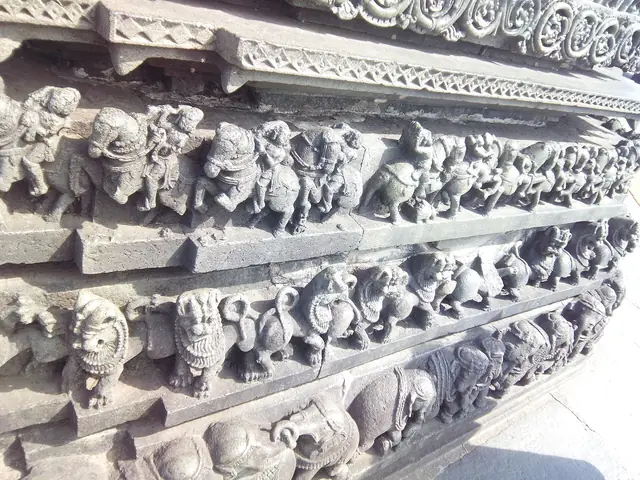
The Hoysala sculptors signed their work, and so we know some of them by name. Dasoja of Balligavi and his son Chavana are named as architects at Belur. Kedaroja was chief architect of the Hoysaleswara at Halebidu. At Somanathapura the master Ruvari Mallitamma carved and signed many panels with a short mark, 'Malli' or 'Ma'. These signed friezes are often called the first known signed artworks in India. Around the walls run horizontal friezes, and above them, in niche after niche, stand the large images of the devatas, each carved to be seen at arm's length by a pilgrim walking the jagati.