Cite
MLA
“Bengal: temples of brick and terracotta.” Hindu History, 2026, https://www.hinduhistory.in/sthapatya/bengal-terracotta-style/. Accessed .
APA
Hindu History. (2026). Bengal: temples of brick and terracotta. Retrieved , from https://www.hinduhistory.in/sthapatya/bengal-terracotta-style/
What defines it
- 01
Chala roofs copying the curved thatch of the village hut
- 02
Jor-bangla: two do-chala huts joined
- 03
Ratna temples with one, five or more towers
- 04
Brick and laterite faced with terracotta panels
01The hut and the jewel
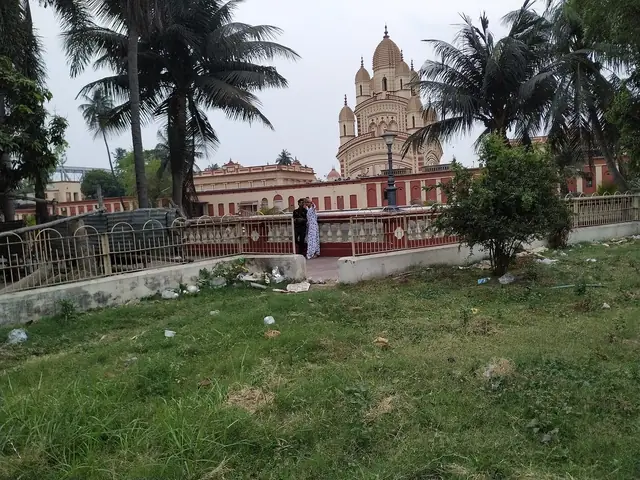
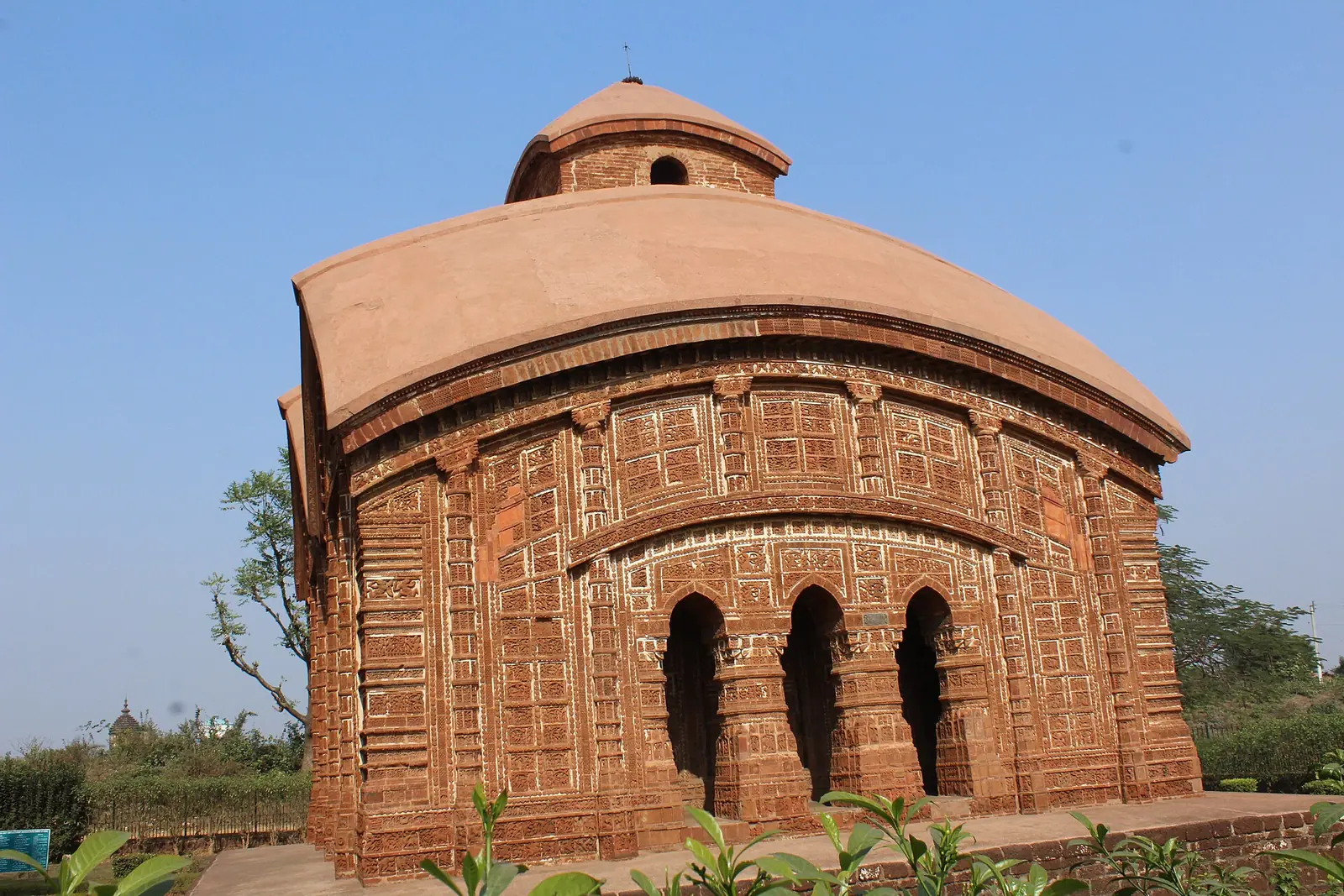
Bengal's builders took the shape of the village hut, its thatched roof curving down at the edges to throw off rain, and made it sacred. A temple with two such roof slopes is a do-chala; with four, a char-chala; with a small second roof on top, an at-chala. Join two do-chala huts side by side, one as porch and one as shrine, and you have the jor-bangla. The second family is the ratna, the jewel temple, crowned by one tower (ek-ratna), five (pancha-ratna) or more, a form that grew under the Malla kings of Mallabhum. A third type, the flat-roofed dalan, came later and took in European ideas in the 19th century.
02Bishnupur of the Mallas
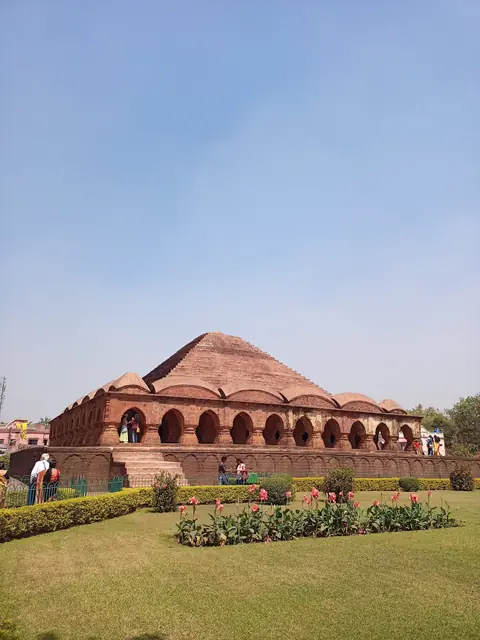
The Malla kings of Bishnupur were Vaishnavas, and in the 17th and 18th centuries, from Bir Hambir onward, they filled their capital with temples to Shri Krishna. They used the local laterite and brick, and wrapped the walls in terracotta tiles. The Rasmancha, an elongated pyramidal tower ringed by hut-shaped turrets, is counted the oldest of the brick temples. The Shyam Rai, a pancha-ratna temple, dates to about 1643. Raghunath Singha built the Keshta Rai, the great jor-bangla, in 1655, and the Madan Mohan temple followed in about 1694. Within a few streets stand all three Bengal forms, deul, chala and ratna.
03A wall of fired clay
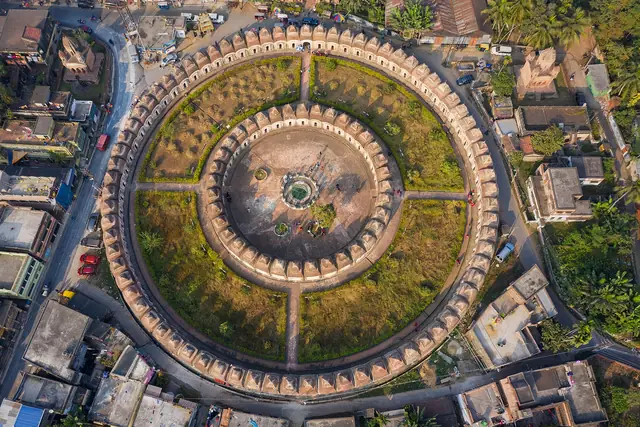
The terracotta panels are the glory of these temples. Each plaque was modelled in river clay, fired, and set into the brick face, so that a whole wall becomes a picture book. On the Bishnupur temples the scenes of the Mahabharata unfold panel by panel, and the Vaishnava kings had Shri Krishna's leelas set beside them. Brick weathers and plaques fall away, so these temples are more fragile than stone ones, and every lost tile is a lost page. The same idiom spread across Bengal, to the 108 Shiva temples of Kalna set in two rings, and to countless village temples in Bankura, Birbhum, Hooghly and across today's Bangladesh.