01Agastya and Vatapi
The Mahabharata’s Vana Parva tells of two asura brothers, Ilvala and Vatapi, who killed Brahmins by a trick: Vatapi became a goat, Ilvala cooked him and fed him to a guest, then called him back, and Vatapi burst out of the guest’s belly. Agastya ate the meal and digested Vatapi before he could be called. The town takes the asura’s name and the lake the sage’s. In 543 CE Pulakeshin I, by an inscription cut on the rock, fortified the hill and performed an ashvamedha. His son Kirtivarman and then Mangalesha cut the caves, and Mangalesha’s inscription in Cave 3 is dated 578 CE.
02Four caves and a Pallava raid
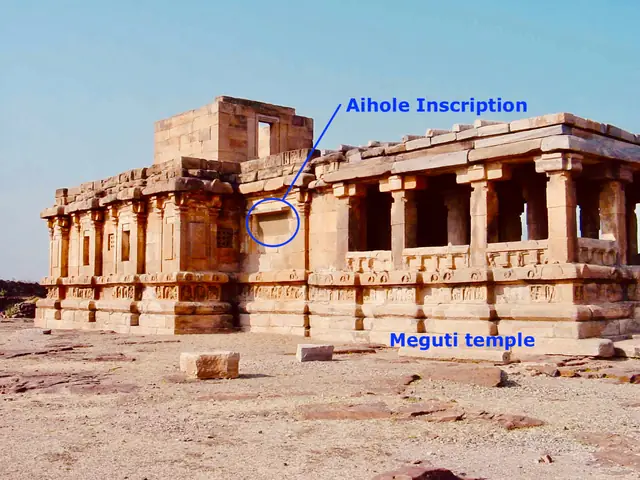
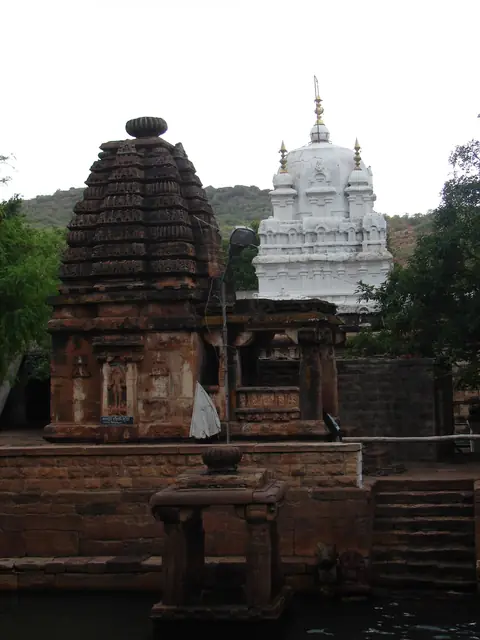
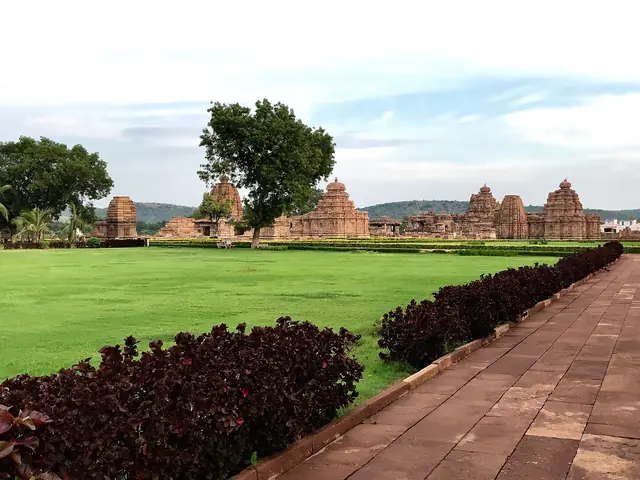
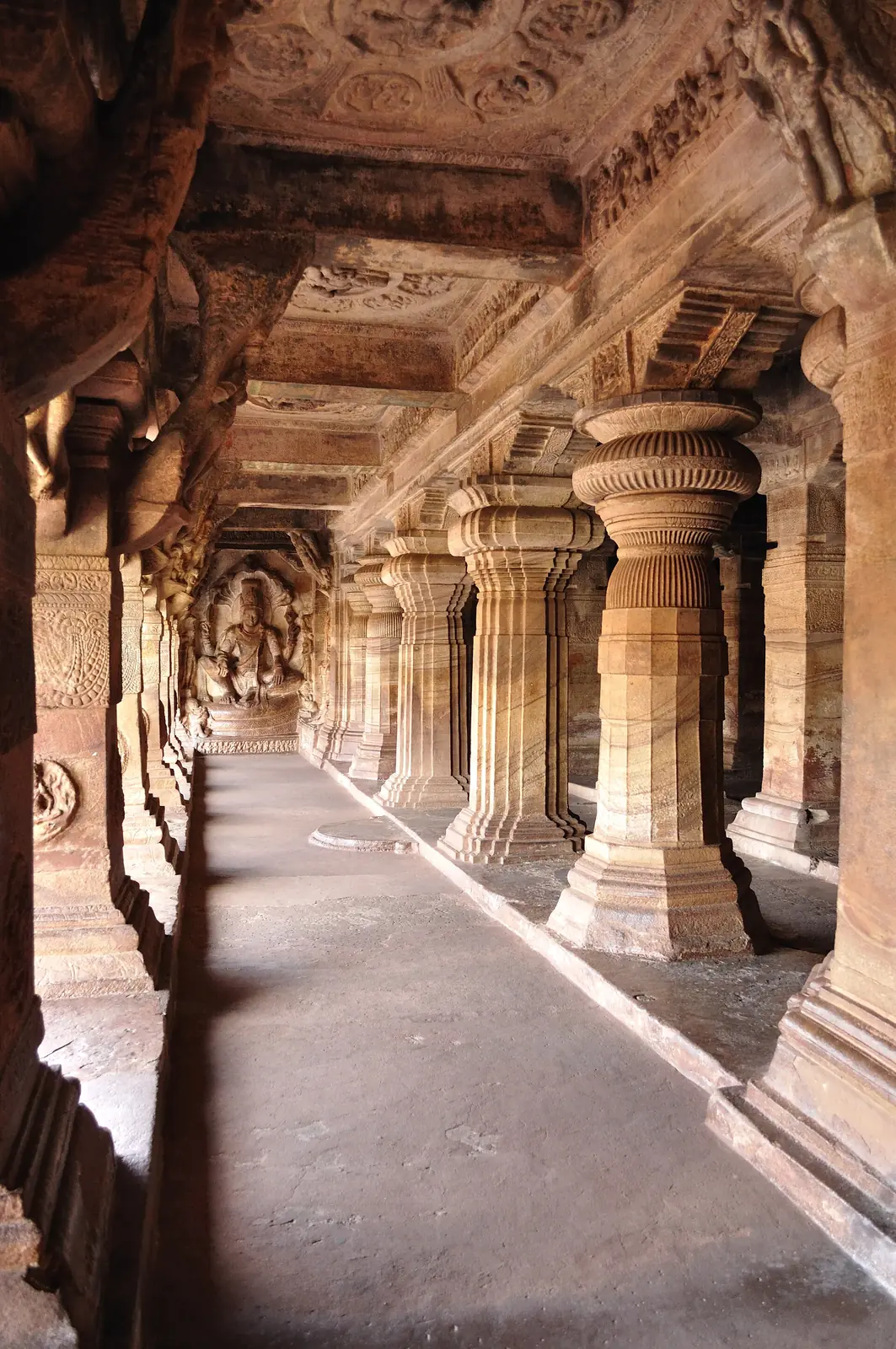
Cave 1 is Shaiva, with an eighteen-armed Nataraja beside the entrance. Caves 2 and 3 are Vaishnava: Trivikrama striding over the worlds, Varaha lifting Bhudevi, Vishnu seated on Ananta, Narasimha. Cave 4 is Jain, with Parshvanatha and Bahubali. In 642 the Pallava king Narasimhavarman I avenged his father, took Vatapi and killed Pulakeshin II; he took the title Vatapikonda and left an inscription on a rock here. Vikramaditya I won the city back about 655, and the Chalukyas held it for another century. The Bhutanatha temples on the lake shore and the Malegitti Shivalaya on the north hill are later Chalukya work.
The life of this place
- 543 CEPulakeshin I fortifies Vatapi (rock inscription).
- 578 CEMangalesha dedicates Cave 3 to Vishnu.
- 642Narasimhavarman I Pallava takes Vatapi; Pulakeshin II is killed.
- c. 655Vikramaditya I recovers the capital.
The caves are a short climb from the town; go in the morning light. Banashankari temple is 5 km away.