Cite
MLA
“Nagara: the northern temple.” Hindu History, 2026, https://www.hinduhistory.in/sthapatya/nagara-style/. Accessed .
APA
Hindu History. (2026). Nagara: the northern temple. Retrieved , from https://www.hinduhistory.in/sthapatya/nagara-style/
What defines it
- 01
Curvilinear shikhara directly over the garbhagriha
- 02
Rathas: vertical projections on each face of the tower
- 03
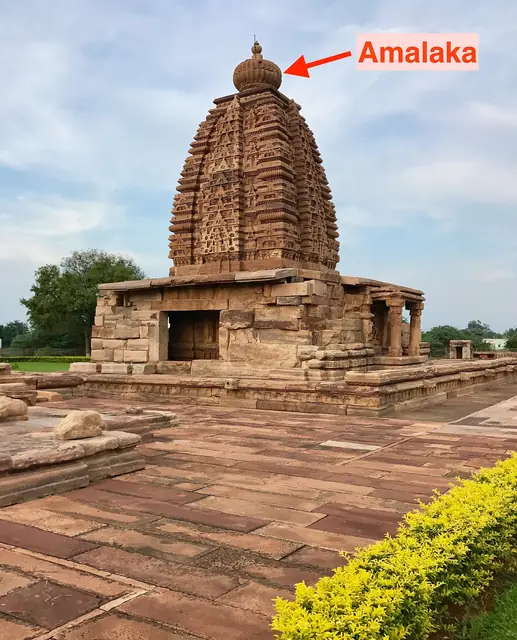
Amalaka and kalasha at the summit
- 04
Sub-types: latina, shekhari, bhumija, phamsana
- 05
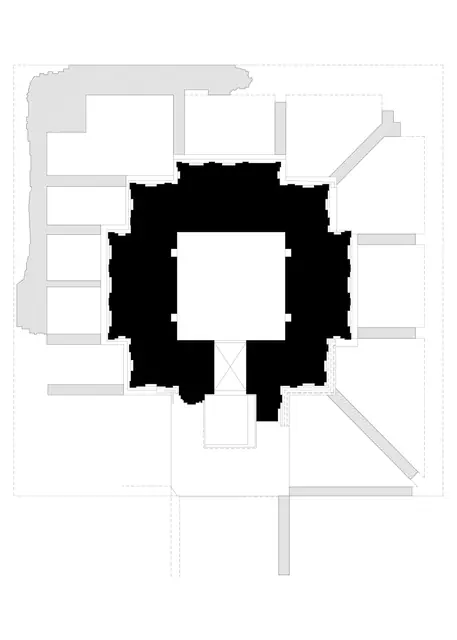
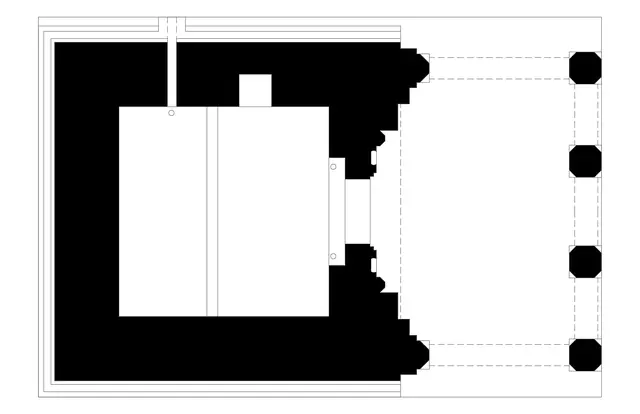
Raised platform; usually no high enclosing wall
01The curved peak
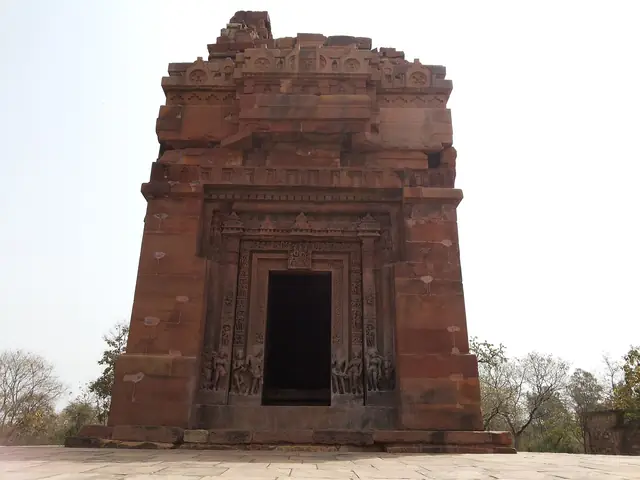
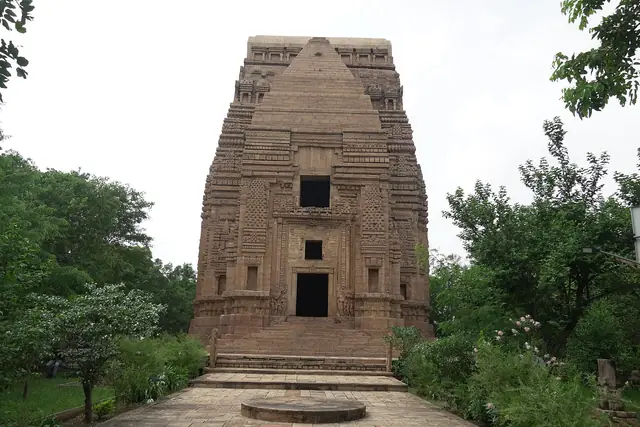
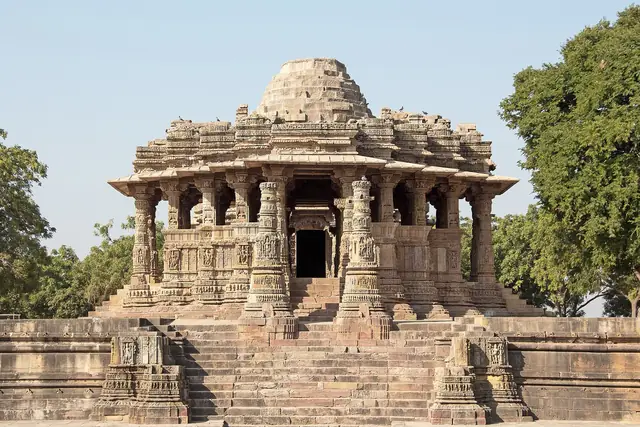
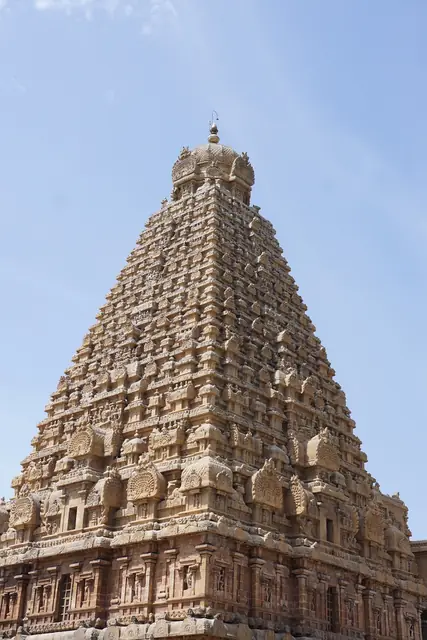
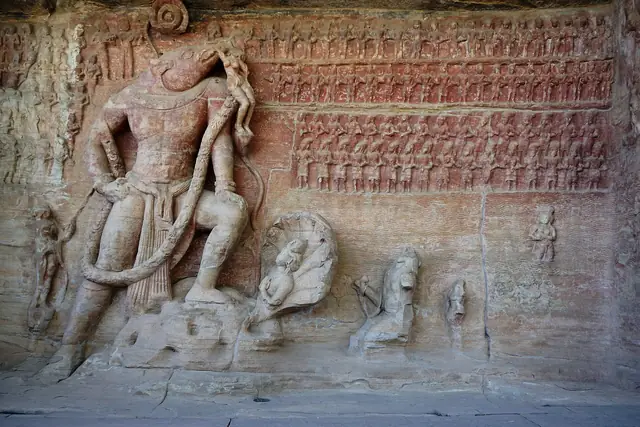
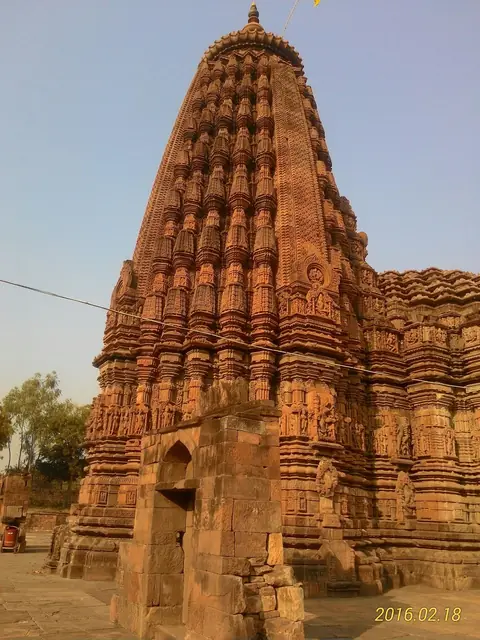
Shikhara means mountain peak, and the Nagara builders made the tower over the garbhagriha look like one. Its faces curve smoothly inward as they rise, and the whole tower sits directly over the sanctum, so the murti below and the finial above share one vertical line. Simple curved towers begin to appear in the 5th century; the Dashavatara temple at Deogarh, of about 500 CE, is one of the early stone temples of the line. By the 7th century the early form had settled into what scholars call mainstream Nagara. Unlike the great southern temples, a Nagara temple usually has no high enclosing wall. It stands on a raised platform, open to the sky on every side.
02Latina, shekhari, bhumija
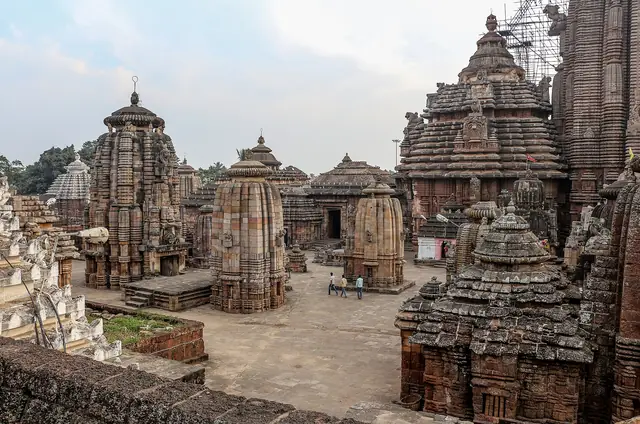
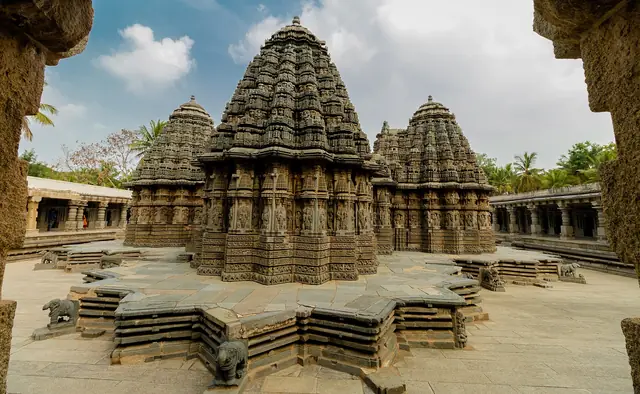
The shilpa tradition and modern scholars name several kinds of Nagara tower. The latina is the plain one: four faces, each with projections called rathas, rising in a single smooth curve. It is the commonest, and was well established in Odisha by about 600 CE. The shekhari tower carries smaller copies of itself, the urushringas, clustered up its sides; this form spreads from the 10th century. The bhumija tower, a Malwa creation, is covered in rows of tiny spires. A fourth form, the phamsana, has a straight-sided roof of stepped slabs and is used for halls and smaller shrines. The 6th-century Brihat Samhita of Varahamihira already gives rules for temples of the north.
03Khajuraho and the regional schools
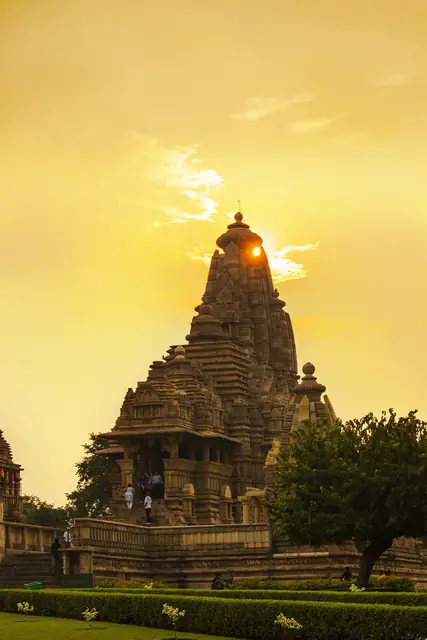
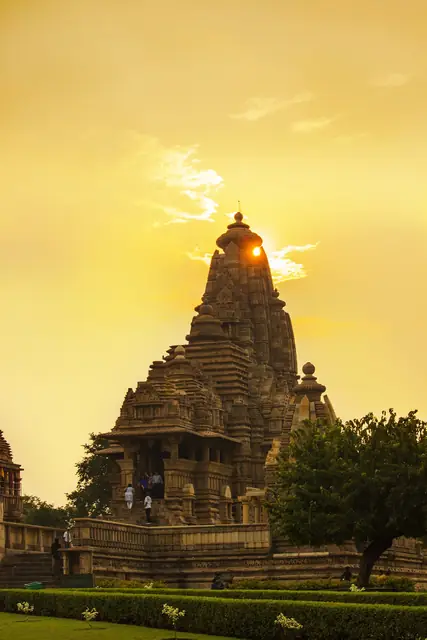
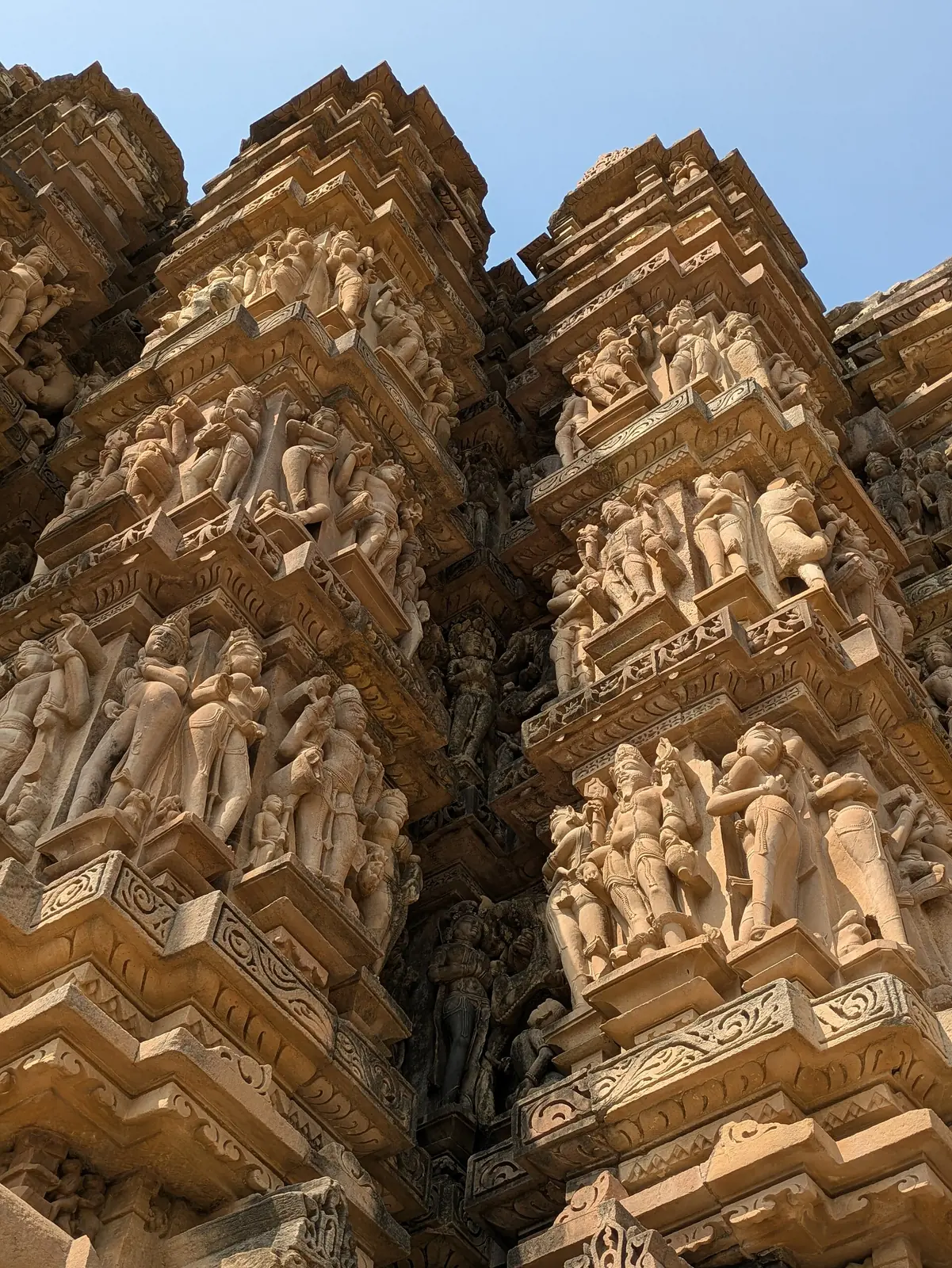
At Khajuraho the Chandelas carried the shekhari tower as far as it would go. The Kandariya Mahadeva temple, built in the reign of Vidyadhara around 1025–1050 CE, rises 31 metres on a plinth about 4 metres high, and its main tower is gathered from 84 smaller spires, like a range of hills climbing to Kailash. The Nagara family has several regional branches. The Chandela school of Bundelkhand worked in sandstone. The Solanki or Maru-Gurjara school grew in Gujarat and Rajasthan, and the Kalinga school in Odisha, each with its own vocabulary. Khajuraho, Konark and the Mahabodhi temple are World Heritage Sites; the Kandariya group was inscribed in 1986.
Family tree
In the texts
- Brihat Samhita of Varahamihira
- Samarangana Sutradhara
- Aparajitaprccha