Cite
MLA
“Maru-Gurjara: the Solanki temple.” Hindu History, 2026, https://www.hinduhistory.in/sthapatya/maru-gurjara-style/. Accessed .
APA
Hindu History. (2026). Maru-Gurjara: the Solanki temple. Retrieved , from https://www.hinduhistory.in/sthapatya/maru-gurjara-style/
What defines it
- 01
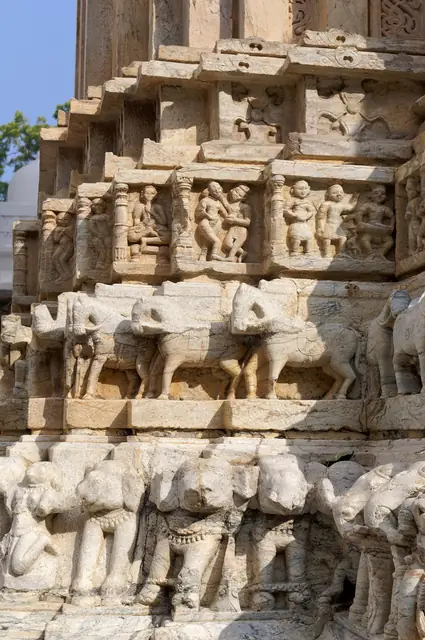
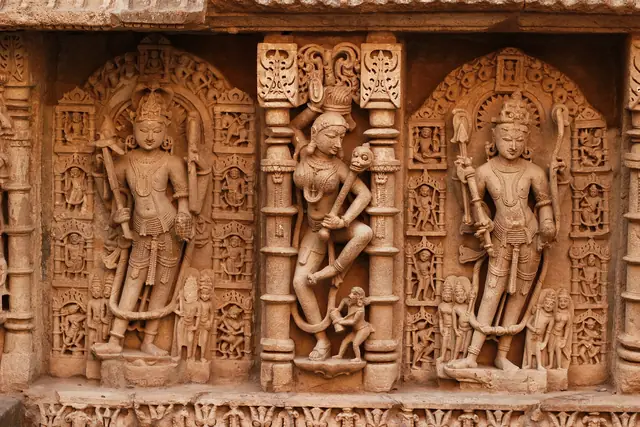
Walls stepped in many projections, each with a carved figure
- 02
Shikhara crowded with urushringas
- 03
Rosette-carved domed ceilings and flying toranas
- 04
Sequences of closed and open mandapas, especially in Jain temples
01Two regions, one style
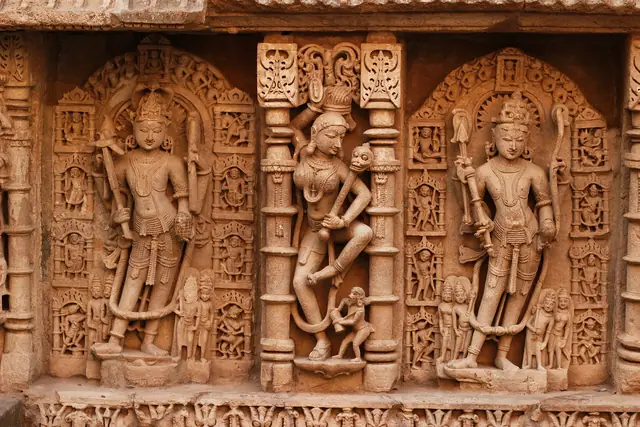
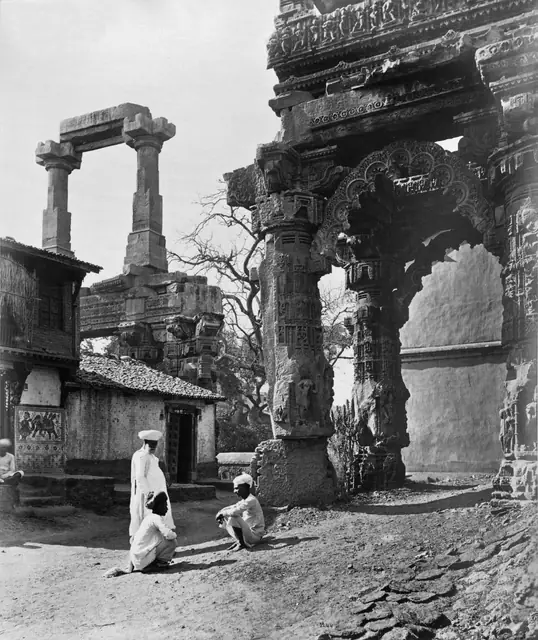
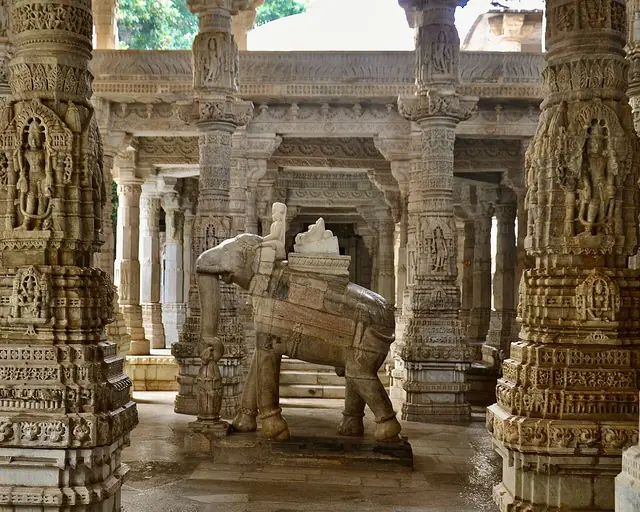
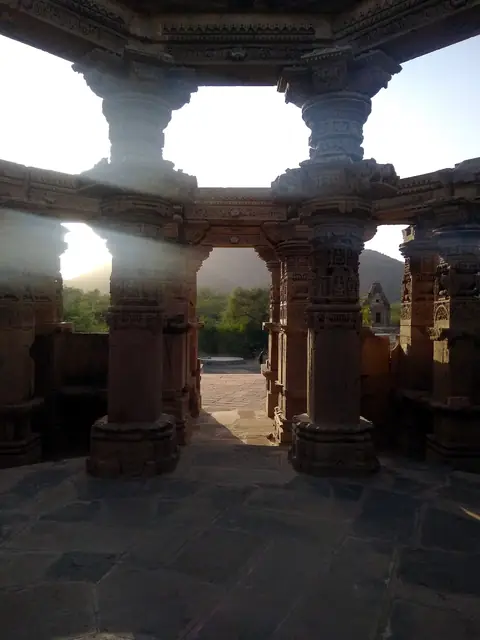
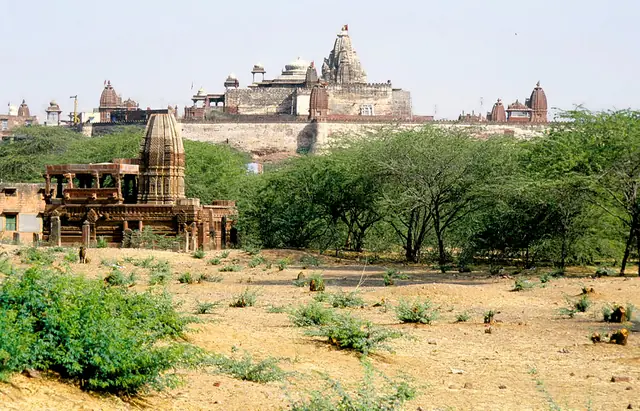
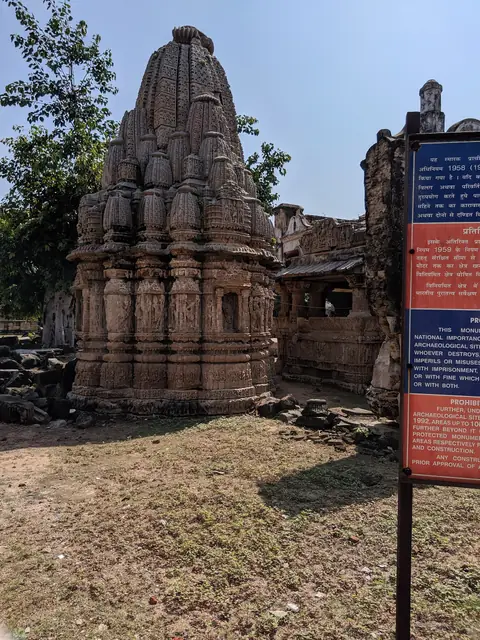
The name is modern. The art historian Madhusudan Dhaky coined Maru-Gurjara in the 20th century for the meeting of two older ways of building, the Maha-Maru of Marwar and the Maha-Gurjara of Gujarat. Before him it was simply the Solanki style, after the Chaulukya or Solanki kings of Anahilwad Patan who were its great patrons from the 11th to the 13th century. Its walls step in and out in many projections, each holding a carved figure, with friezes of elephants, horsemen and kirtimukhas. The main tower is crowded with urushringas, and the interior hides domed ceilings carved into rosettes, and the toranas, the decorative flying arches that frame a doorway.
02Modhera, Dilwara, Siddhpur
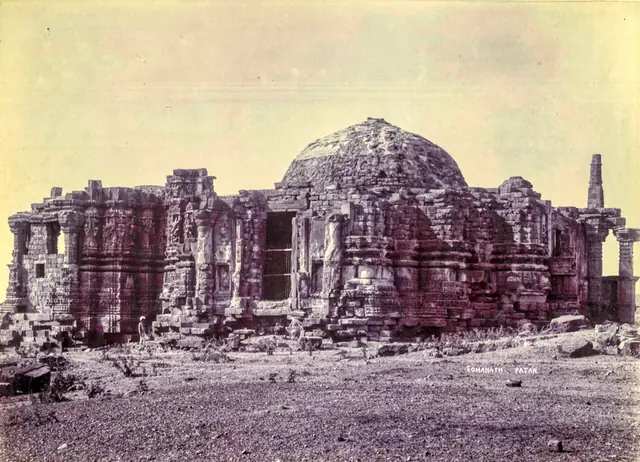
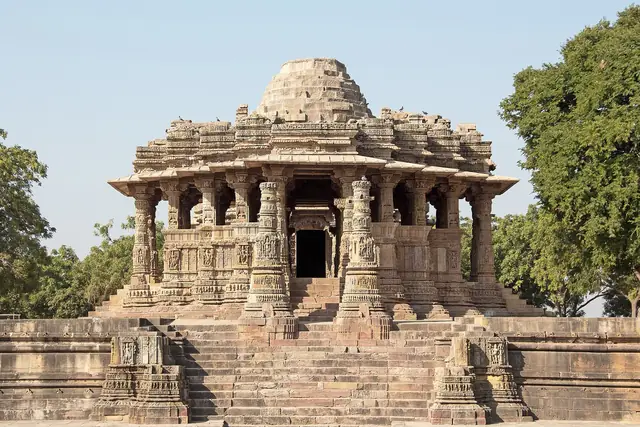
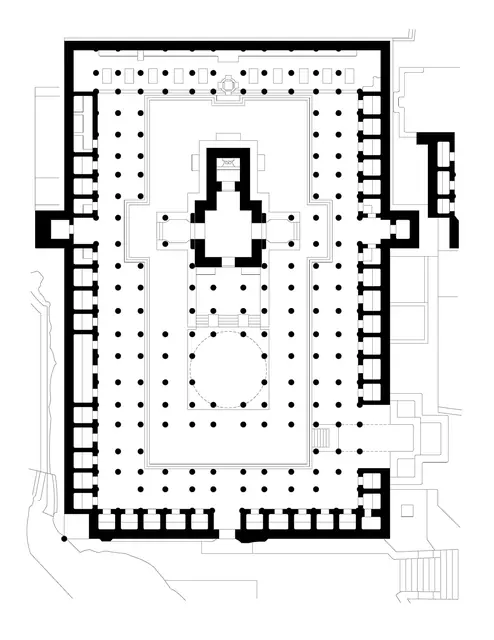
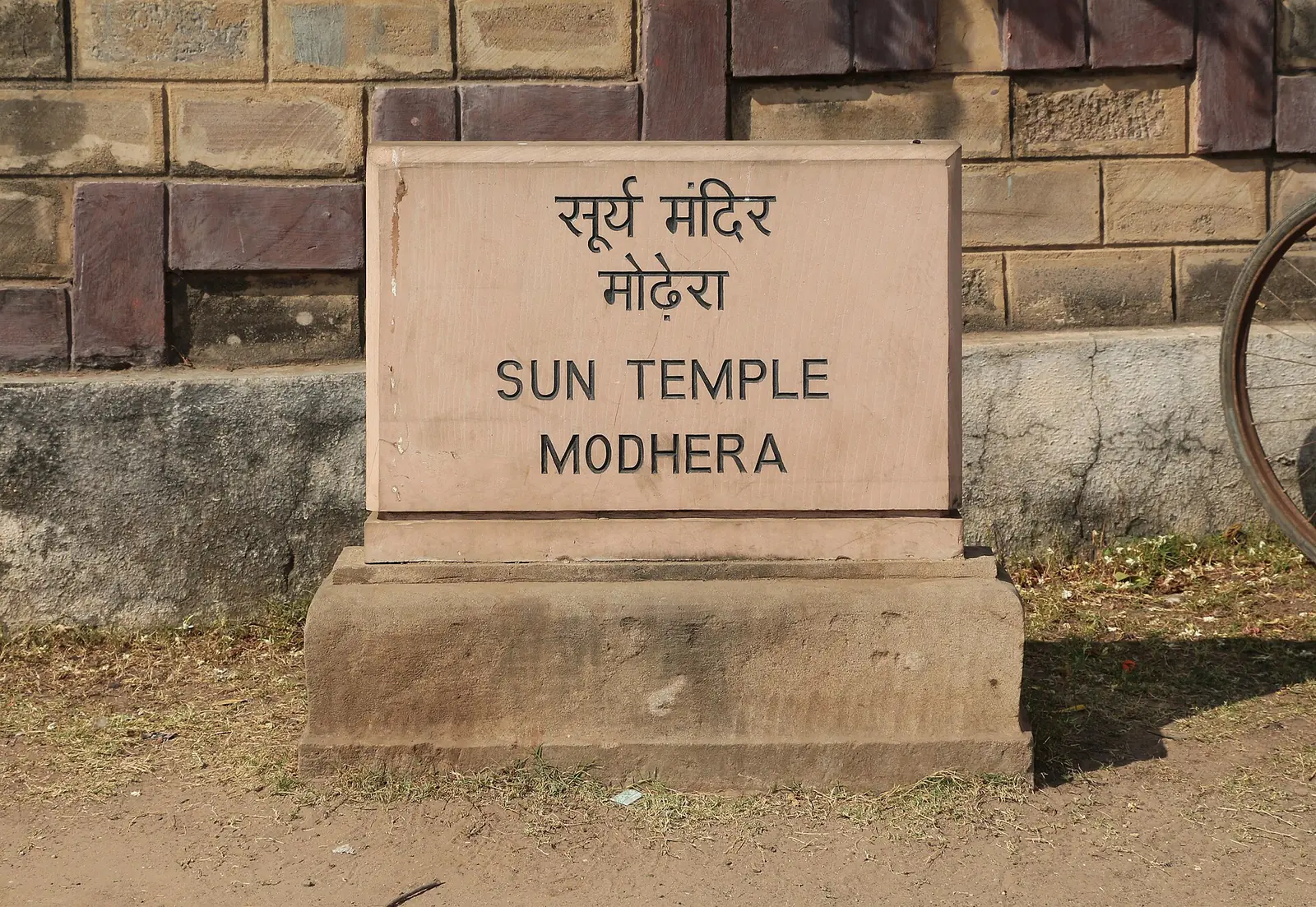
The Surya temple at Modhera was built in 1026–27, soon after Mahmud of Ghazni's raid on Somnath, with a stepped tank before it. In 1031 the Vimal Vasahi at Dilwara on Mount Abu was raised in white marble for the Jain Tirthankaras, and the Rani ki Vav at Patan, a temple turned upside down into a stepwell, followed probably in 1063–83. The Rudra Mahalaya at Siddhpur was completed in 1140; the Aparajitaprccha's rules can be traced in its plan, and in the Ajitanatha temple at Taranga of 1161. The Hindu tradition faded in its home after the 13th century, but Jain builders carried the style on, at Ranakpur in 1439 and in the Jagdish temple at Udaipur in 1651.
03A living style
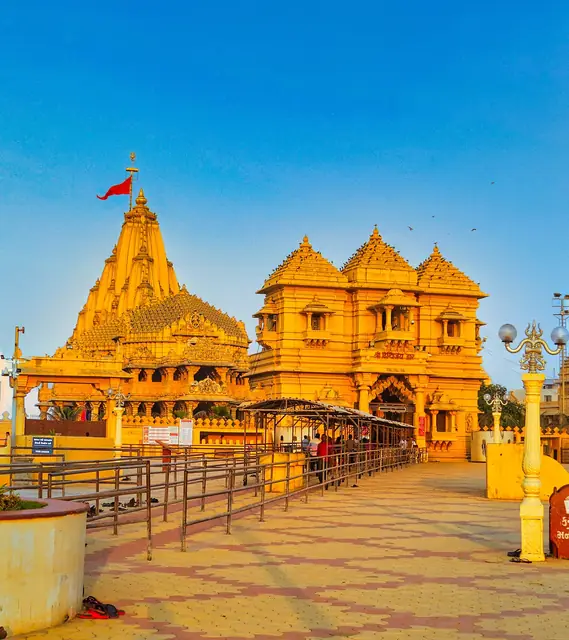
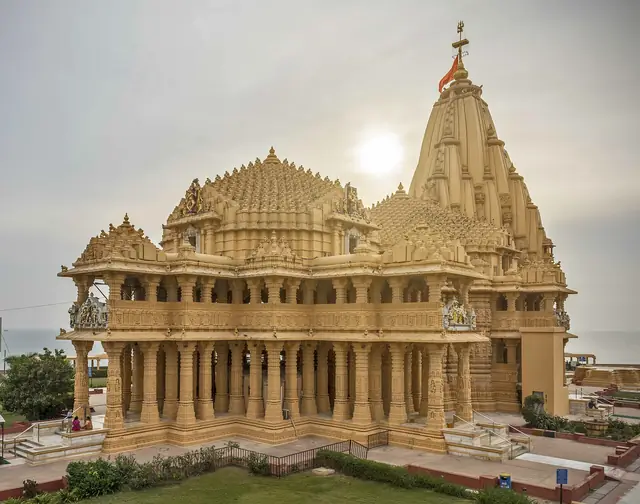
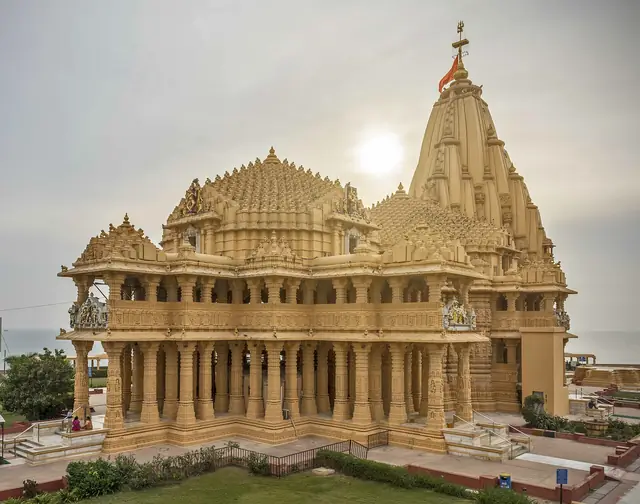
Maru-Gurjara never stopped being built. The new Somnath, designed by the Sompura temple architects and inaugurated in 1951, was raised in this manner on the ruins of a temple attacked again and again since 1026. Swaminarayan temples, from Neasden in London (1995) to many in India, use the style, and Jain communities have built it in Antwerp, Leicester and Potters Bar. The hereditary salats of Gujarat and Mewar still work from texts such as the Aparajitaprccha and the 15th-century Prasada Manjari. In much modern work only parts survive, the flying arches, the ceiling rosettes, the love of white marble, but the full temple can still be raised by those who know the canon.
In the texts
- Aparajitaprccha of Bhuvanadeva
- Prasada Manjari