Cite
MLA
“Manigramam and the Ainurruvar: the merchant guilds.” Hindu History, 2026, https://www.hinduhistory.in/samudra/manigramam-ainurruvar-guilds/. Accessed .
APA
Hindu History. (2026). Manigramam and the Ainurruvar: the merchant guilds. Retrieved , from https://www.hinduhistory.in/samudra/manigramam-ainurruvar-guilds/
What defines it
- 01
Tharisapalli copper plates, Kollam, 849 CE
- 02
Ayyavole (Aihole): home of the Five Hundred
- 03
Lobu Tua (Barus) Tamil inscription, 1088 CE
- 04
Takuapa Tamil inscription, 9th century
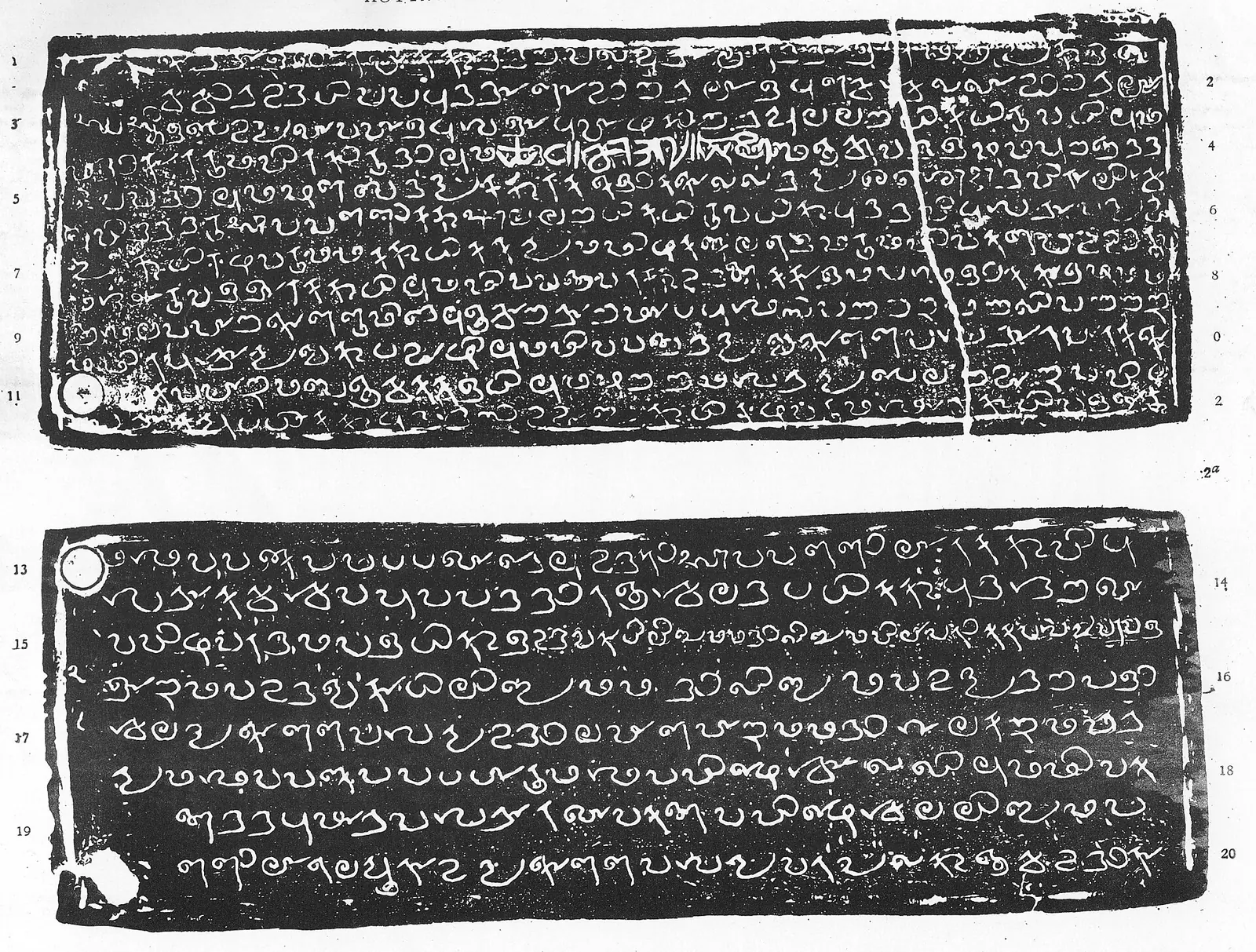
01The Kollam plates of 849
The Tharisapalli copper plates, issued at Kollam in 849 CE by Ayyan Adikal Tiruvadikal, ruler of Venad under the Chera king Sthanu Ravi, grant land and rights to a church. They place the grant under the protection of two merchant bodies, the Manigramam and the Anjuvannam. The plates carry signatures in Arabic, Pahlavi and Hebrew script, a sign of how many foreign traders lived in the port.
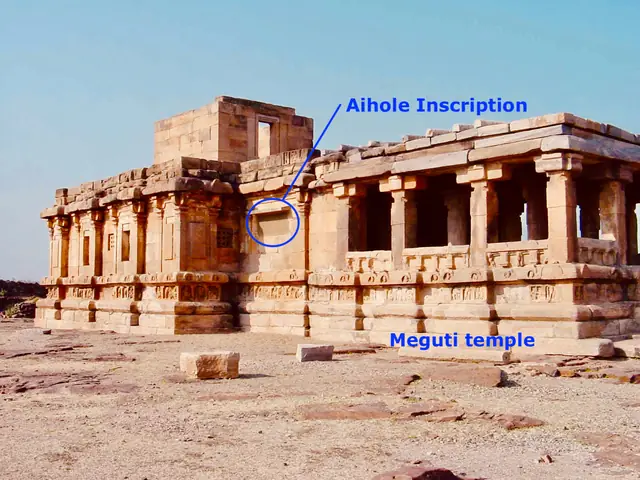
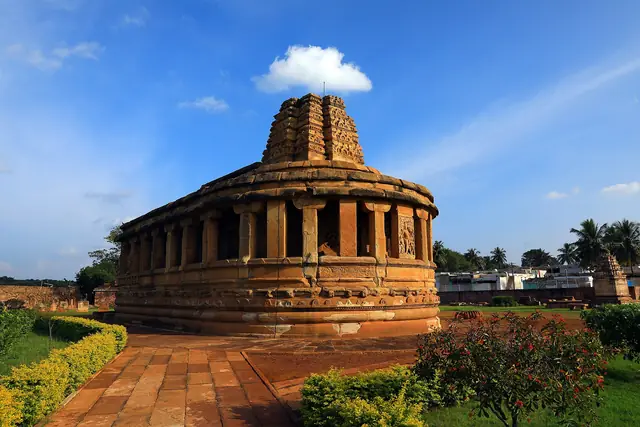
02The Five Hundred of Ayyavole
The greatest guild took its name from Ayyavole, today Aihole in Karnataka. Its long prashasti calls its members the Five Hundred Svamis of Ayyavole, devotees of Bhagavati, who travel the countries of the eighteen and the thousand directions. In Tamil they were the Ainurruvar or Nanadesi. Their records run from Karnataka and Andhra through the Chola country to Lanka, and they built and endowed temples wherever they settled.
03A stone at Barus
At Lobu Tua near Barus on the west coast of Sumatra, a Tamil inscription dated Saka 1010, which is 1088 CE, records that the Ainurruvar of the thousand directions met at Varocu, the old name of Barus, and fixed dues to be paid by ships. Barus was famous for camphor. Further north, at Takuapa in Thailand, a 9th-century Tamil inscription puts a tank in the care of the Manigramam. These stones show Tamil merchants organised and settled abroad, not just passing through.