Cite
MLA
“Hoysala Sculpture.” Hindu History, 2026, https://www.hinduhistory.in/kala/hoysala-sculpture/. Accessed .
APA
Hindu History. (2026). Hoysala Sculpture. Retrieved , from https://www.hinduhistory.in/kala/hoysala-sculpture/
What defines it
- 01
Soapstone (chloritic schist)
- 02
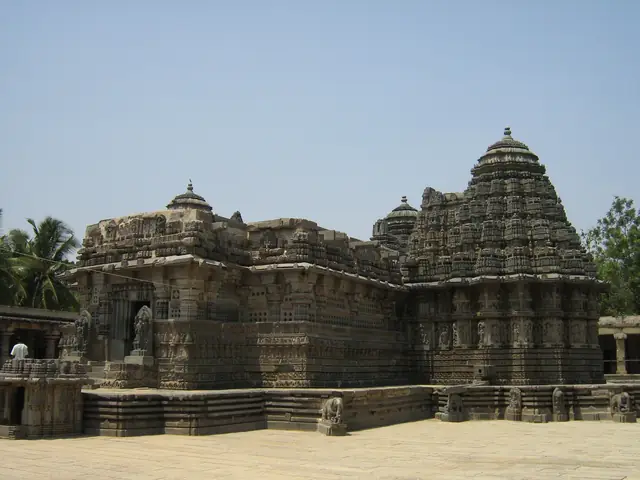
Star-shaped plans on raised platforms
- 03
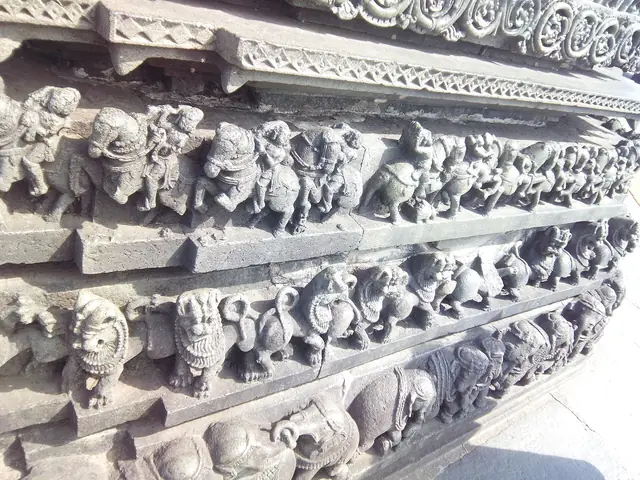
Horizontal friezes of animals and the epics
- 04
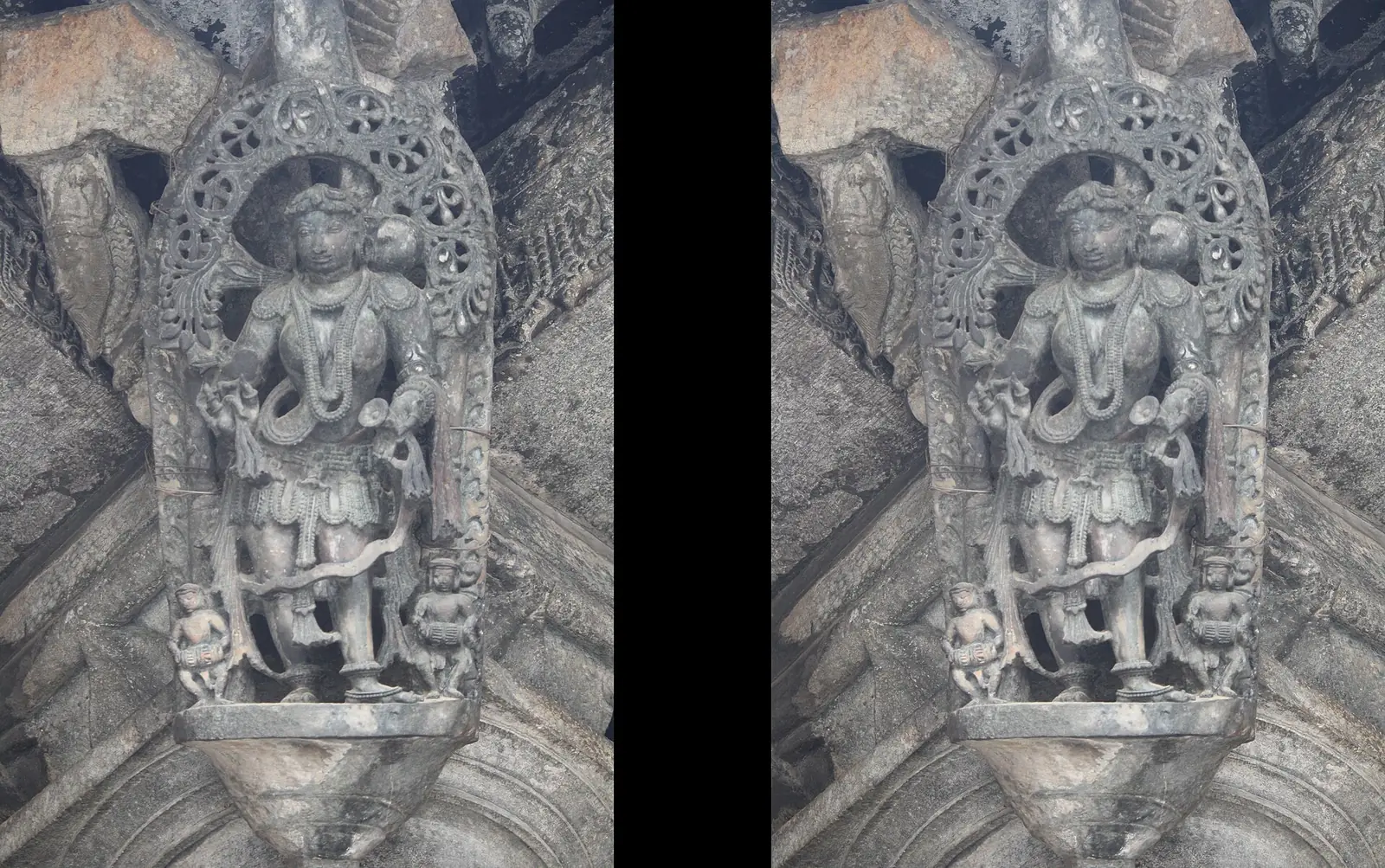
Madanika bracket figures
- 05
Signed works of named sculptors
01Three temples
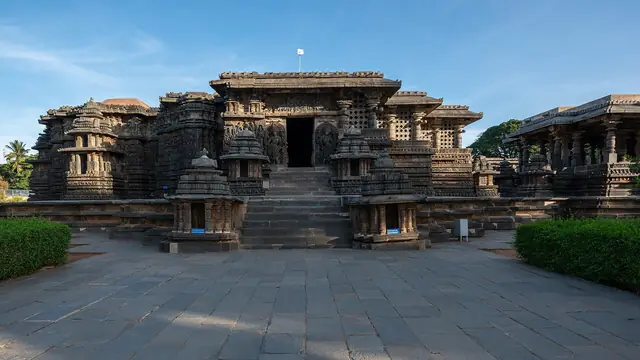
King Vishnuvardhana consecrated the Chennakeshava temple at Belur in 1117. A little later his officer Ketamalla began the Hoysaleswara temple at Halebidu, the old capital Dorasamudra, with its twin shrines and long friezes. In 1268, under Narasimha III, the general Somanatha built the Keshava temple at Somanathapura, the most complete of all. The temples stand on star-shaped plans on raised platforms, so the walls catch light from many angles.
02Soapstone and the signed sculptor
Chloritic schist is soft when quarried and hardens in the air, so it could be carved like wood or ivory: pierced jewellery, fingernails, beads that move. The base of the wall runs in bands, elephants, horses, scrolls, then the Ramayana and Mahabharata, all around the temple. At Belur 42 madanikas, celestial dancers, lean from the brackets; one, Darpana Sundari, looks into a mirror. Hoysala sculptors signed their work. Dasoja and his son Chavana are named at Belur, and Ruvari Mallitamma signed some 40 images at Somanathapura.
03Visiting
Belur is still a living temple, with daily puja to Chennakeshava. Halebidu suffered the raids of Malik Kafur’s army in 1311 and later attacks, and the capital was abandoned; the temple stands without its towers. Somanathapura, near Mysuru, is kept by the ASI. Belur and Halebidu are 16 km apart and make one day’s visit from Hassan. Go in the morning, and take time on the friezes: each one is a book.