Cite
MLA
“The rock-cut tradition: from Barabar to Ellora.” Hindu History, 2026, https://www.hinduhistory.in/sthapatya/rock-cut-caves/. Accessed .
APA
Hindu History. (2026). The rock-cut tradition: from Barabar to Ellora. Retrieved , from https://www.hinduhistory.in/sthapatya/rock-cut-caves/
What defines it
- 01
Barabar and Nagarjuni: oldest rock-cut caves, Mauryan polish
- 02
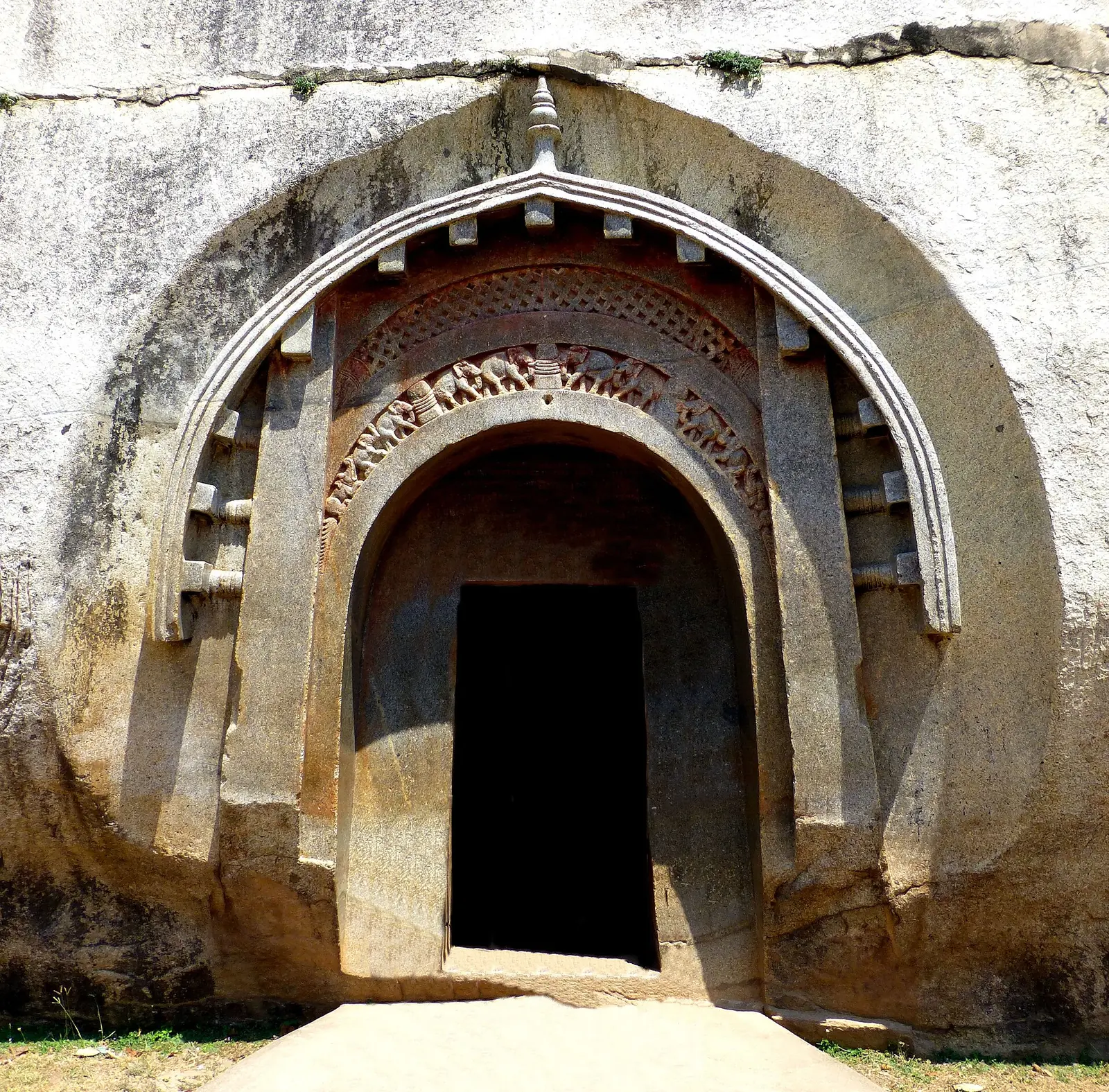
Lomas Rishi doorway: first chaitya (chandrashala) arch
- 03
Stone copying lost timber forms
- 04
Hindu caves at Udayagiri (401 CE) and Badami (578 CE)
- 05
From caves to monoliths: Mamallapuram, Masrur, Ellora
01Barabar: the oldest caves
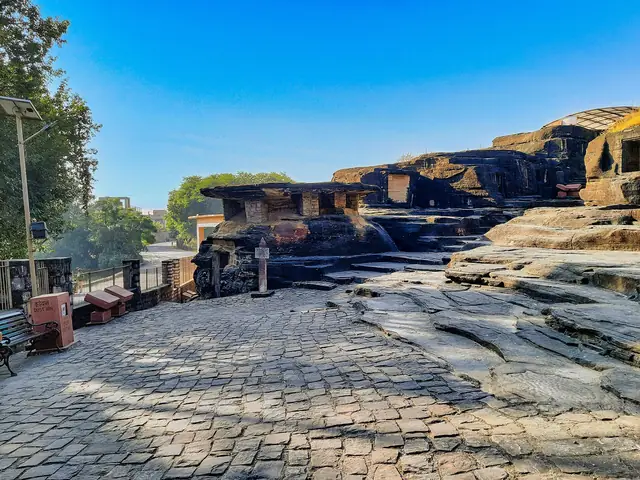
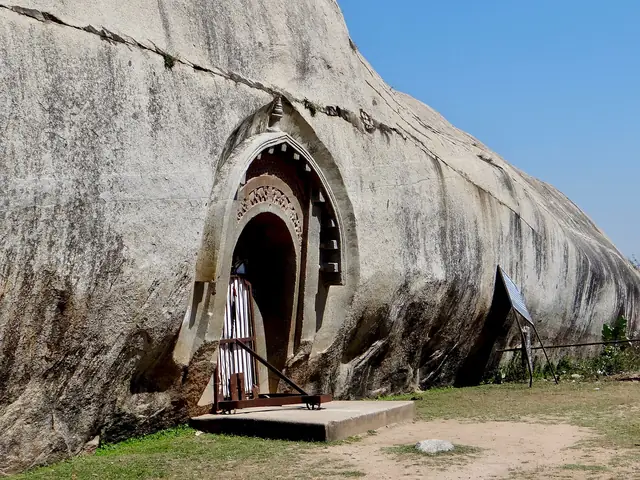
About 24 km north of Gaya, in Jehanabad district of Bihar, two granite hills hold the oldest surviving rock-cut caves in India. Barabar hill has four, Karan Chaupar, Lomas Rishi, Sudama and Visvakarma; Nagarjuni, about 1.6 km away, has three more. Inscriptions in the Barabar caves name King Piyadasi, Ashoka, in his 12th and 19th regnal years, and those at Nagarjuni name his grandson Dasharatha, about 230 BCE. Most were given to the Ajivika ascetics. Their interiors are polished to a mirror finish that makes the voice ring. In the 5th–6th centuries CE the Maukhari king Anantavarman added inscriptions of his own, installing Hindu images in some of the caves.
02A wooden doorway in stone
The doorway of the Lomas Rishi cave, of about 250 BCE, is the earliest known example of the ogee-shaped arch later called the chandrashala or chaitya arch. It copies a wooden hut in stone, down to the curved rafters, and in its band a row of elephants walks towards stupa emblems. The cave itself was never finished. This one carved doorway set a pattern: the chaitya arch appears again on the halls of Ajanta and Karla, and centuries later as the gavaksha motif climbing the faces of Nagara shikharas and edging the shalas of Dravida vimanas. The sculptors had learnt to imitate in rock the timber buildings that have not survived.
03Udayagiri, Badami, Mamallapuram
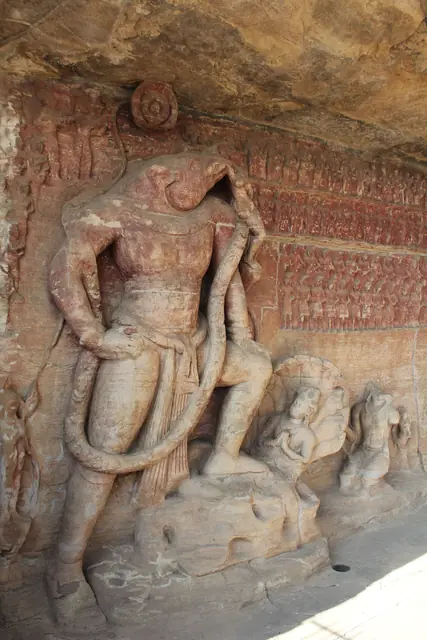
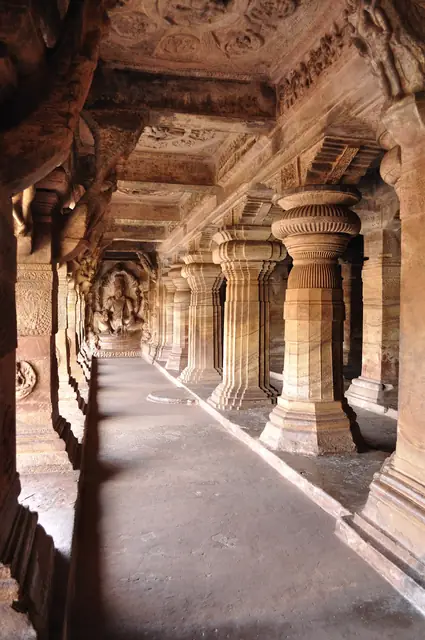
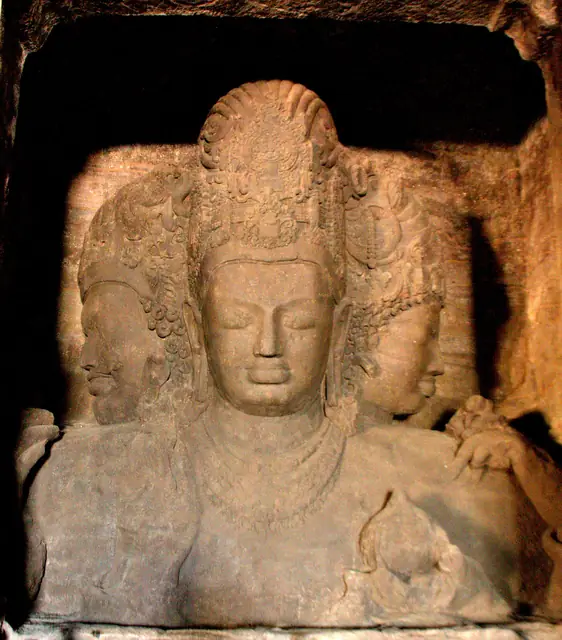
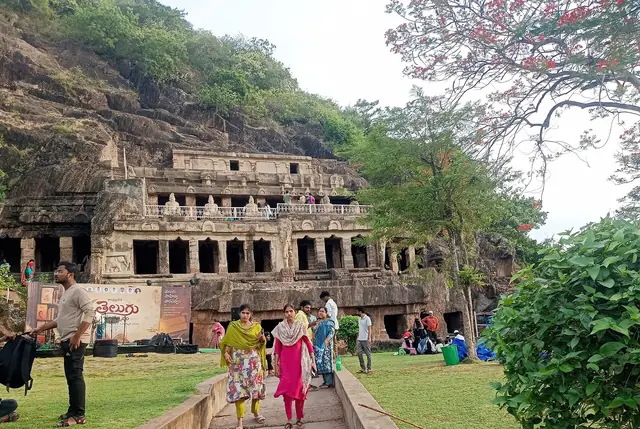
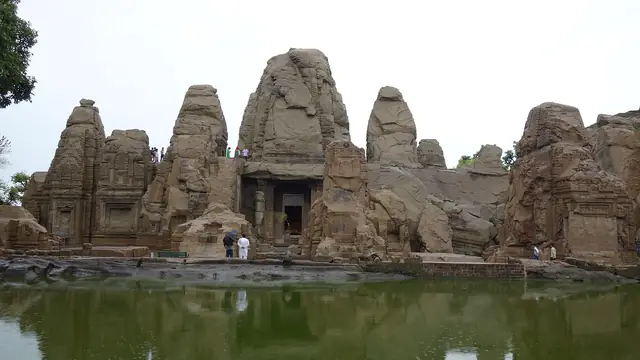
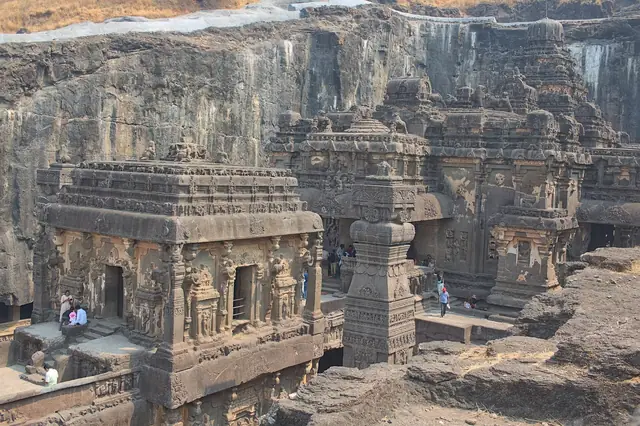
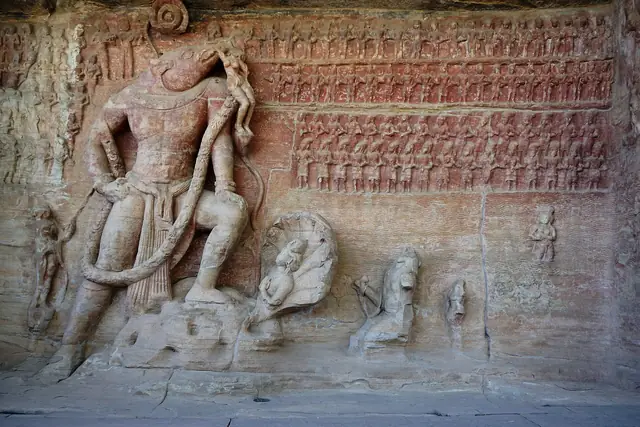
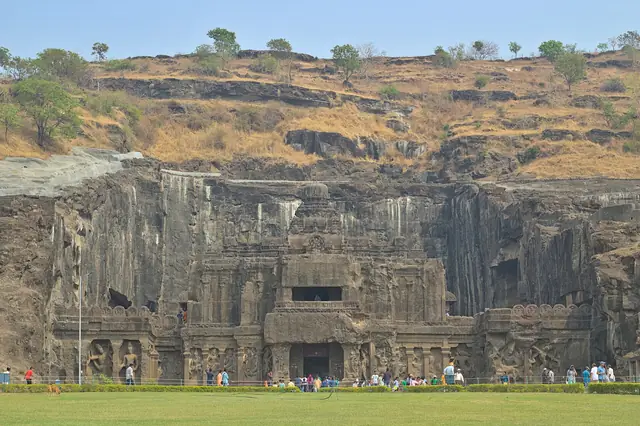
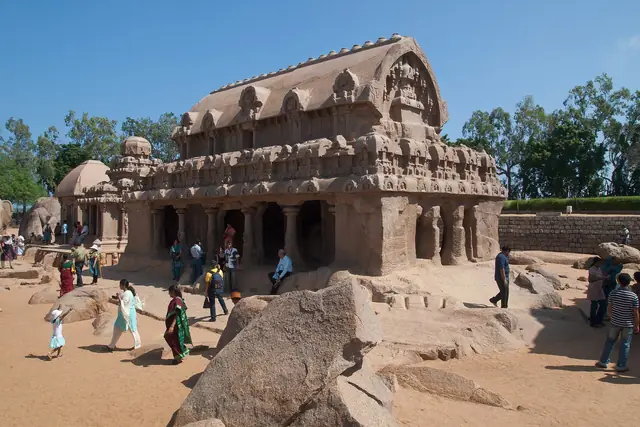
Hindu cave temples follow. At Udayagiri near Vidisha the caves carry inscriptions of the reign of Chandragupta II, one dated 401 CE, and the great relief of Bhagwan Varaha raising Bhudevi. At Badami the Chalukyas cut four cave temples into a red sandstone cliff; Cave 3, a shrine of Bhagwan Vishnu, was dedicated by Mangalesha in Saka 500, that is 578 CE, and beside its inscription stands Varaha again. In the south the Pallavas cut cave-shrines between about 610 and 690 CE before turning to monoliths at Mamallapuram. Elephanta near Mumbai, Undavalli on the Krishna, and Masrur in the Kangra hills, a temple group carved from a ridge, carry the tradition on. Ellora's Kailasa is its summit.