01Polished granite
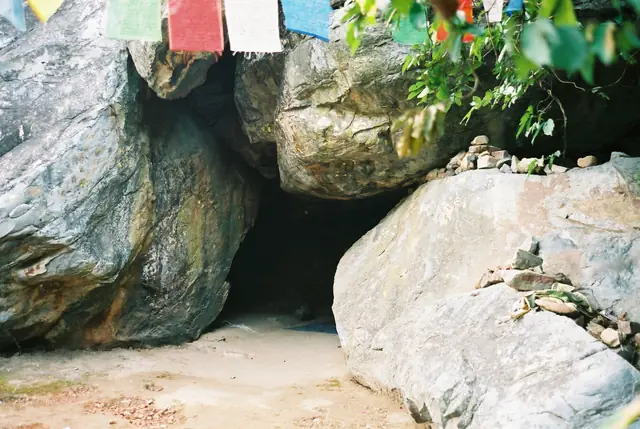
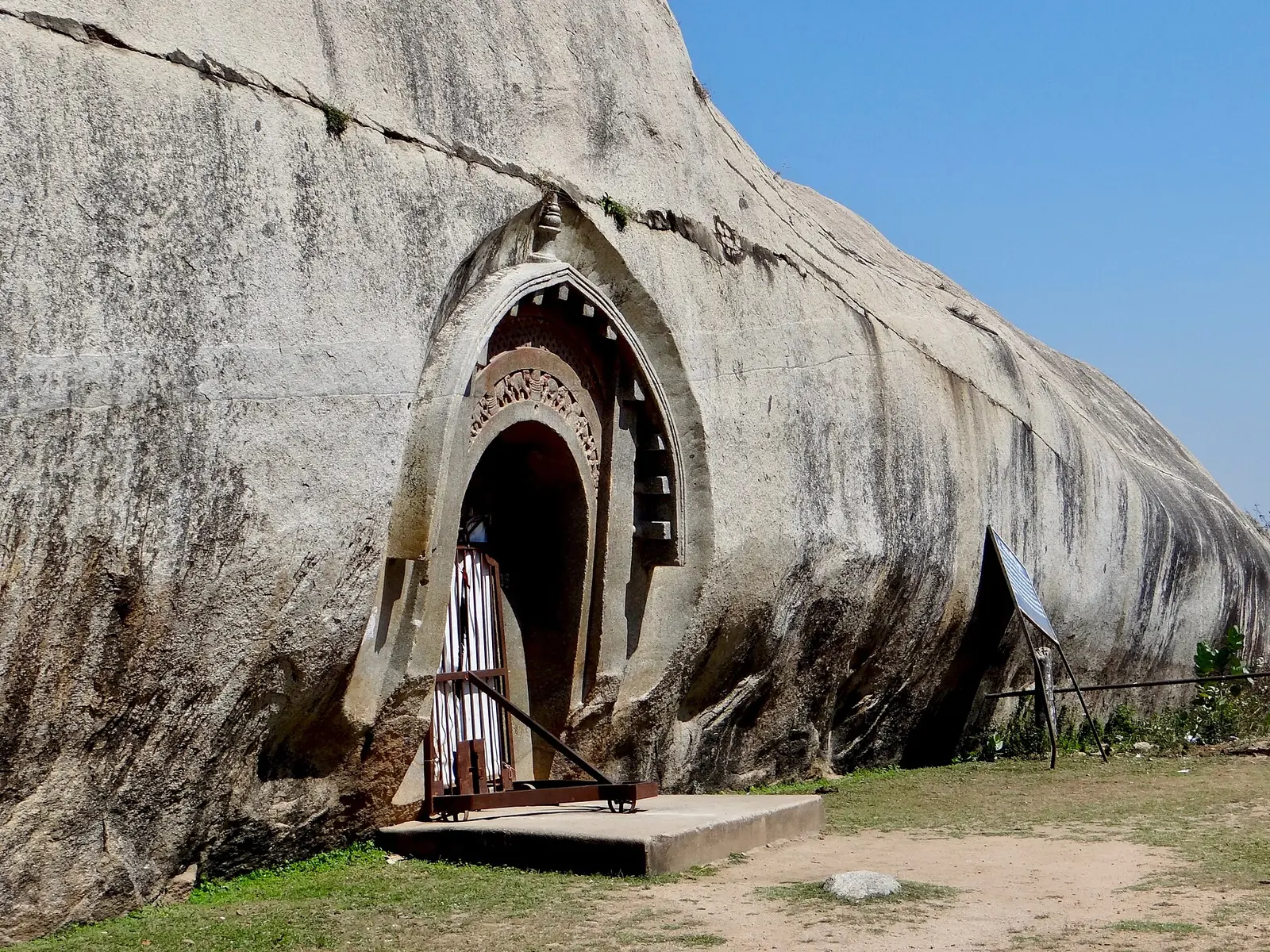
Four caves are cut into the Barabar hill and three into nearby Nagarjuni. Inside, the walls carry the Mauryan polish, so smooth that a whisper echoes for seconds. Ashoka’s inscriptions in two of the Barabar caves record their gift to the Ajivikas in the 12th and 19th years of his reign, and Dasharatha’s inscriptions at Nagarjuni do the same. The Lomas Rishi cave has the finest doorway: a carved wooden-style arch with a frieze of elephants moving towards a stupa, the form every later chaitya facade follows, from Karle to Ajanta.
02Later worship
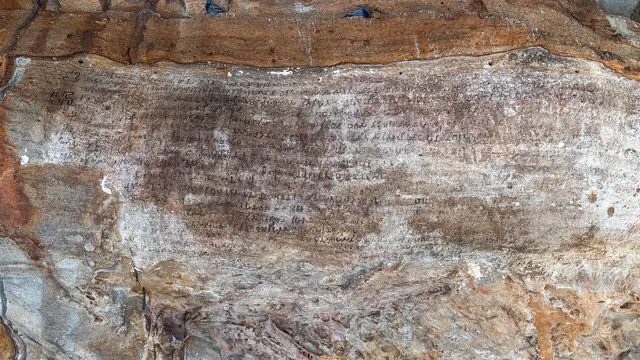
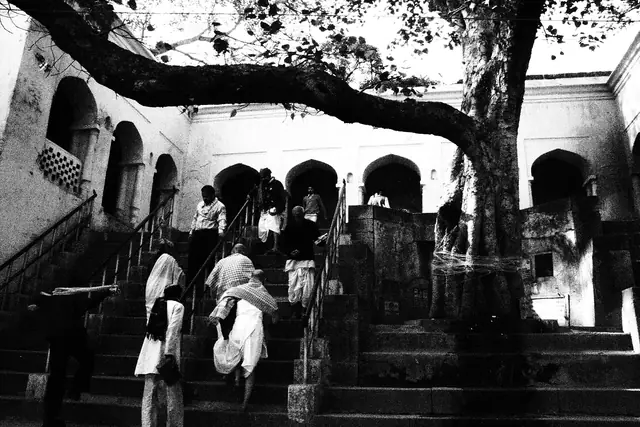
In the 6th century a Maukhari prince, Anantavarman, installed images in some of the caves and left Sanskrit inscriptions: one of Bhagwan Krishna, one of Shiva as Bhutapati with the Devi, one of Katyayani. On the top of Barabar hill stands the Siddheshwarnath temple of Mahadev, crowded with kanwariyas in the month of Shravan, who carry Ganga water up the steep path to pour on the linga. Anantavarman’s inscriptions, in late Brahmi, can still be read on the cave doorways.
The life of this place
- c. 261 BCEIn his 12th regnal year Ashoka gives the first Barabar caves to the Ajivikas.
- late 3rd century BCEDasharatha dedicates the Nagarjuni caves.
- 6th centuryThe Maukhari Anantavarman installs images of Krishna, Shiva and Devi.
About 25 km north of Gaya via Bela; steps lead up to the caves. Carry a torch to see the polish inside.