Cite
MLA
“Gupta Sculpture.” Hindu History, 2026, https://www.hinduhistory.in/kala/gupta-sculpture/. Accessed .
APA
Hindu History. (2026). Gupta Sculpture. Retrieved , from https://www.hinduhistory.in/kala/gupta-sculpture/
What defines it
- 01
Calm, inward faces
- 02
Smooth bodies, thin clinging robes
- 03
First great narrative panels of the Devatas
- 04
Proportions of the pratima-lakshana texts
01Varaha at Udayagiri
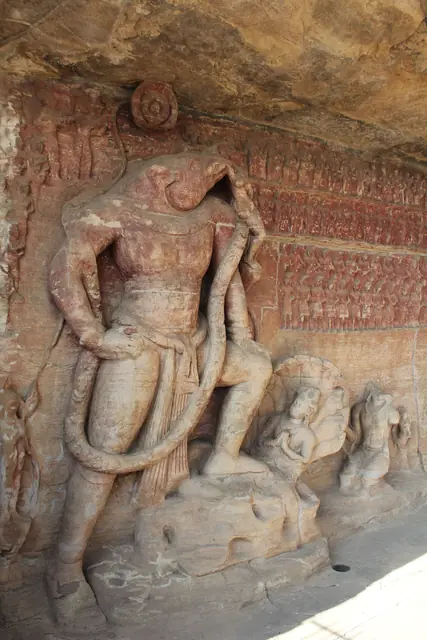
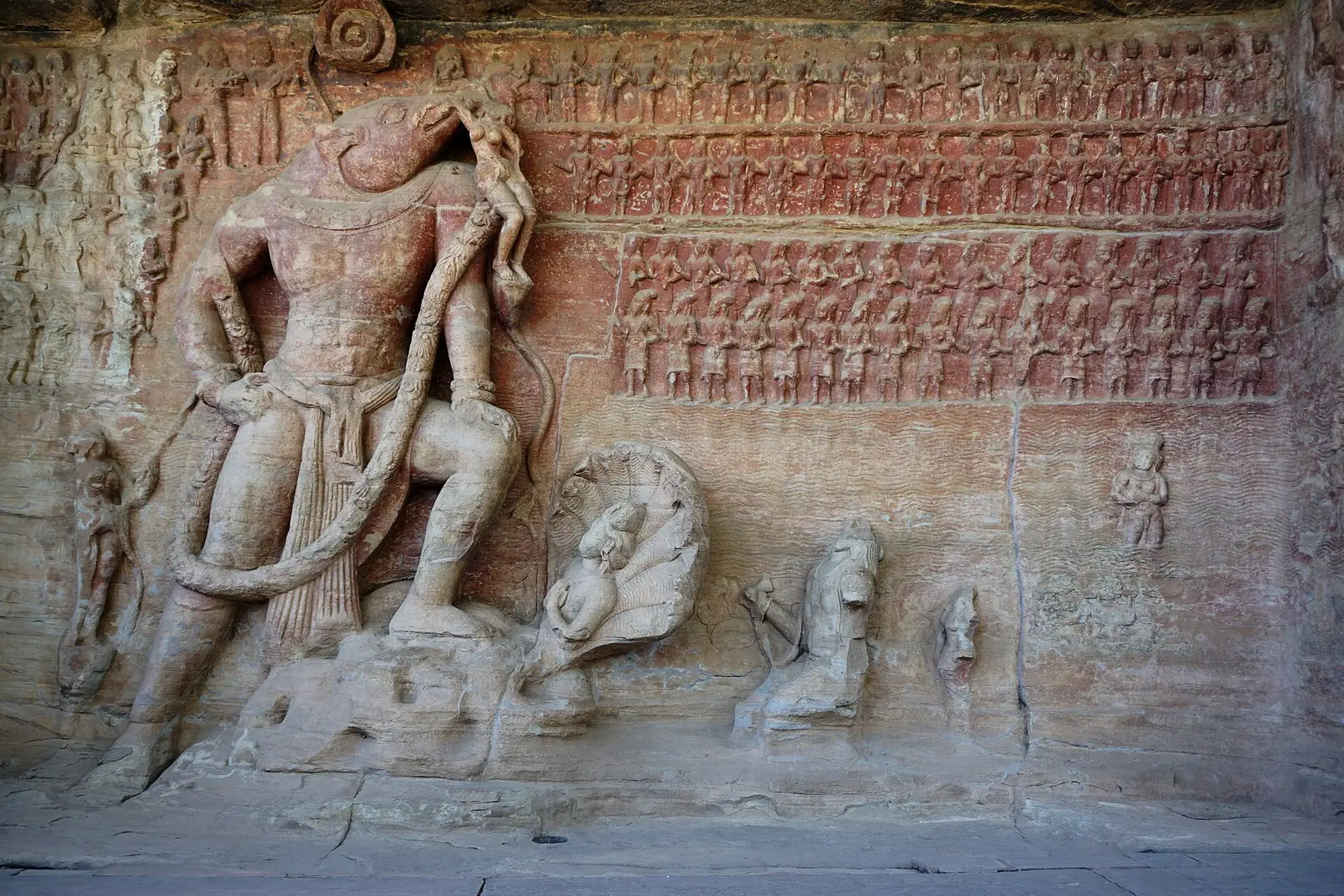
At Udayagiri near Vidisha, an inscription in Cave 6 is dated in the Gupta year 82, 401 CE, in the reign of Chandragupta II. Beside it is the great relief of Bhagwan Varaha, about four metres high, lifting Bhudevi from the ocean, while rows of rishis and devas watch and the river goddesses Ganga and Yamuna flow on the walls. It is the first of its kind and still the most powerful. Shastras on image-making, the pratima-lakshana chapters of Varahamihira’s Brihat Samhita and the Vishnudharmottara, set out the proportions these sculptors followed.
02Deogarh and Sarnath
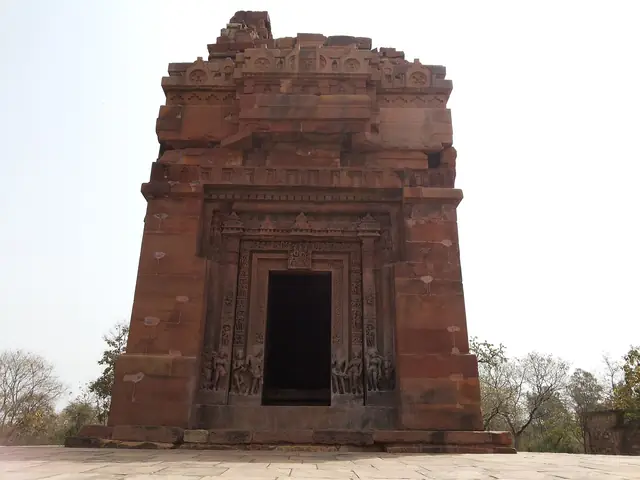
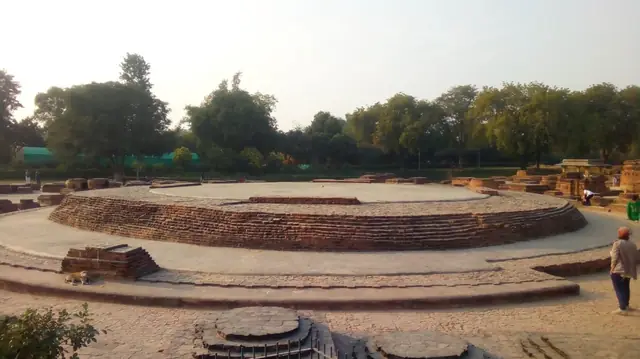
The Dashavatara temple at Deogarh, of around 500 CE, carries three great panels: Vishnu as Anantashayana on Shesha, Gajendra Moksha, and Nara-Narayana in tapas. At Sarnath, sculptors carved the seated Buddha turning the wheel of Dharma, eyes half closed, robe so fine it seems wet on the body; it is now in the Sarnath Museum. Mathura workshops made standing Buddhas and Vishnus in red sandstone. In metal, the copper Buddha from Sultanganj in Bihar, more than two metres high, shows the Gupta founders’ skill.
03Where to see it
Go to Udayagiri at sunrise, when the Varaha relief is lit from the east, and to the Dashavatara temple at Deogarh on the Betwa. The Sarnath Museum, the Indian Museum in Kolkata, the Government Museum in Mathura and the National Museum in New Delhi hold the great Gupta images. The standing Buddha from Jamalpur, Mathura, is in the Mathura museum; the Sultanganj Buddha is in Birmingham.