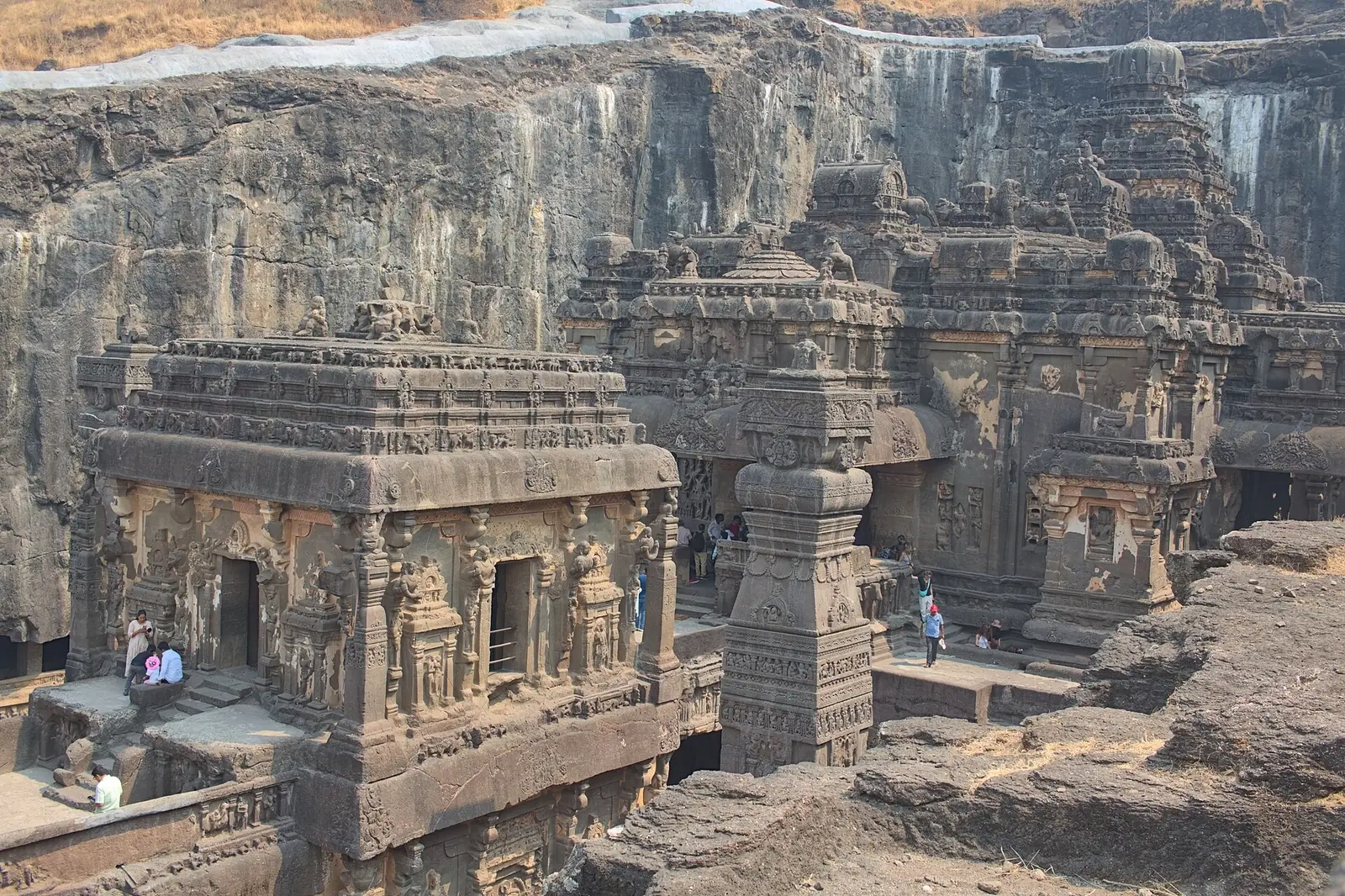
01Kailasa cut from the hill
The masons began at the top. They cut three deep trenches into the hillside, leaving a block of rock in the middle, then carved that block from the roof down into a two-storeyed temple of the Dravida kind, meant as Mahadev’s own Kailasa. Scholars estimate that some two lakh tonnes of stone were removed. A copper-plate grant of the Rashtrakuta Karka II from Baroda, dated 812 CE, praises the temple Krishnaraja made at Elapura, saying the devas in their vimanas wondered whether it could be the work of man, and the architect himself asked how he had done it.
02Ravana shakes the mountain
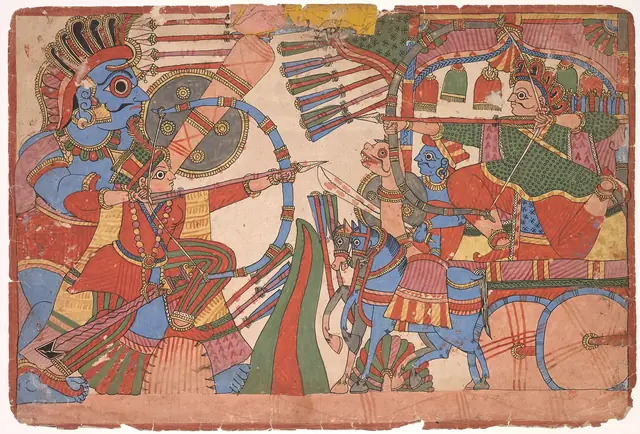
Walk around the base and the Itihasa runs along the walls: panels of the Ramayana on one side, the Mahabharata on the other, in long bands like a carved scroll. The most famous panel shows Ravana, arms spread, heaving Kailasa from below while Parvati clutches Shiva’s arm and Shiva calmly presses the mountain down with one toe. Life-size elephants stand around the plinth as if carrying the temple. Two dhvaja-stambhas, about 15 m high, flank the Nandi mandapa, and a bridge of living rock joins it to the main shrine.
03Three faiths in one cliff
Kailasa is one of thirty-four caves cut along two kilometres of the Charanandri hills at Ellora, the ancient Elapura. Caves 1 to 12 are Buddhist, 13 to 29 Hindu, and 30 to 34 Jain, made between about the 6th and 10th centuries under the Kalachuris, Chalukyas and Rashtrakutas. Monks, Shaiva ascetics and Jain munis worked a few hundred metres apart for centuries. UNESCO listed the Ellora Caves as a World Heritage Site in 1983.
The life of this place
- c. 756–773The Kailasa is carved in the reign of the Rashtrakuta king Krishna I.
- 812 CEKarka II’s Baroda copper plates praise Krishnaraja’s temple at Elapura.
- 1983The Ellora Caves are inscribed as a UNESCO World Heritage Site.
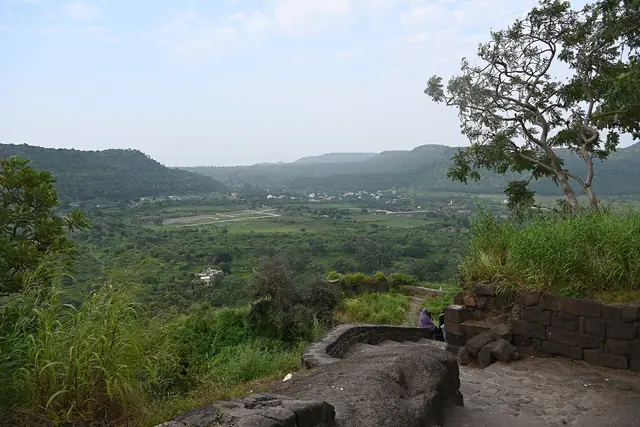
About 30 km from Chhatrapati Sambhajinagar; closed on Tuesdays. Climb the path to the top of the cliff behind Cave 16 to see the whole temple from above.