Cite
MLA
“Gupta script.” Hindu History, 2026, https://www.hinduhistory.in/lipi/gupta-script/. Accessed .
APA
Hindu History. (2026). Gupta script. Retrieved , from https://www.hinduhistory.in/lipi/gupta-script/
01Letters of the Gupta age
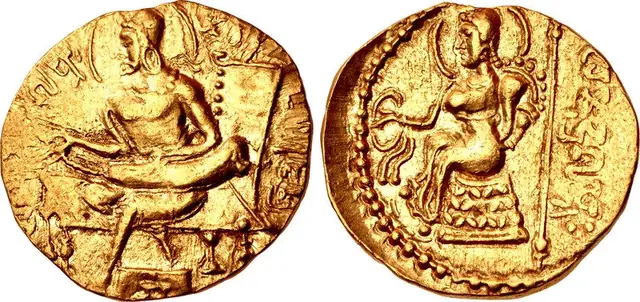
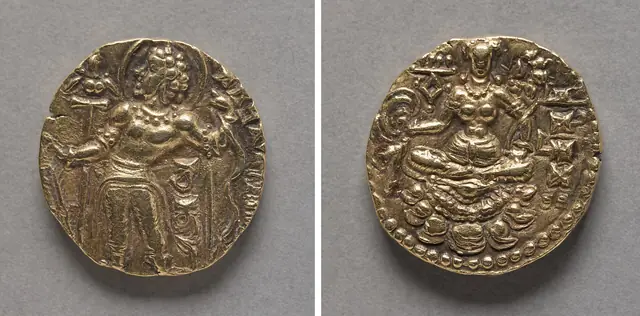
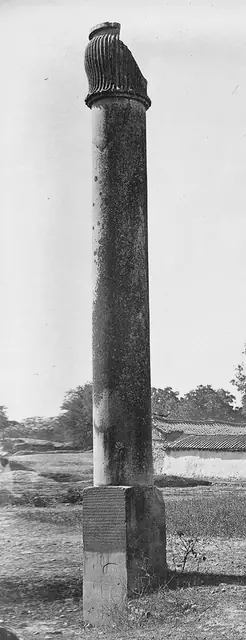
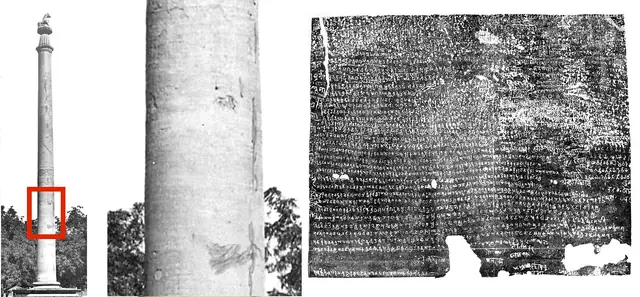
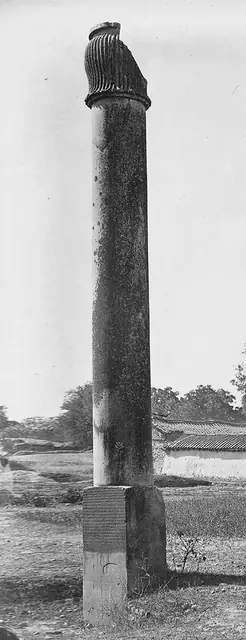
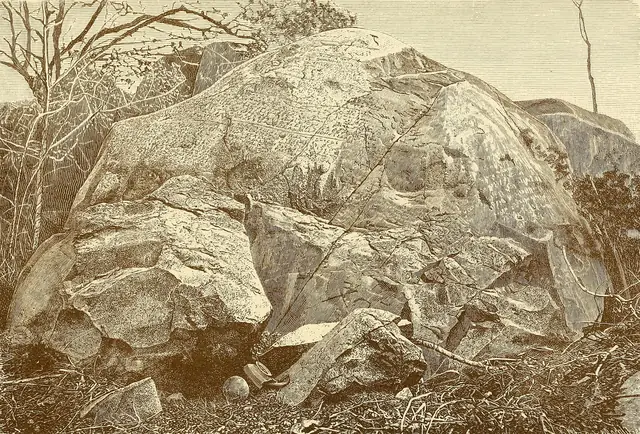
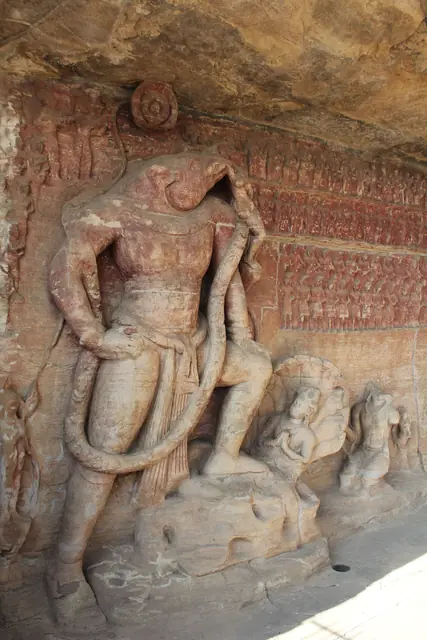
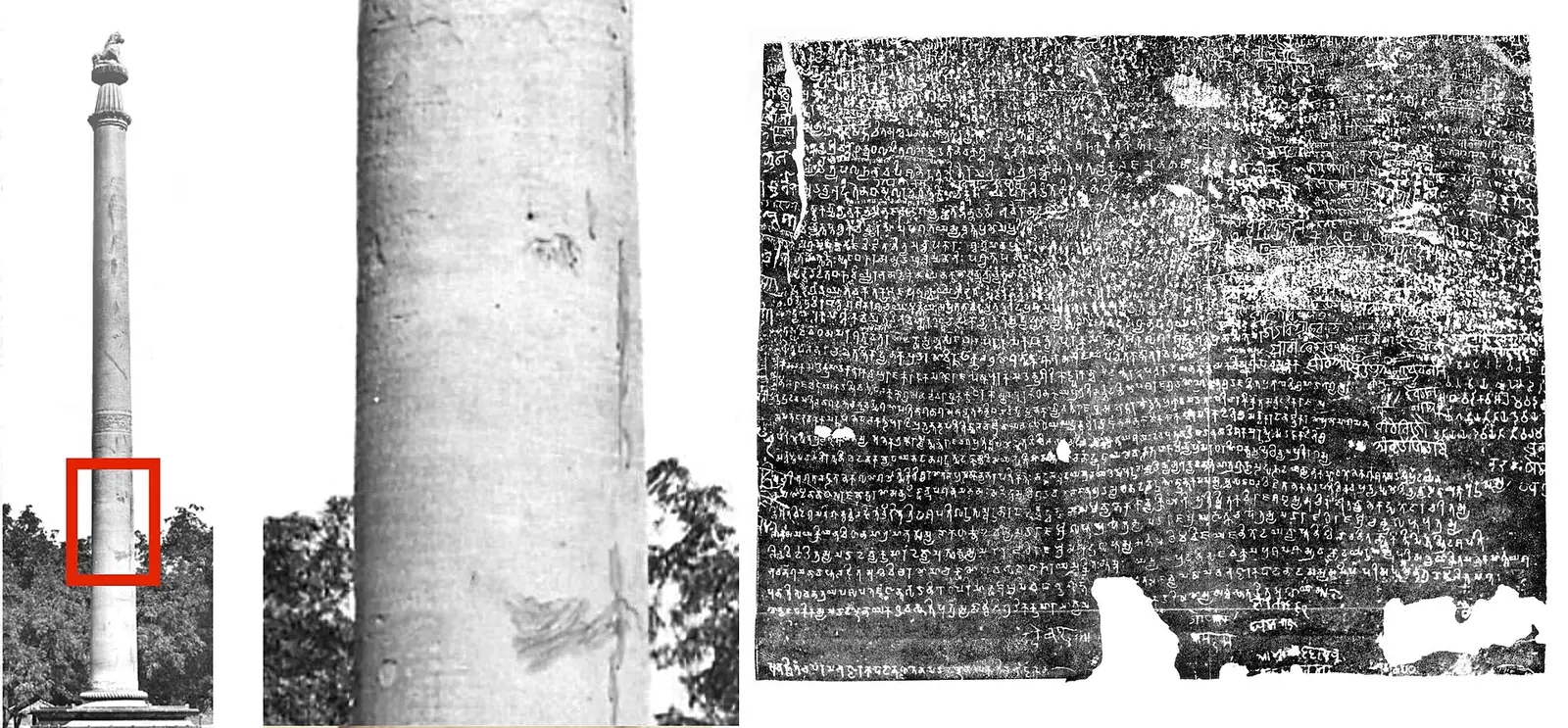
Under the Guptas, Brahmi in the north changed shape. The letters grew taller, vowel signs curled, and small wedges or hooks appeared at the tops of the strokes, the first hint of the headline that Devanagari would later draw across every word. The great Gupta records show it at its best: Harishena’s verse prashasti of Samudragupta on the Allahabad pillar, the Mehrauli iron pillar, the Udayagiri cave inscriptions near Vidisha, and Skandagupta’s pillar at Bhitari and rock inscription at Junagadh.
02A script that travelled
From Gupta letters came the Siddhamatrika of the 6th century, then Sharada in Kashmir, Nagari in the west and centre, and the eastern scripts that became Bengali and Odia. Buddhist monks carried the Gupta-era forms north over the passes, and the Tibetan alphabet of the 7th century was modelled on an Indian script of this family. Scripts of the Silk Road oasis kingdoms, used for Sanskrit, Tocharian and Khotanese, are also its descendants.
03The ladder back to Brahmi
Gupta letters were half-familiar to anyone who read Nagari, and that made them the first rung. In the 1830s James Prinsep and his colleagues in Calcutta worked through the Gupta records on the Allahabad pillar and elsewhere, then stepped back letter by letter to the older Ashokan forms. J. F. Fleet published the full set in 1888 as Inscriptions of the Early Gupta Kings, still the standard edition.