Cite
MLA
“The rathas of Mamallapuram.” Hindu History, 2026, https://www.hinduhistory.in/sthapatya/mahabalipuram-rathas/. Accessed .
APA
Hindu History. (2026). The rathas of Mamallapuram. Retrieved , from https://www.hinduhistory.in/sthapatya/mahabalipuram-rathas/
What defines it
- 01
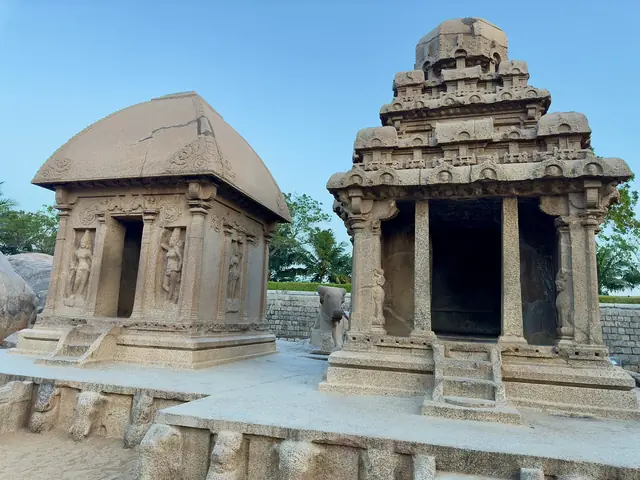
Draupadi ratha: square kuta (hut) roof
- 02
Arjuna ratha: two talas; Dharmaraja ratha: three
- 03
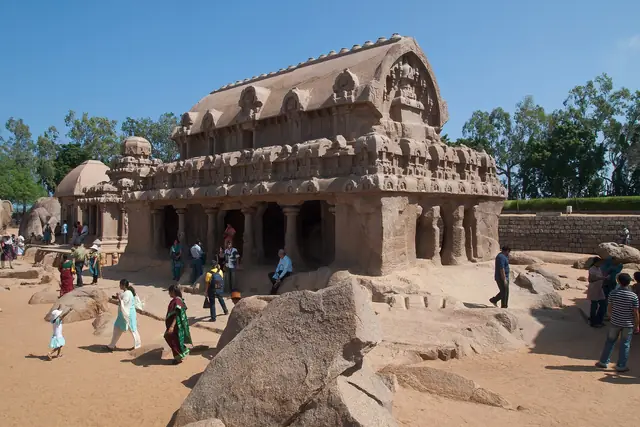
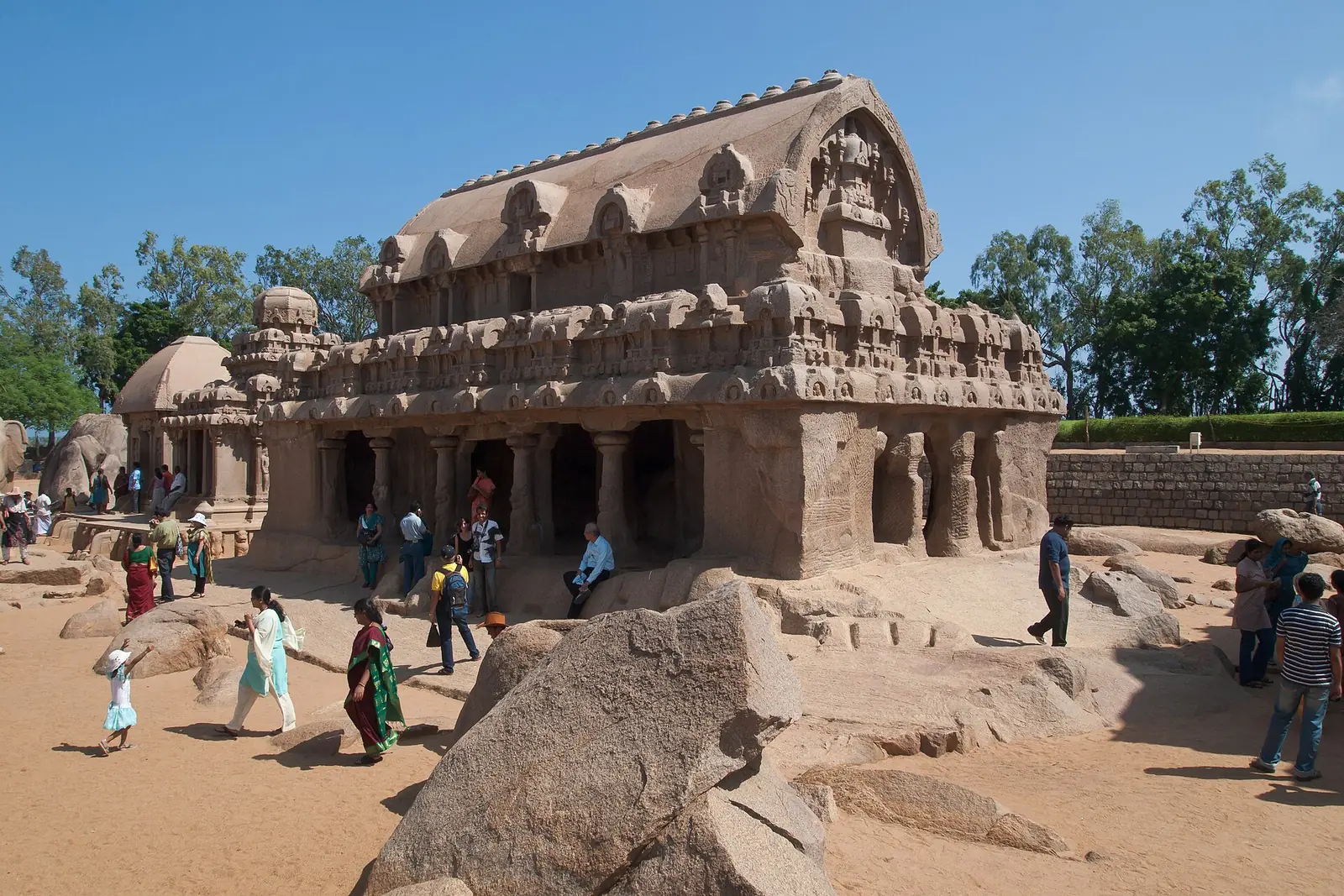
Bhima ratha: oblong shala roof, sandhara colonnade
- 04
Nakula-Sahadeva ratha: apsidal gajaprishtha
- 05
Unfinished, never consecrated monoliths of granite
01Five monoliths
Each ratha is a monolith cut from a granite outcrop, shaped as a model of a temple; the ASI calls them models of chariots, ratha meaning chariot. Their plans are square, rectangular or apsidal. The largest measures about 13 by 11 metres and the tallest stands about 12 metres. They were never completed or consecrated; work seems to have stopped on the death of the king who began them, and uncut rock still shows at their bases and tops. Early accounts credit Narasimhavarman I, called Mamalla, who ruled 630–668; R. Nagaswamy and others, reading later inscriptions, attribute the Mamallapuram monuments to Narasimhavarman II. They are part of the World Heritage site inscribed in 1984.
02A pattern book of temple types
Each ratha shows a different form. The Draupadi ratha is a square shrine with a hut-shaped roof, the kuta, like a thatched village hut, and holds an image of Durga. The Arjuna ratha has two talas and a small mukhamandapa. The Dharmaraja ratha, the tallest, rises in three tiers as a pyramid and carries images of Harihara and Brahma among others. The Bhima ratha is oblong with a barrel-vaulted roof, the shala form, and a colonnade on its long sides that makes it a sandhara shrine with a path around. The Nakula-Sahadeva ratha is apsidal, the gajaprishtha or elephant-back form, and a carved elephant stands beside it, echoing its shape.
03Why they matter
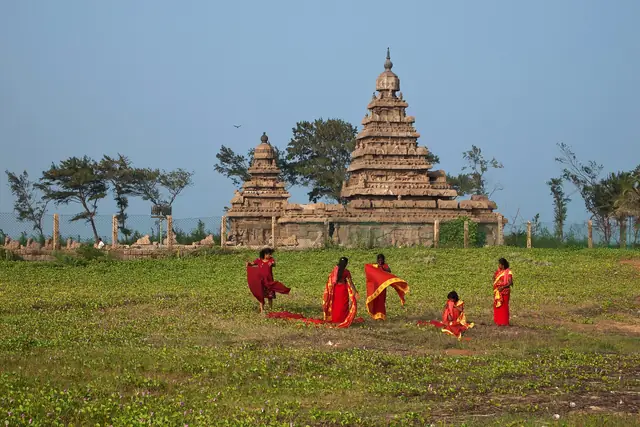
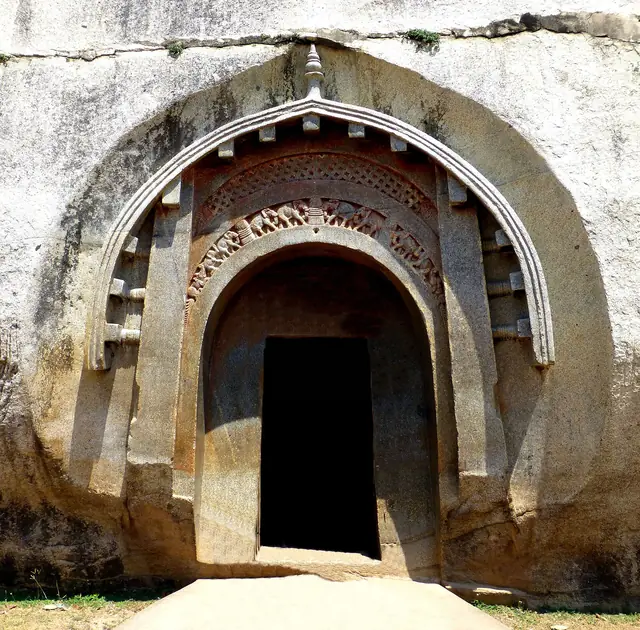
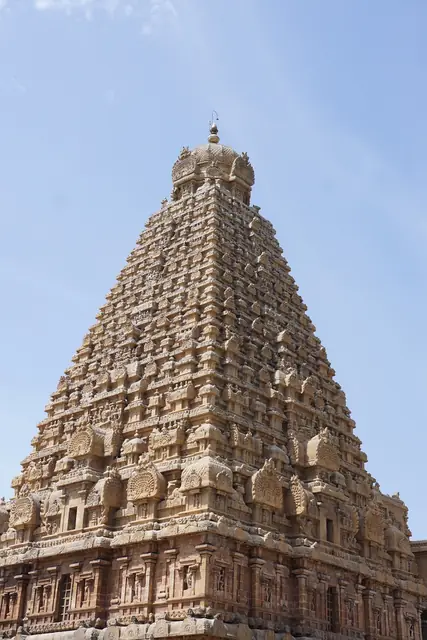
The Pandava names are popular ones, given long after; the shrines have no link with the Itihasa beyond them. What they do record is the full vocabulary of the southern temple at the moment it was being fixed: the square kuta, the oblong shala, the apsidal gajaprishtha and the storeyed pyramid. They likely served as models for the structural temples that followed, the Shore Temple close by, and later the great Chola vimanas. Granite has protected them from centuries of salt wind, and they came through the 2004 tsunami. Nearby, the Pallava sculptors also cut cave-mandapas into the same granite.