Cite
MLA
“Faxian (Fa-hsien).” Hindu History, 2026, https://www.hinduhistory.in/sakshi/faxian/. Accessed .
APA
Hindu History. (2026). Faxian (Fa-hsien). Retrieved , from https://www.hinduhistory.in/sakshi/faxian/
The king governs without decapitation or (other) corporal punishments. Criminals are simply fined, lightly or heavily, according to the circumstances (of each case).
The route
What defines it
- 01
Came for complete copies of the Vinaya
- 02
Three years at Pataliputra learning Sanskrit
- 03
Mild law, fines in place of corporal punishment
- 04
Free houses of charity and medicine
- 05
Never names the reigning king
01The walk for the Vinaya
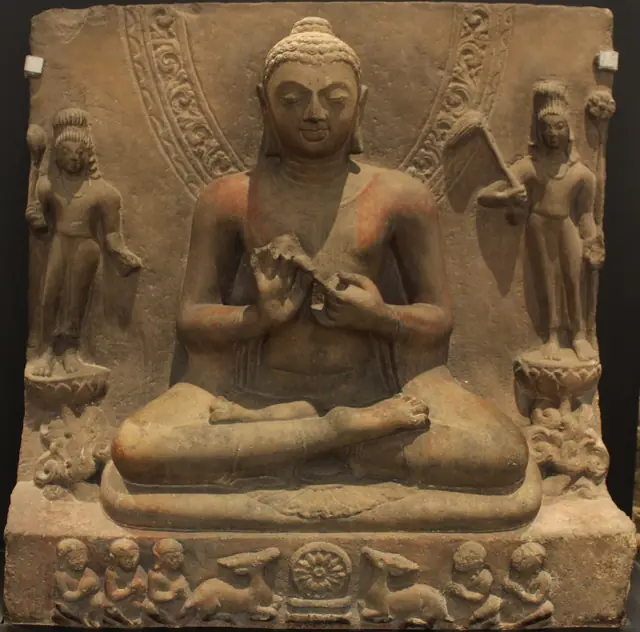
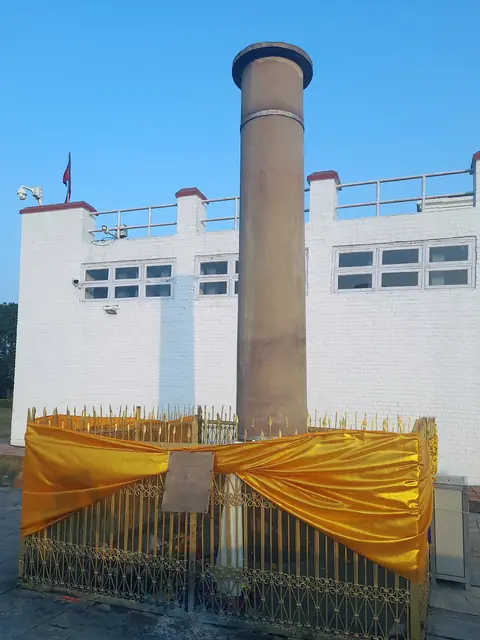
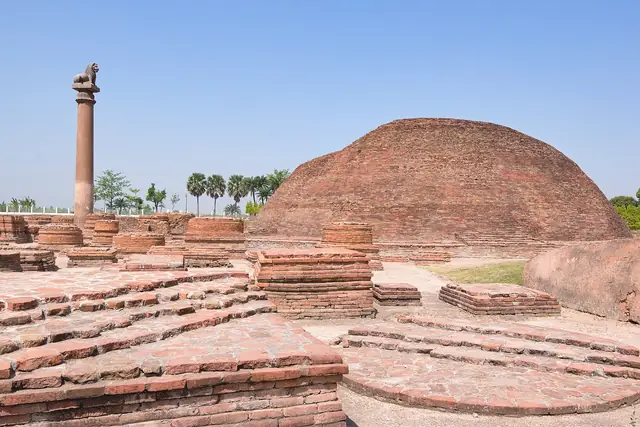
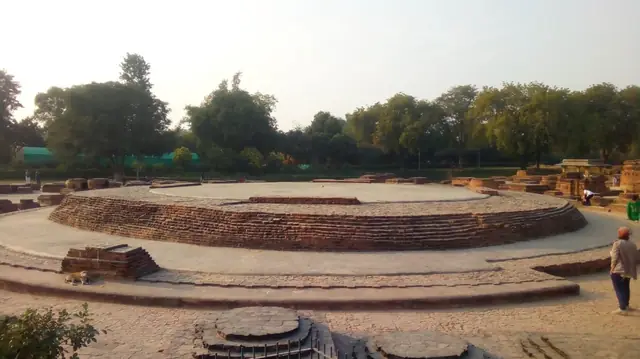
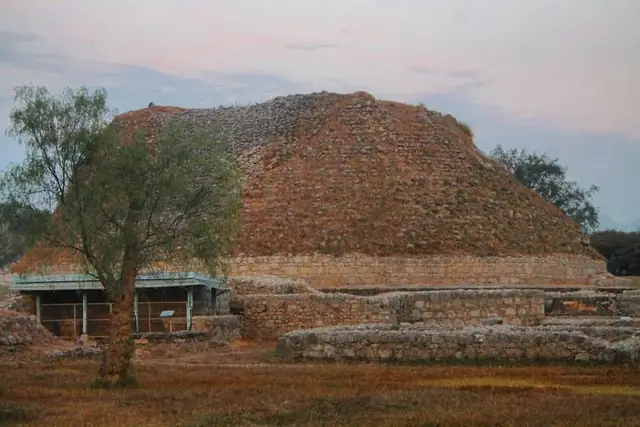
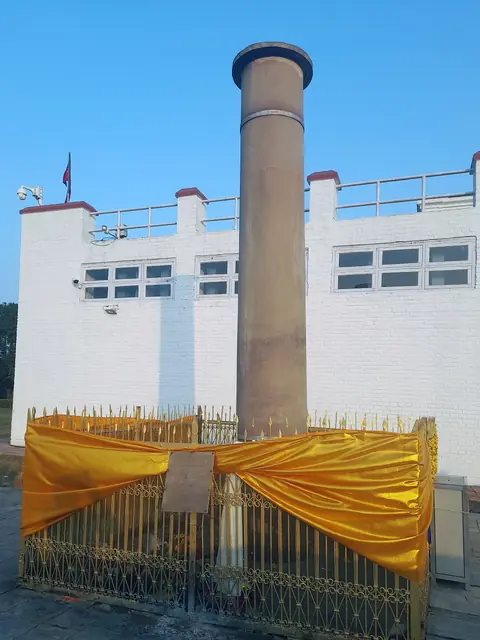
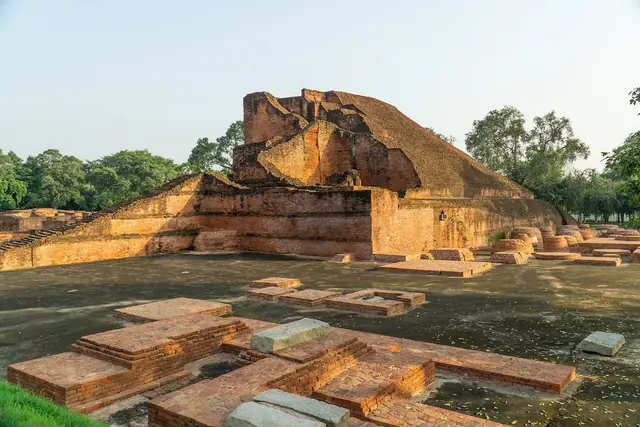
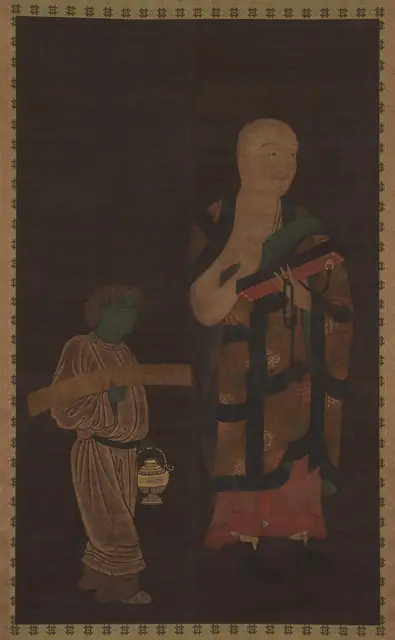
Faxian left Chang’an in 399 CE with a few companions. They crossed the Taklamakan and the Pamirs, came down through Udyana and Gandhara, and reached Mathura. From there he went east along the old Buddhist circuit: Sankasya, Kanyakubja, Shravasti, Kapilavastu, Lumbini, Kushinagara, Vaishali, Pataliputra, Rajagriha, Gaya and Varanasi. He stayed three years at Pataliputra learning Sanskrit and copying the Vinaya texts he had come for, then two years at the port of Tamralipti in Bengal copying sutras and drawing images. He sailed to Lanka, stayed two more years, and reached China by sea in about 412. He set it all down in the Foguo ji, the ‘Record of Buddhist Kingdoms’, a short book that James Legge put into English in 1886.
02The Middle Kingdom under the Guptas
The land south of Mathura he calls the Middle Kingdom, Madhyadesha. People there, he says, need not register their households; only those who till the royal land pay a share of grain; they come and go as they please. The king rules without beheading or flogging, and crimes are fined. Throughout the country people do not kill living things, drink liquor or eat onions and garlic, and there are no butchers in the markets; cowries serve as small money. At Pataliputra he describes a yearly procession of some twenty cars carrying images, with Brahmins inviting the images into the city, and houses where Vaishya families gave free food and medicine to the poor, the crippled and the sick, with physicians to examine them.
03A pilgrim’s eye, and its limits
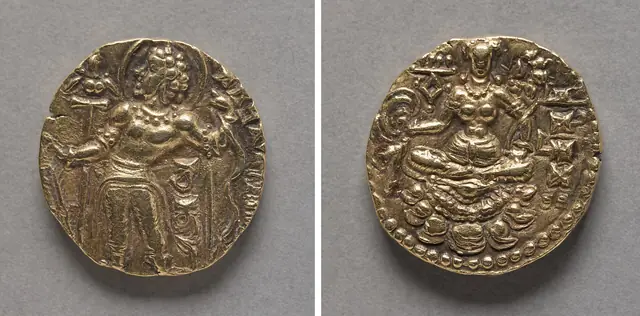
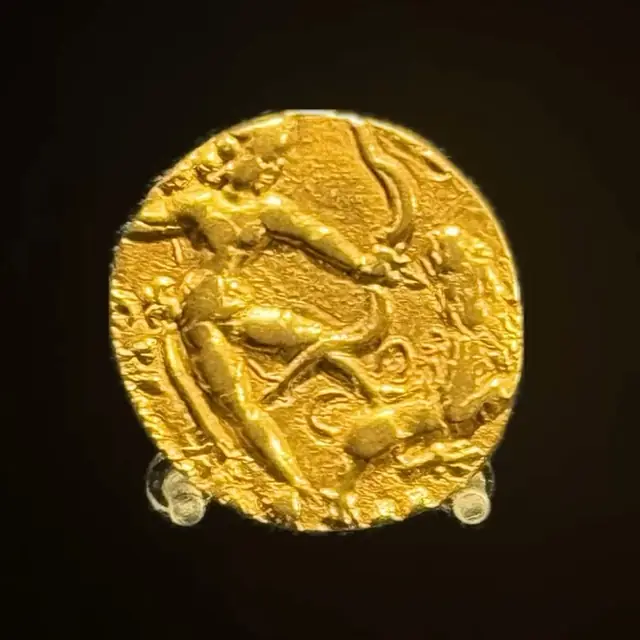
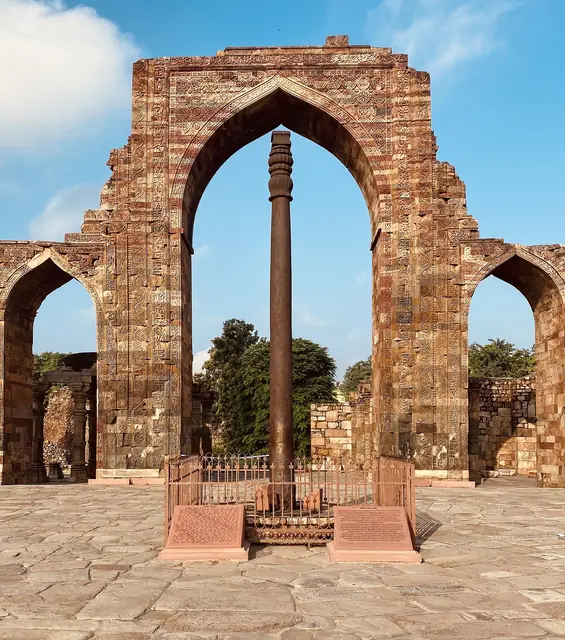
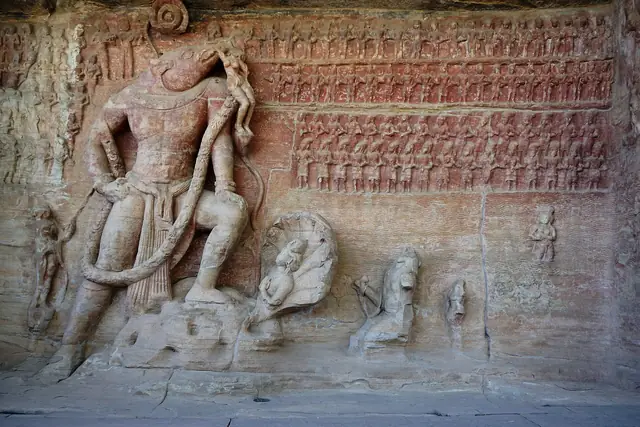
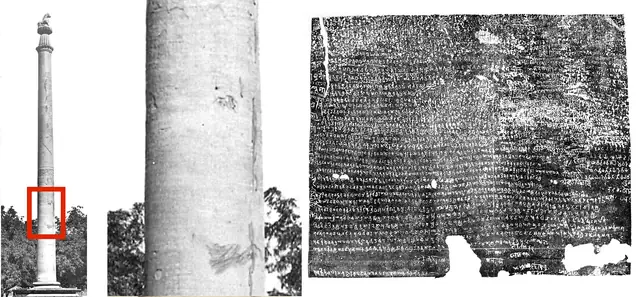
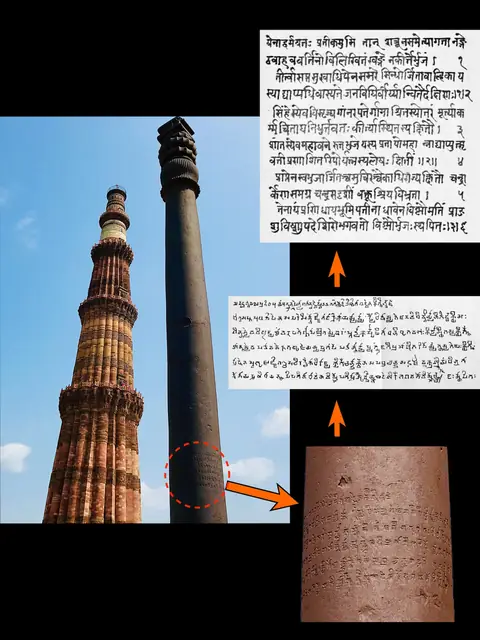
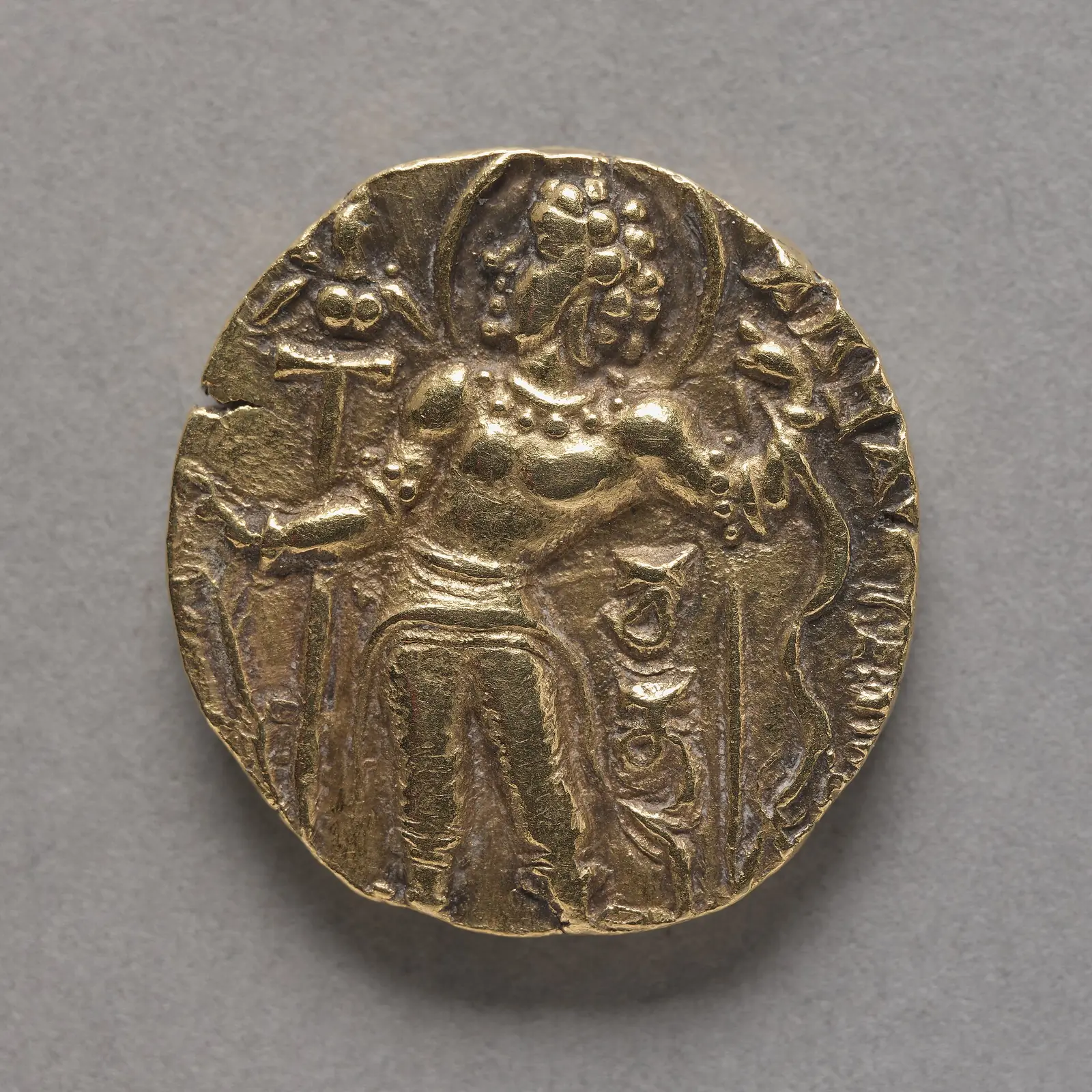
Faxian never names the king. That he travelled under Chandragupta II Vikramaditya is worked out from the dates, and from Gupta records such as the Udayagiri and Mehrauli inscriptions and the gold dinars of the reign. His eye was fixed on stupas, relics and monasteries, so the Vaishnava and Shaiva temples rising in his time barely appear, and the Bhagavata kings he lived under are seen only as patrons of the Sangha. His picture of mild law also has an edge he states himself: repeated rebels lost the right hand, and the Chandalas lived apart, striking a piece of wood when entering a town so that others could avoid touching them. What he gives, he gives plainly, with distances in yojanas, and much of it has been used by archaeologists to find the sites he names.
In the texts
- Foguo ji, Record of Buddhist Kingdoms (c. 416 CE)
- Translation by James Legge (Oxford, 1886)