01Two ages of carving
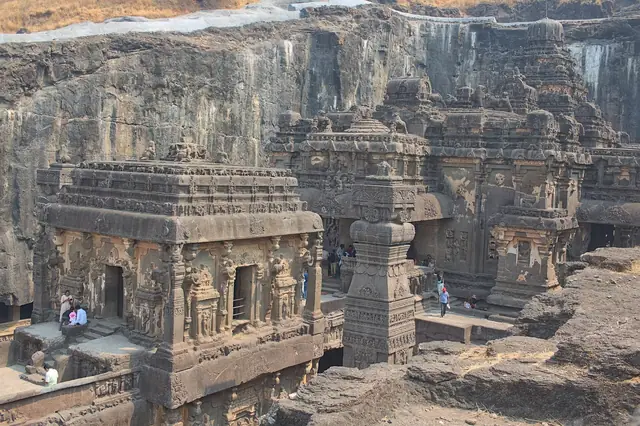
The oldest caves, the chaitya halls 9 and 10 and some viharas, were cut around the 2nd and 1st centuries BCE, in the Satavahana age. Then the work stopped for centuries. It began again in the later 5th century under the Vakataka king Harishena, when ministers and feudatories of his court paid for new monasteries. An inscription in Cave 16 records that Varahadeva, Harishena’s minister, had it made. Within perhaps two or three decades most of the great caves were cut and painted, and then the site was left, some caves unfinished.
02Padmapani and the Jatakas
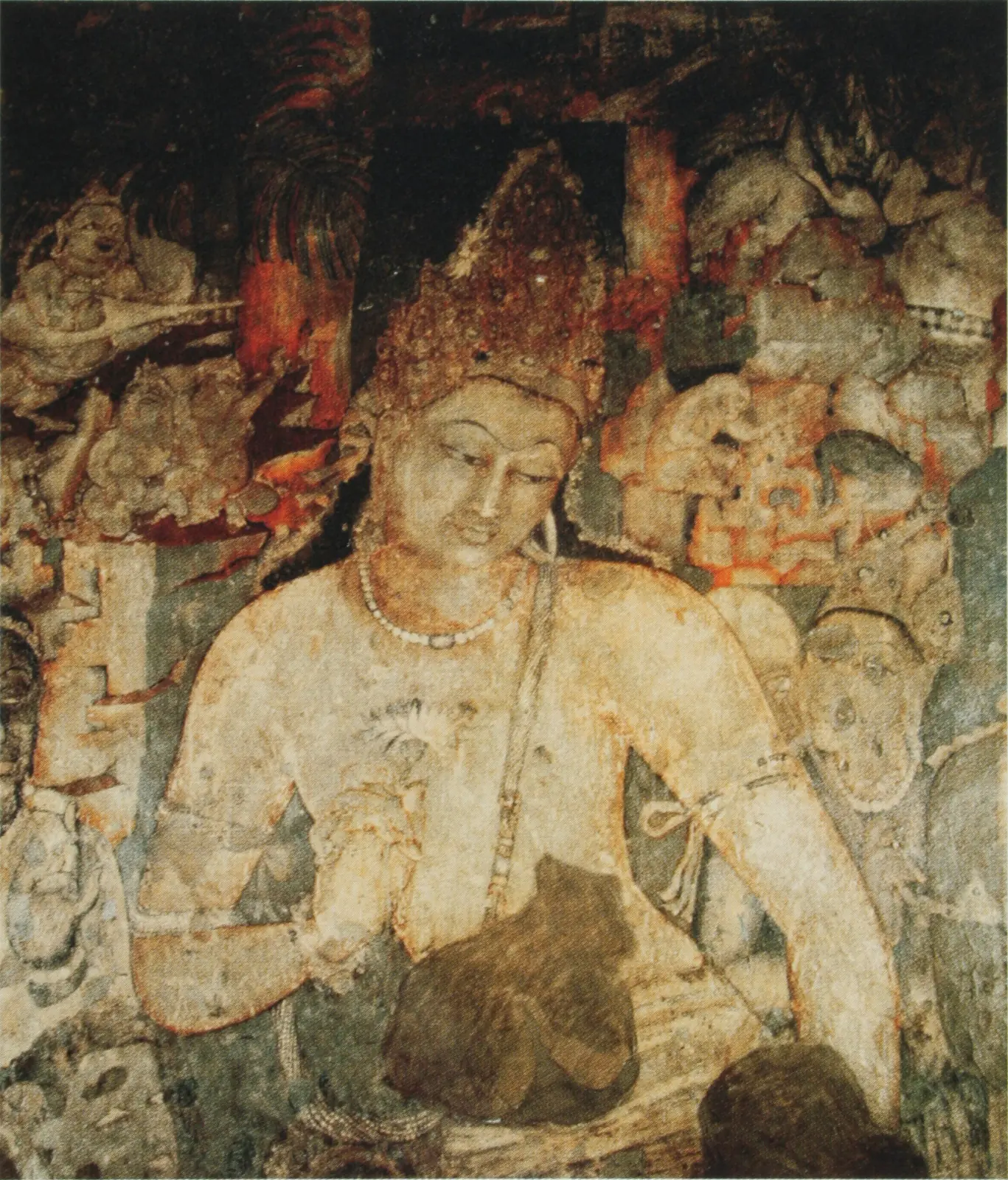
The walls tell the Jataka tales of the Buddha’s earlier births, crowded with kings, dancers, merchants, elephants and city streets, painted on a lime plaster laid over clay and cow dung. In Cave 1 the Bodhisattva Padmapani holds a blue lotus, head tilted, eyes half closed; it is the most reproduced painting of ancient India. These are Buddhist monasteries, built on Dharmic soil by kings who also gave to Shaiva and Vaishnava shrines. On 28 April 1819 a British officer, John Smith, chasing a tiger, scratched his name in Cave 10. UNESCO listed Ajanta in 1983.
The life of this place
- c. 2nd–1st century BCEThe first chaitya halls and viharas are cut.
- c. 460–480 CEThe second phase under the Vakataka king Harishena; Varahadeva’s inscription in Cave 16.
- 28 April 1819John Smith of the Madras Army comes upon the caves and signs Cave 10.
- 1983Inscribed as a UNESCO World Heritage Site.
About 100 km from Chhatrapati Sambhajinagar; closed on Mondays. Flash photography is forbidden to protect the paintings.