Cite
MLA
“When did Bhagwan Buddha live?.” Hindu History, 2026, https://www.hinduhistory.in/vimarsha/buddha-date/. Accessed .
APA
Hindu History. (2026). When did Bhagwan Buddha live?. Retrieved , from https://www.hinduhistory.in/vimarsha/buddha-date/
What defines it
- 01
Ashoka’s consecration c. 268 BCE, fixed by five Greek kings
- 02
218 years (Sri Lankan chronicles) or about 100 (northern texts)
- 03
Lumbini pillar: hida budhe jate
- 04
Timber shrine at Lumbini, 6th century BCE (Antiquity, 2013)
- 05
Puranic Magadha king lists
01One anchor, many counts
Every chronology starts from Ashoka. His thirteenth rock edict names five Greek kings, Antiyoka, Turamaya, Antekina, Maka and Alikasudara, who are Antiochus II of Syria, Ptolemy II of Egypt, Antigonus of Macedon, Magas of Cyrene and Alexander of Epirus, and this lets historians place his consecration around 268 BCE. From that anchor the schools count back. The Dipavamsa and the Mahavamsa of Sri Lanka say 218 years passed between the parinirvana and Ashoka’s consecration. Northern Buddhist texts in Sanskrit, Chinese and Tibetan say about a hundred. Every tradition agrees that Bhagwan Buddha lived eighty years. So the gap decides everything, and the gap is exactly what the sources dispute.
02The ground at Lumbini
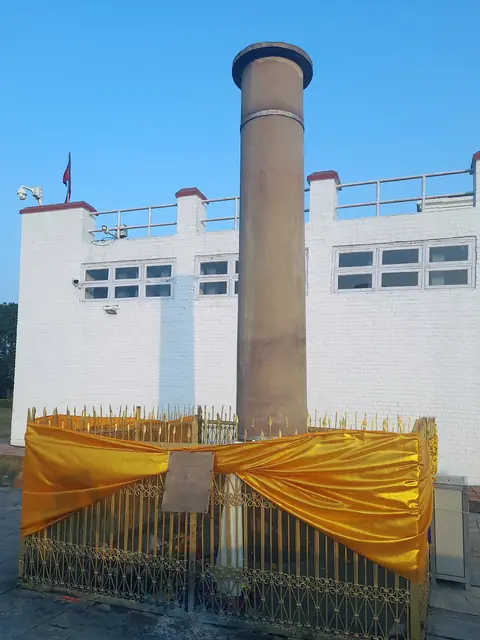
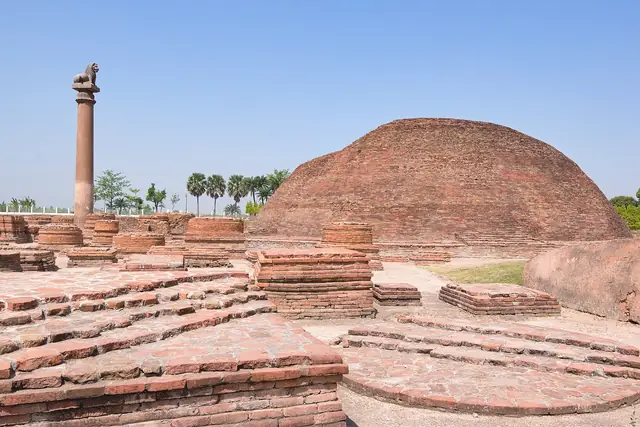
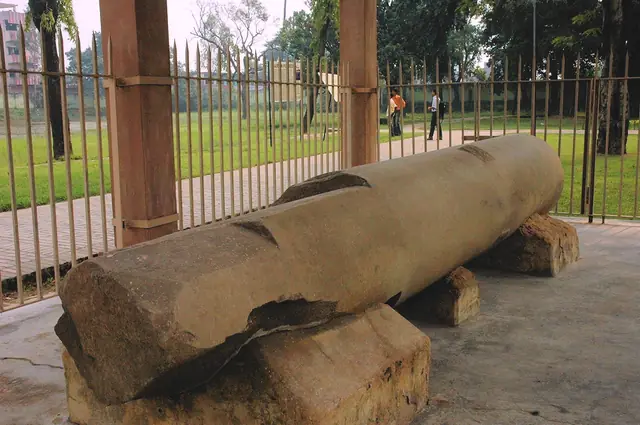
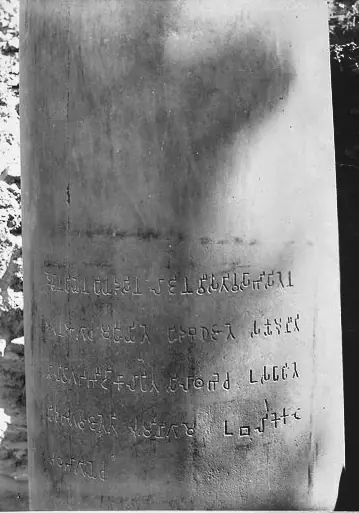
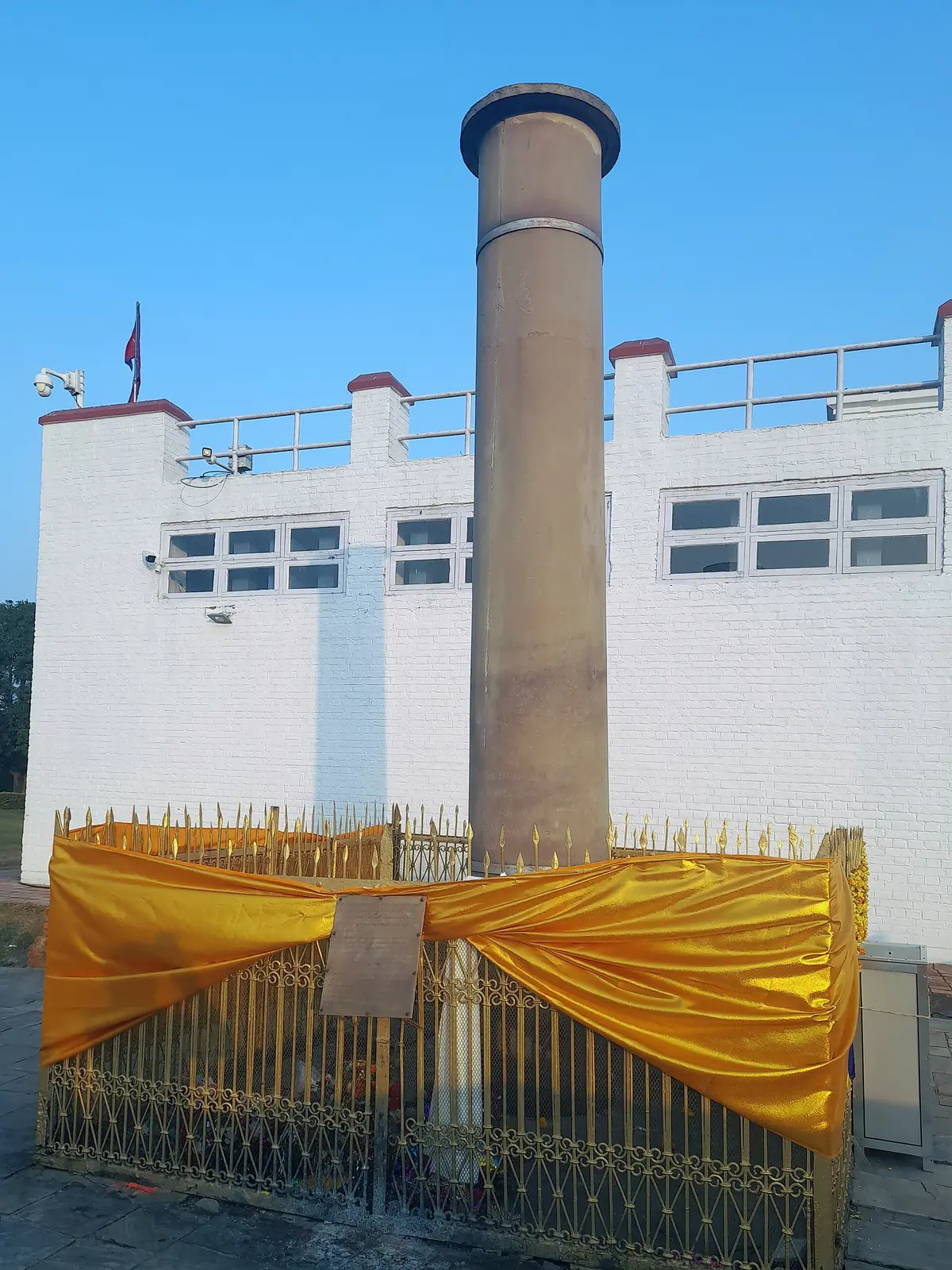
Ashoka himself came to Lumbini in the twentieth year after his consecration and set up a pillar whose inscription says hida budhe jate, here the Buddha was born; he also reduced the village’s tax. In 2013 a team led by Robin Coningham of Durham University published in the journal Antiquity the remains of a timber shrine beneath the brick temples of the Maya Devi shrine, dated by radiocarbon and optically stimulated luminescence to the 6th century BCE, with an open space at its centre where a tree may once have stood. Coningham said the find challenged those who had placed the Buddha in much later centuries. Others reply that the date of a shrine is not a birth date, and the argument goes on.
The positions
Long chronology: parinirvana 544/543 BCE, or corrected to c. 483 BCE
The Theravada tradition of Sri Lanka, Myanmar and Thailand (Dipavamsa, Mahavamsa); in its corrected form, most 20th-century historians
Counting 218 years back from Ashoka, the Theravada world places the parinirvana in 544 or 543 BCE and celebrated the 2,500th Buddha Jayanti in 1956. When historians fixed Ashoka by his Greek contemporaries, they found the chronicles’ dates for him too early by some sixty years and shifted the count, to a parinirvana of about 487–483 BCE and a birth around 563 BCE, which entered textbooks across India. The Lumbini timber shrine of the 6th century BCE sits comfortably with this range.
The 218-year figure comes from chronicles compiled in Sri Lanka many centuries later, and it implies a long gap filled by only a handful of elders in the lineage of Vinaya teachers. The corrected long chronology joins a Sri Lankan count to Greek dates, and neither half was made to fit the other.
Short chronology: parinirvana c. 400–368 BCE
Northern Buddhist sources; Heinz Bechert and the Göttingen symposium of 1988; Richard Gombrich
Sanskrit, Chinese and Tibetan Buddhist texts put the parinirvana about a century before Ashoka. In 1988 Bechert gathered specialists at Göttingen to weigh every source, and concluded that the evidence gave sufficient reason to date the parinirvana considerably later than 483 BCE, probably in the 4th century BCE. Gombrich, working from the succession of Vinaya teachers, argued for a date around 400 BCE. A shorter span also fits the small number of generations of elders between the Buddha and Ashoka’s time.
Bechert himself conceded that the short chronology too has no secure basis as a historical date. The northern texts were also compiled long after the events, and the Lumbini timber shrine of the 6th century BCE sits awkwardly with a Buddha born in the 5th century unless the shrine is older than its purpose.
Puranic chronology: c. 1887–1807 BCE
Kota Venkatachalam (The Age of Buddha, Milinda and King Amtiyoka and Yuga Purana) and writers of the Indian chronology school
Venkatachalam took the Puranic lists of the kings of Magadha, from the Brihadratha line through the Pradyota, Shishunaga and Nanda dynasties, with their stated reigns, and counted forward from the Mahabharata war as the Kali reckoning fixes it. This places Ajatashatru’s accession near 1814 BCE and, with the Buddha seventy-two at that time, his life around 1887–1807 BCE. Writers of this school argue that the Sandrokottos of the Greeks was a Gupta Chandragupta, not the Maurya, so that the accepted chronology of ancient India rests on a mistaken identification.
Ashoka’s own edicts name Greek kings of the 3rd century BCE, and his Lumbini pillar honours the Buddha’s birthplace as a place already sacred, so a Buddha in the 19th century BCE requires moving Ashoka too, against that evidence. The Puranic reign totals differ between Puranas, and no excavation at a Buddhist site has reached remains that old.
A relic inscription dated close to the parinirvana; more excavation with scientific dates at Lumbini, Kapilavastu, Bodh Gaya, Sarnath and Kushinagar; or an independent record that fixes the gap between the Buddha and Ashoka. Whatever the answer, it must reckon with the Ashoka anchor, tied to five Greek kings, which every school has to account for.
Great masters
In the texts
- Dipavamsa and Mahavamsa
- Ashoka’s Rock Edict XIII and the Lumbini pillar inscription
- Puranic king lists of Magadha (Vayu, Matsya, Vishnu, Bhagavata)