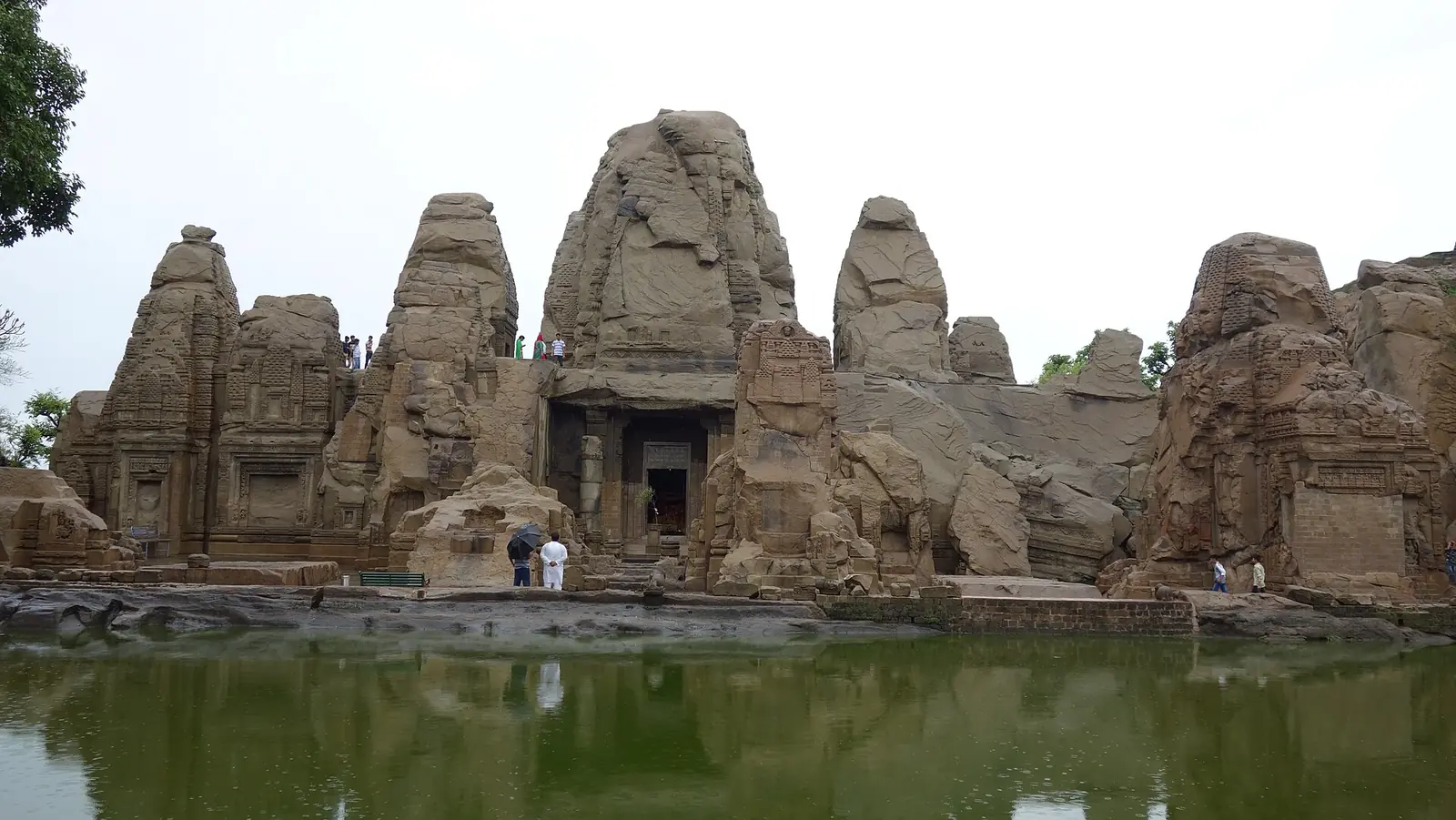
01A mountain made into temples
The carvers began at the top of the ridge and worked downward, as at Ellora, leaving shikharas, mandapas and sanctums standing in the living rock. The plan was a mandala: a main shrine facing east with smaller shrines arranged around it, and a rock-cut tank in front in which the whole group is reflected. Much was never finished. The lintels carry Shiva, Vishnu, Indra and the river goddesses. The main shrine, the Thakurdwara, now holds murtis of Rama, Lakshmana and Sita, and worship goes on.
02Found and shaken
Harold Shuttleworth, a British officer, brought the temples to scholarly notice in 1913, and Hargreaves of the Archaeological Survey surveyed them soon after. The Kangra earthquake of 1905 had already brought down parts of the upper storeys. Local tradition says the Pandavas carved the temples during their exile, and left them unfinished when their hiding place was discovered. The ASI protects the site, and on a clear morning the snow peaks of the Dhauladhar stand behind the shikharas in the tank’s reflection.
The life of this place
- c. 8th centuryTemples carved from the sandstone ridge.
- 1905 CEKangra earthquake damages the upper parts.
- 1913 CEHarold Shuttleworth reports the temples; ASI survey follows.
40 km south-west of Kangra town via Lunj; ASI ticketed site.