Cite
MLA
“Bhumija: the tower of little spires.” Hindu History, 2026, https://www.hinduhistory.in/sthapatya/bhumija-style/. Accessed .
APA
Hindu History. (2026). Bhumija: the tower of little spires. Retrieved , from https://www.hinduhistory.in/sthapatya/bhumija-style/
What defines it
- 01
Rows of miniature spires (kutastambhas) between central bands
- 02
Tower built in bhumis (storeys), grid-like
- 03
Plan of a square rotated about its centre
- 04
A Nagara sub-type, beside latina and shekhari
01Storeys of spires
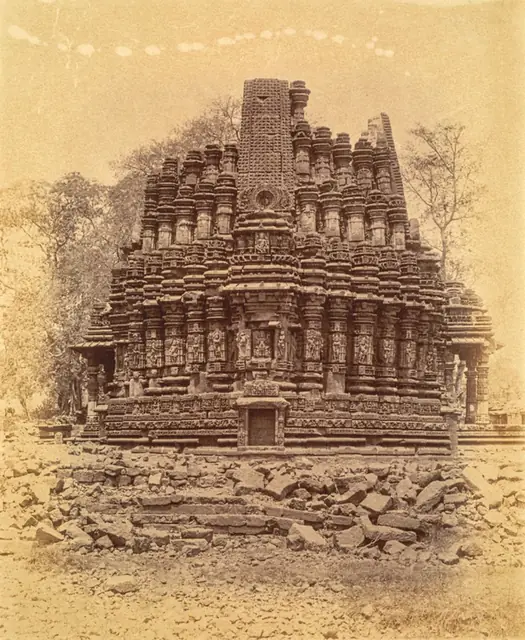
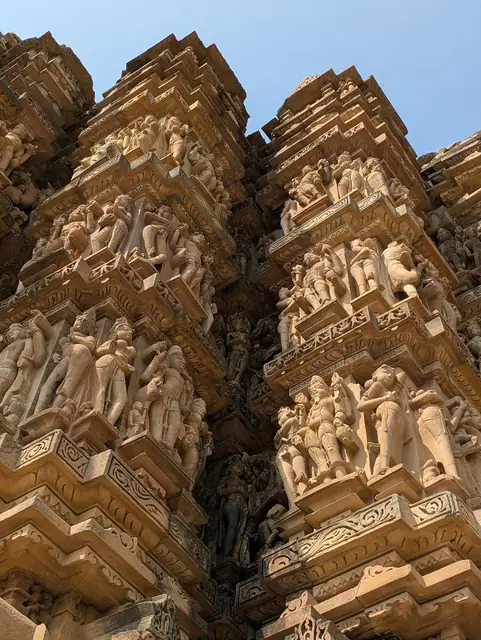
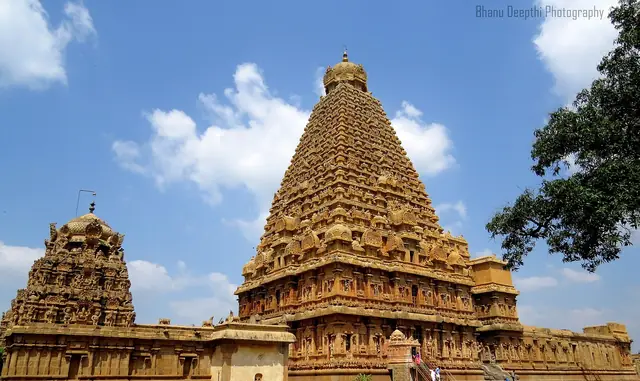
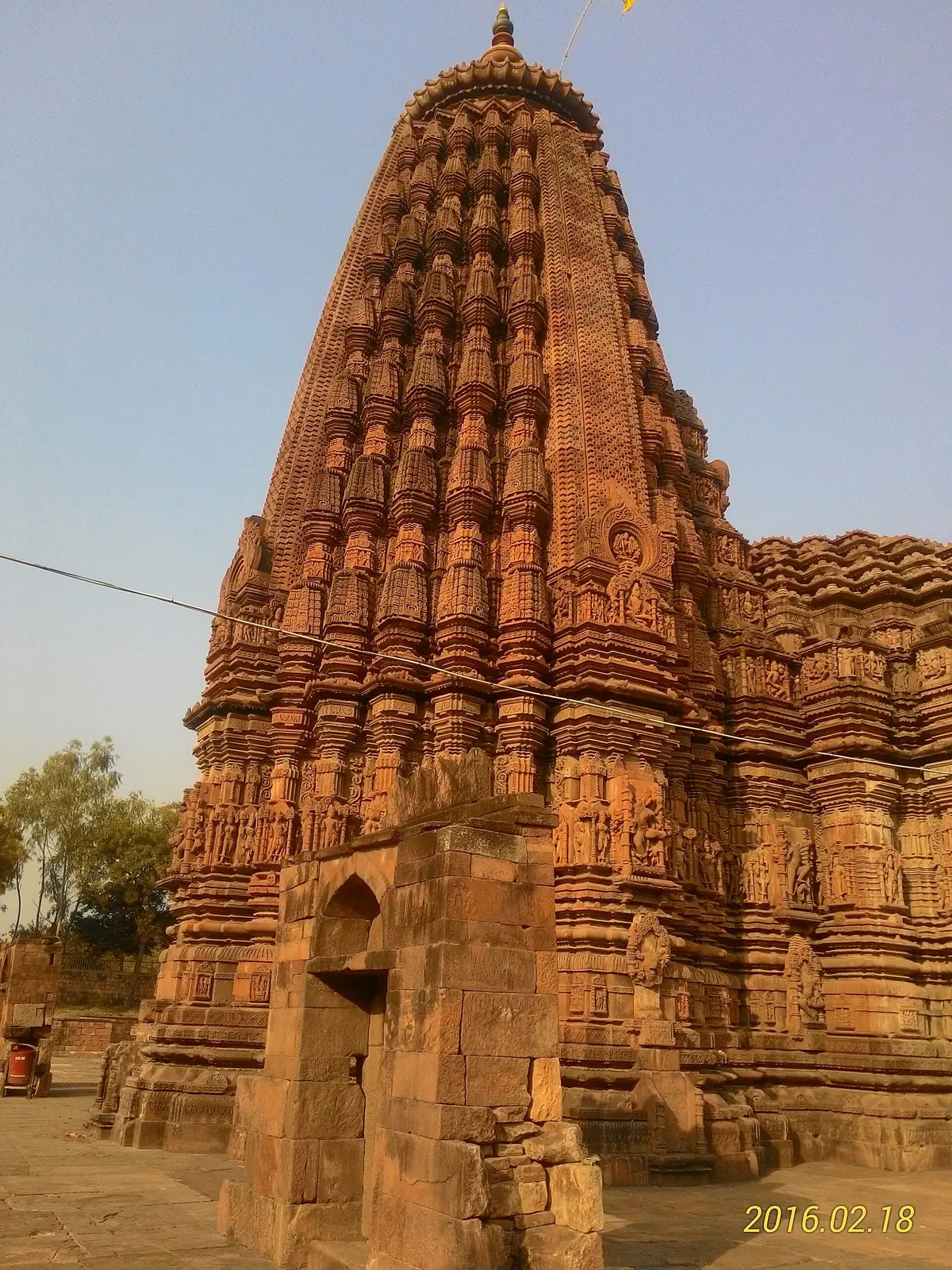
Bhumi means earth or storey, and the bhumija tower is built in storeys. Down the middle of each face runs a flat band, the latā, as on a latina tower; but the quarters between these bands are filled with miniature spires, kutastambhas, set in horizontal and vertical rows right up to the top. The effect is a grid, less soaring than the latina, closer to a pyramid. Behind it lies a plan in which a square is rotated about its centre, the turning pausing at fixed intervals, so the walls break into many angled facets. This is still a Nagara temple, and scholars class bhumija as one of the Nagara sub-types alongside latina and shekhari.
02Malwa and Raja Bhoja
The style took shape in Malwa under the Paramaras. Some scholars date its first experiments to the 9th century and its settled form to the 10th; others put the first true bhumija towers around 1000–1025, and Donald Stadtner has published proto-bhumija temples of the 7th–8th centuries from eastern Madhya Pradesh and Chhattisgarh. The ruins at Un near the Narmada include eight bhumija temples. The Samarangana Sutradhara, the 11th-century treatise attributed to Raja Bhoja, describes the type in its 65th chapter with sixteen variants, and the Aparajitaprccha lists more. Adam Hardy, who published those verses in 2015, found that most surviving temples before the 13th century follow their rules.
03Udaypur to Sinnar and Ramappa
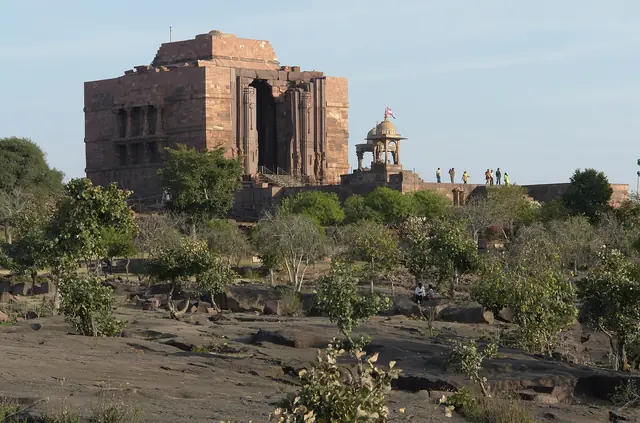
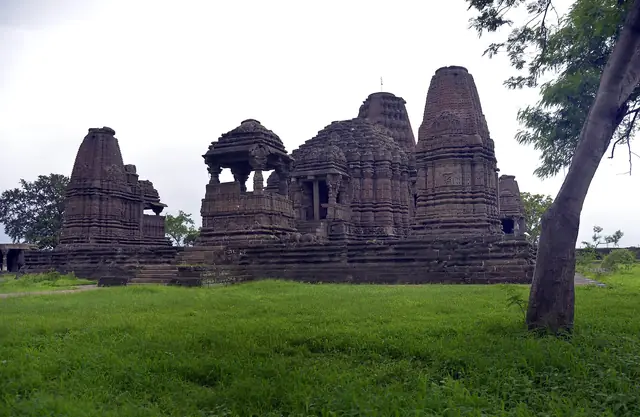
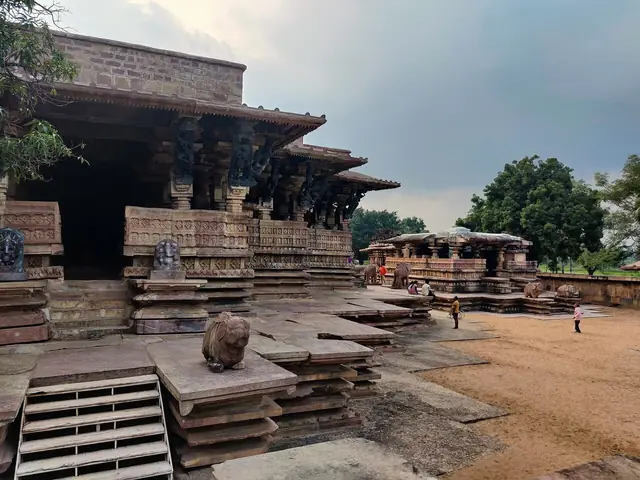
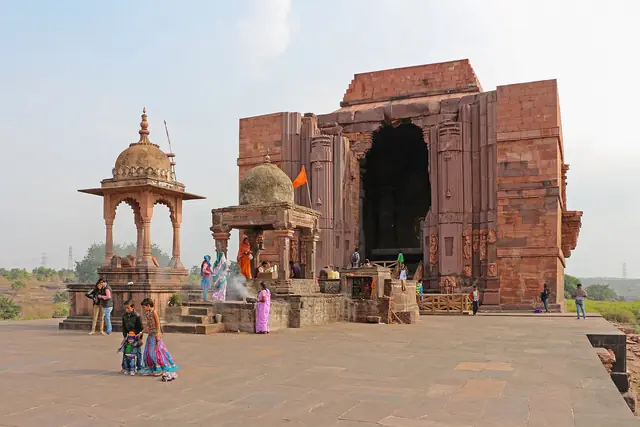
The finest and best-preserved bhumija temple is the 11th-century Nilakantheshvara, also called Udayeshvara, at Udaypur near Vidisha in Madhya Pradesh, a Paramara foundation whose tower climbs in tight rows of little spires to a great amalaka. From Malwa the form travelled. In Maharashtra it shaped the Gondeshwar temple at Sinnar and the Shiva temple at Ambarnath. It reached Rajasthan, Gujarat and Chhattisgarh, where the Jain temples at Arang use it. Further south the Kakatiyas fused bhumija ideas with Dravida forms at the Ramappa temple in Telangana, and Hoysala builders borrowed it for some of their towers in Karnataka.
Family tree
In the texts
- Samarangana Sutradhara, chapter 65
- Aparajitaprccha