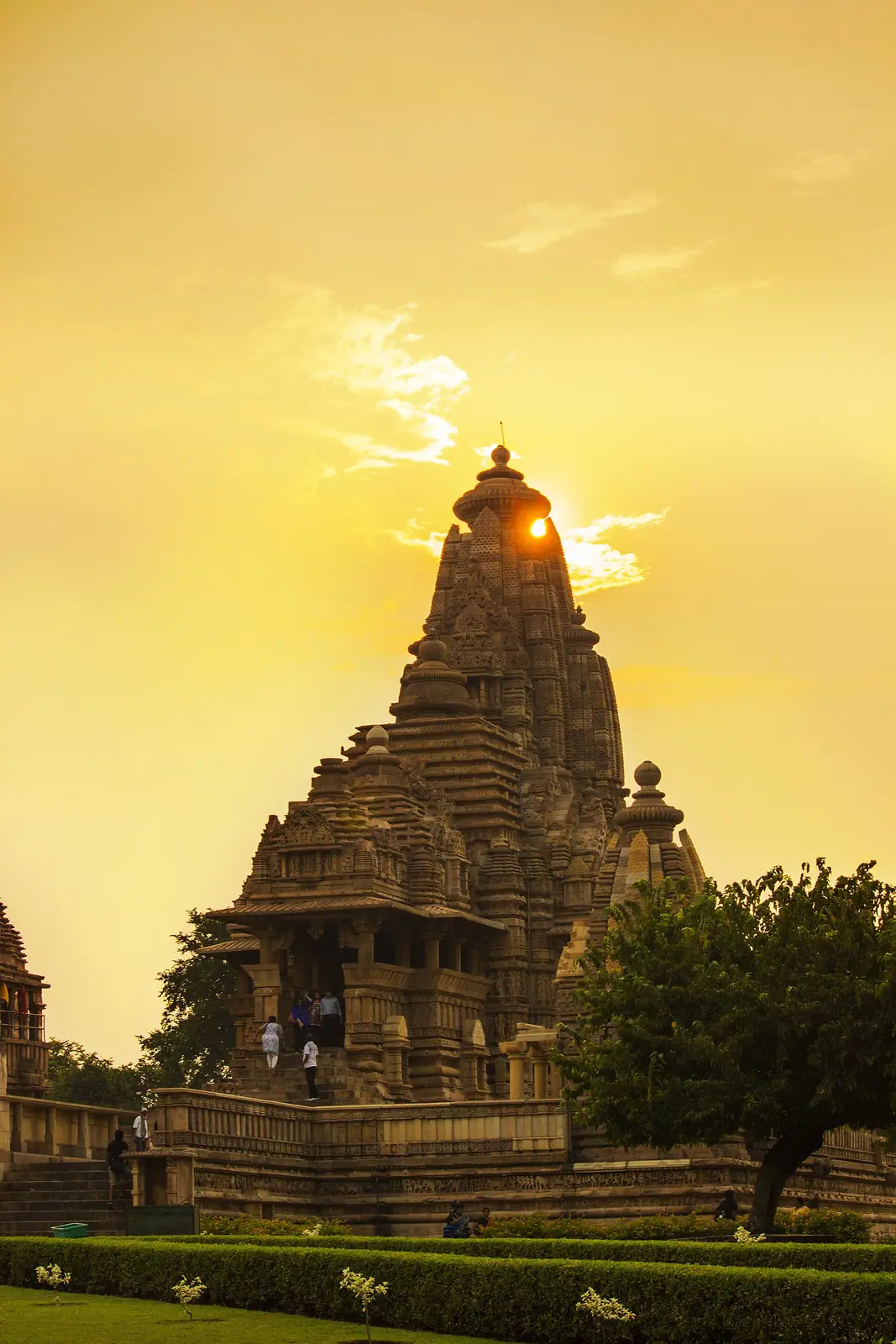
01Dated by their kings
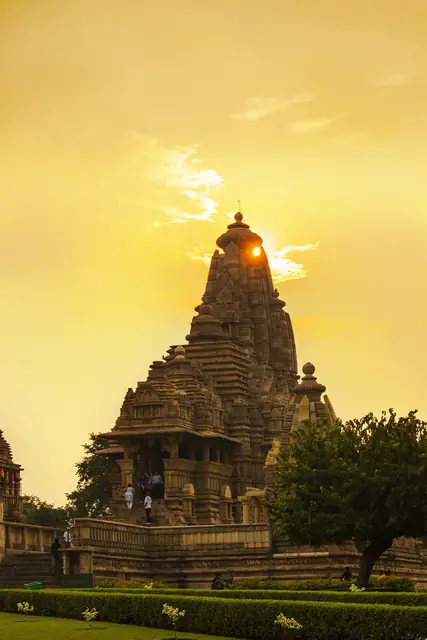
Khajuraho can be dated stone by stone. An inscription of 954 CE in the Lakshmana temple says Yashovarman built it for Vaikuntha Vishnu and that his son Dhanga completed it. A second, of 1002 CE, in the Vishvanatha temple credits Dhanga. The Kandariya Mahadeva, the largest, is assigned to Vidyadhara, around 1030; he was the Chandela king who held off Mahmud of Ghazni at Kalinjar in 1019–22. Its shikhar is made of 84 smaller spires rising like a mountain range, Kailash in sandstone. Al-Biruni, writing about 1030, names Kajuraha as the capital of Jejakabhukti.
02Lost to the forest
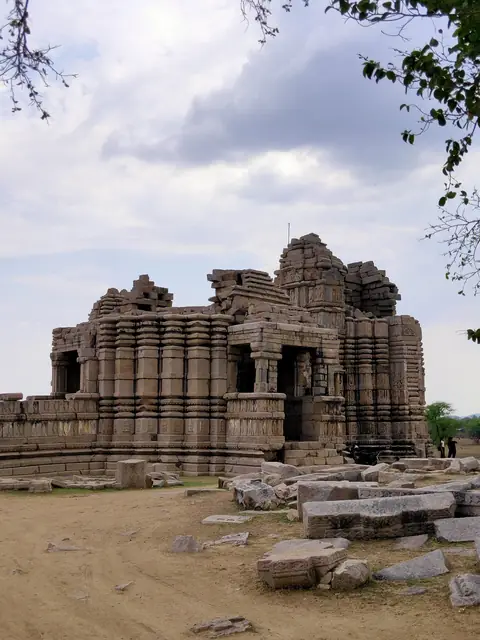
After the Chandelas lost Kalinjar to Qutb-ud-din Aibak in 1202–03, the court never came back, and Khajuraho shrank to a village. Ibn Battuta passed by around 1335 and wrote of yogis living by the temple tanks. The forest closed in, and that remoteness kept most of the temples whole. Captain T.S. Burt of the Bengal Engineers reached them in 1838; Alexander Cunningham surveyed them in the 1850s and 1860s. UNESCO listed the group in 1986.
03Matangeshvara
Outside the western group’s fence stands the Matangeshvara temple, plain-walled, with a linga about 2.5 metres high. Unlike its neighbours it never fell out of worship. At Mahashivaratri the town celebrates the wedding of Shiva and Parvati here, and pilgrims queue from the night before. The eastern group holds the Jain temples of Parshvanatha and Adinatha, of the same age and workshops.
The life of this place
- 954 CELakshmana temple completed by Dhanga; inscription dated.
- 1002 CEVishvanatha temple inscription of Dhanga.
- c. 1030 CEKandariya Mahadeva built under Vidyadhara.
- 1202–03 CEChandelas lose Kalinjar to Aibak; Khajuraho declines.
- 1838 CET.S. Burt reaches the temples.
- 1986 CEUNESCO World Heritage Site.
Khajuraho has an airport and a railway station. The western group is ticketed; Matangeshvara is free and open for puja from dawn.