01The first form
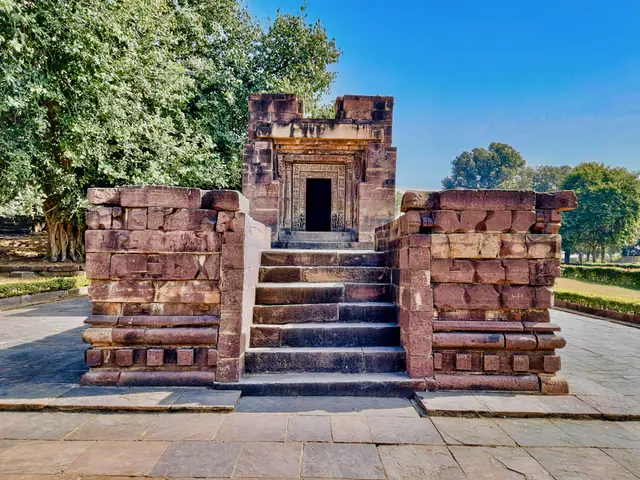
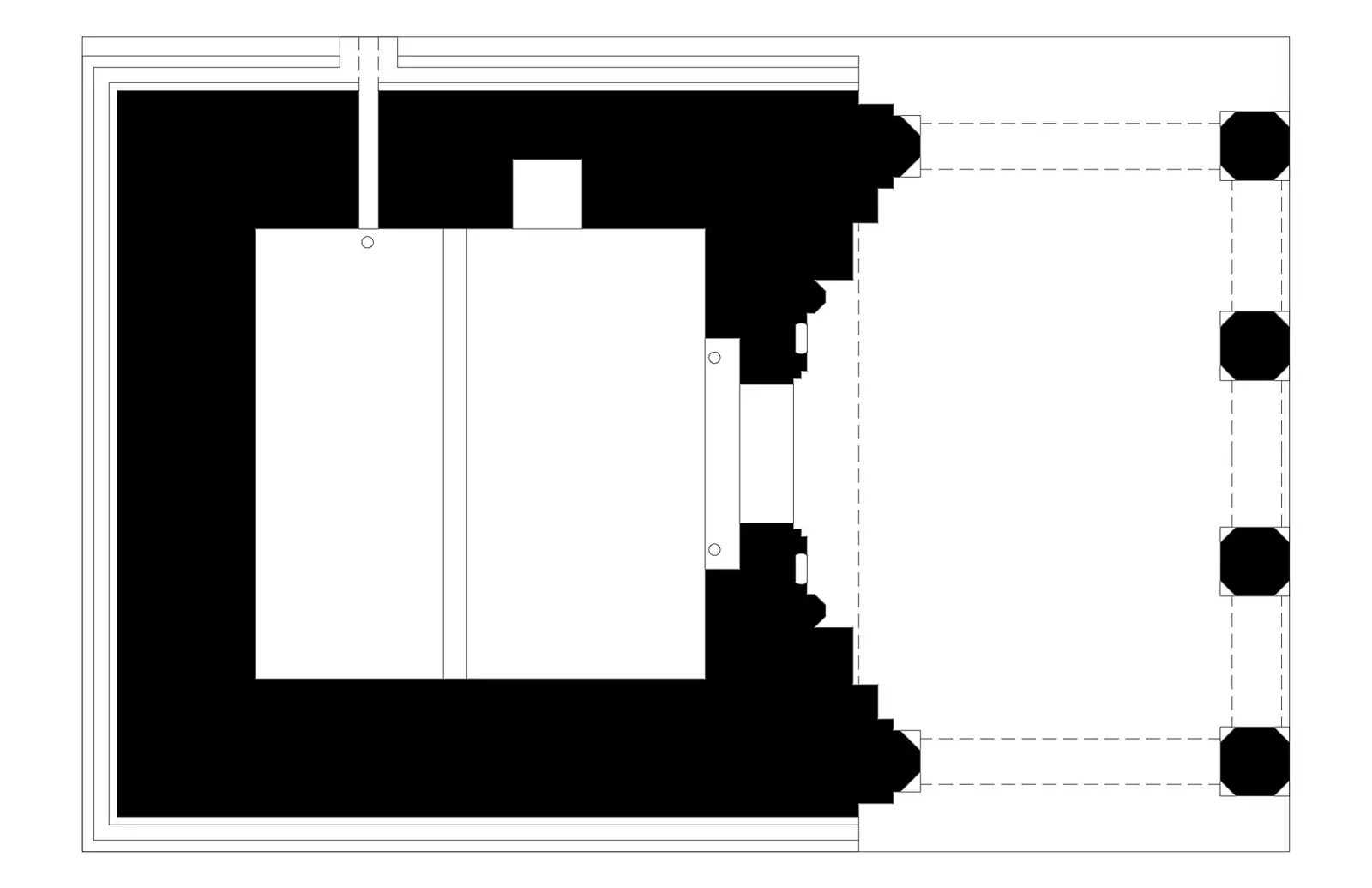
Everything a north Indian temple would later become is here in small: a square sanctum with a single door, an open porch on four pillars in front, Ganga and Yamuna at the doorway, lion capitals on the columns. The roof is flat, as in the Sanchi temple of the same age. Panels set later into the porch walls show Vishnu reclining on Shesha with Brahma rising from the lotus at his navel, and Narasimha. The villagers worship the Devi in the sanctum as Kankali.
02Lost to the railway
Alexander Cunningham, who visited in the 1870s, found the ruins of about 36 temples at Tigawa. Many had been pulled down by a contractor who used their stone for the railway being built across the region. The Kankali Devi temple survived because it was in worship. It is dated by its style to about 400–425 CE, the reign of Chandragupta II and his son, and is now protected by the ASI.
The life of this place
- c. 400–425 CEThe temple is built.
- 1870sCunningham records the ruins of about 36 temples, many broken for railway stone.
Tigawa is about 4 km north of Bahoriband, between Katni and Jabalpur; Katni is the nearest large railhead.