Cite
MLA
“Mandapa: the pillared hall.” Hindu History, 2026, https://www.hinduhistory.in/sthapatya/mandapa/. Accessed .
APA
Hindu History. (2026). Mandapa: the pillared hall. Retrieved , from https://www.hinduhistory.in/sthapatya/mandapa/
What defines it
- 01
Ardhamandapa or mukhamandapa: the entrance porch
- 02
Mandapa / mahamandapa: the gathering hall
- 03
Antarala: vestibule joining hall and sanctum
- 04
Odisha: jagamohana, natamandira, bhoga-mandapa
- 05
Vijayanagara: kalyana and vasanta mandapas, yali pillars
01Porch, vestibule, hall
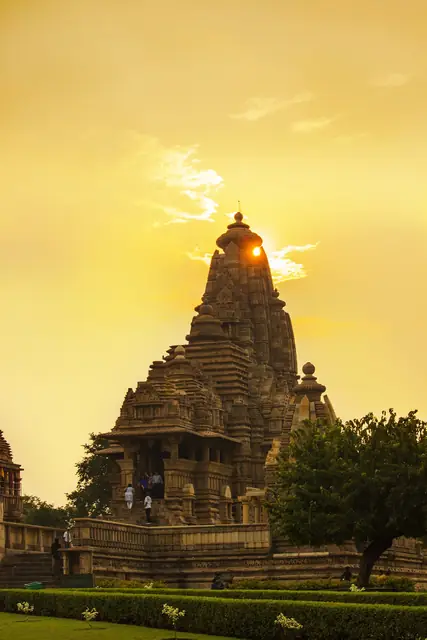
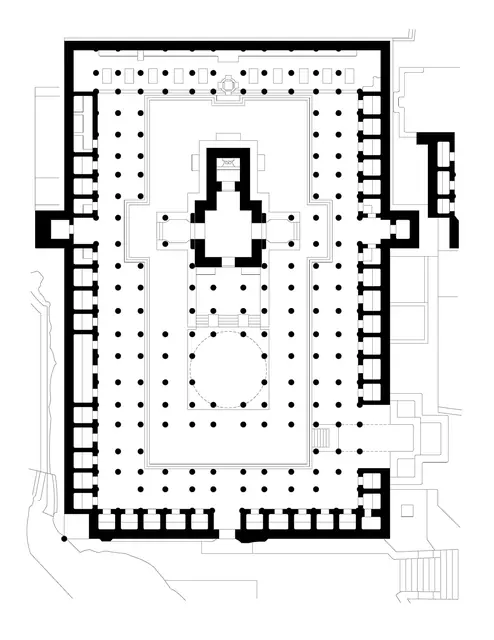
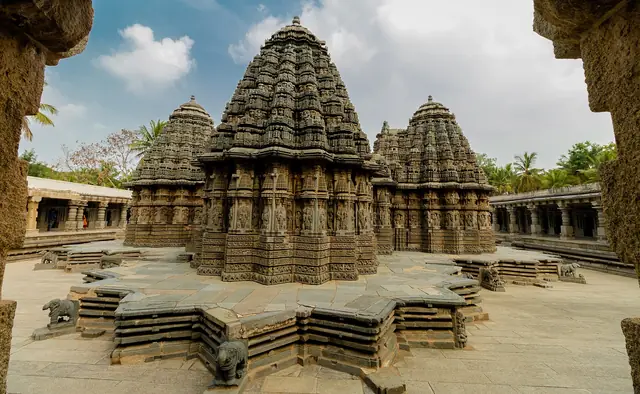
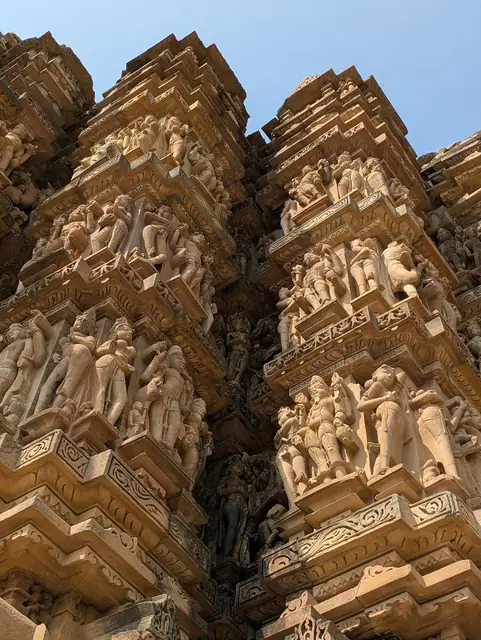
A devotee walking towards the sanctum passes through a series of spaces. At the front is the porch, often called the ardhamandapa or mukhamandapa. Then comes the mandapa proper, the gathering hall. Between the hall and the garbhagriha sits the antarala, a narrow vestibule that joins them. Each space is a little darker and narrower than the last, so that the eye adjusts to lamp-light as one nears the murti. At Khajuraho the Kandariya Mahadeva has three halls in front of its sanctum, and their pyramidal roofs climb one behind another towards the main tower. In the Pallava rathas at Mamallapuram, the Arjuna Ratha already has a small mukhamandapa cut from the rock.
02Halls for dance and offering
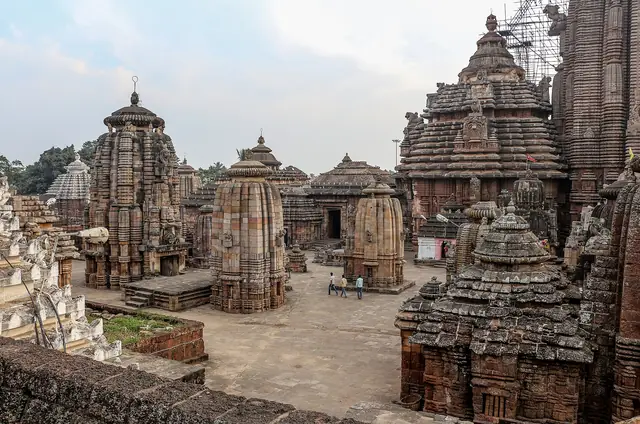
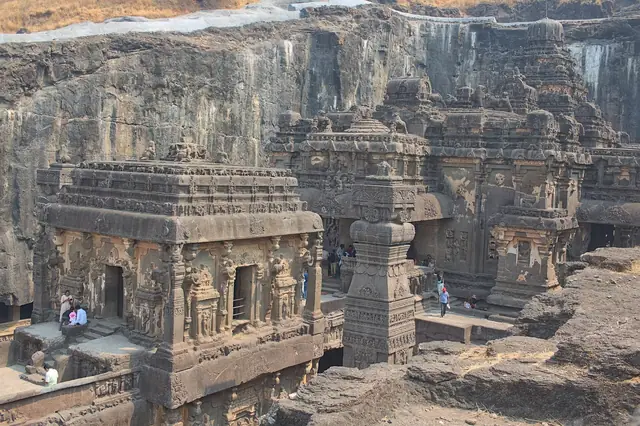
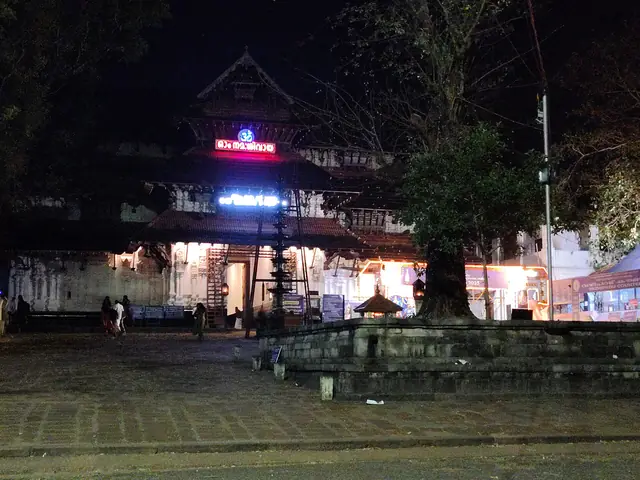
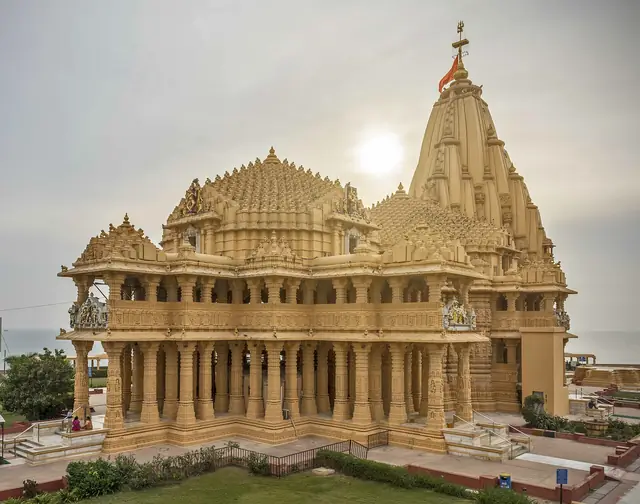
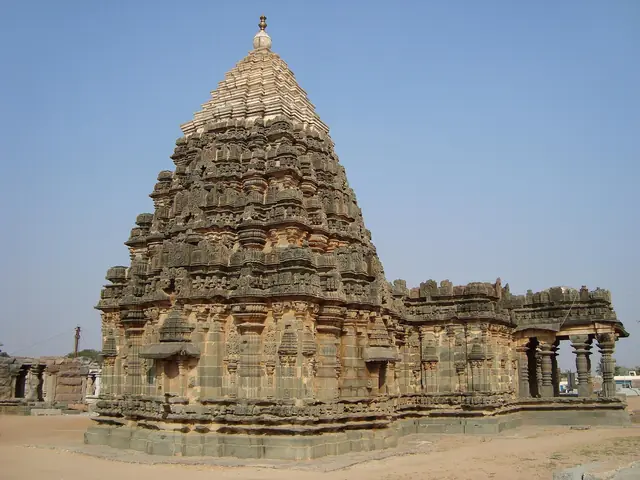
As temple worship grew, so did its halls. In Odisha the Lingaraja at Bhubaneswar has four buildings on one axis: the deula, the jagamohana for the assembly, the natamandira for dance and the bhoga-mandapa where food offerings are prepared, each roof lower than the one behind. At Ellora the rock-cut Kailasa has a flat-roofed mandapa on 16 pillars before its shrine. In Kerala the namaskara mandapam, a square pavilion on a raised platform, stands before the sreekovil. In the Maru-Gurjara temples, Jain ones especially, closed and open halls follow one another, their ceilings carved into domed rosettes.
03The great halls of the south
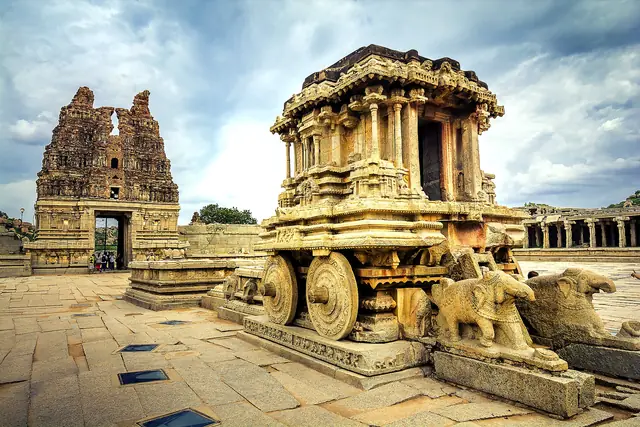
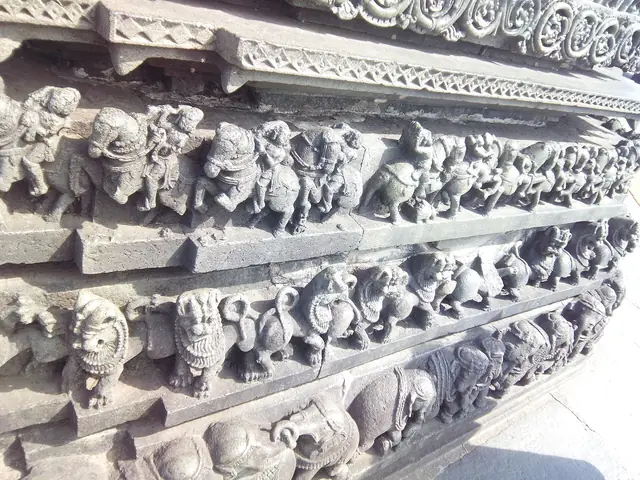
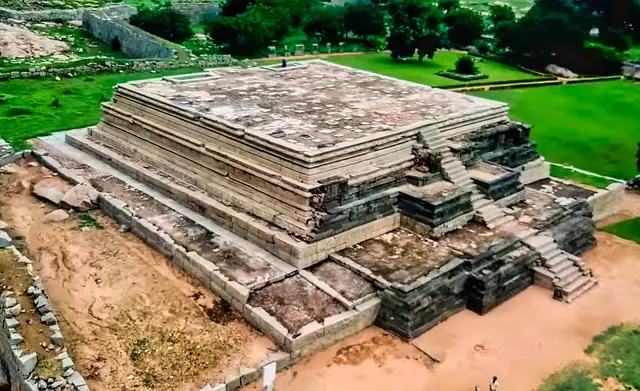
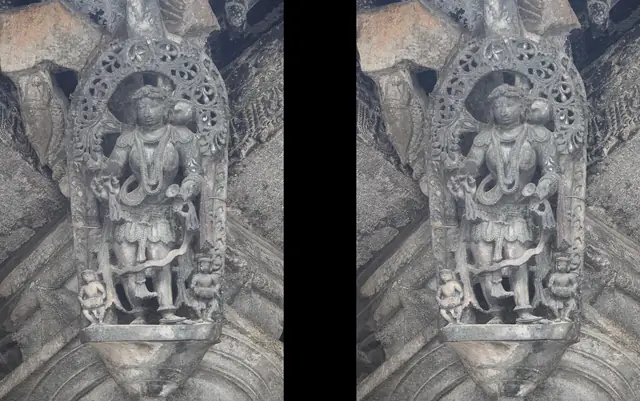
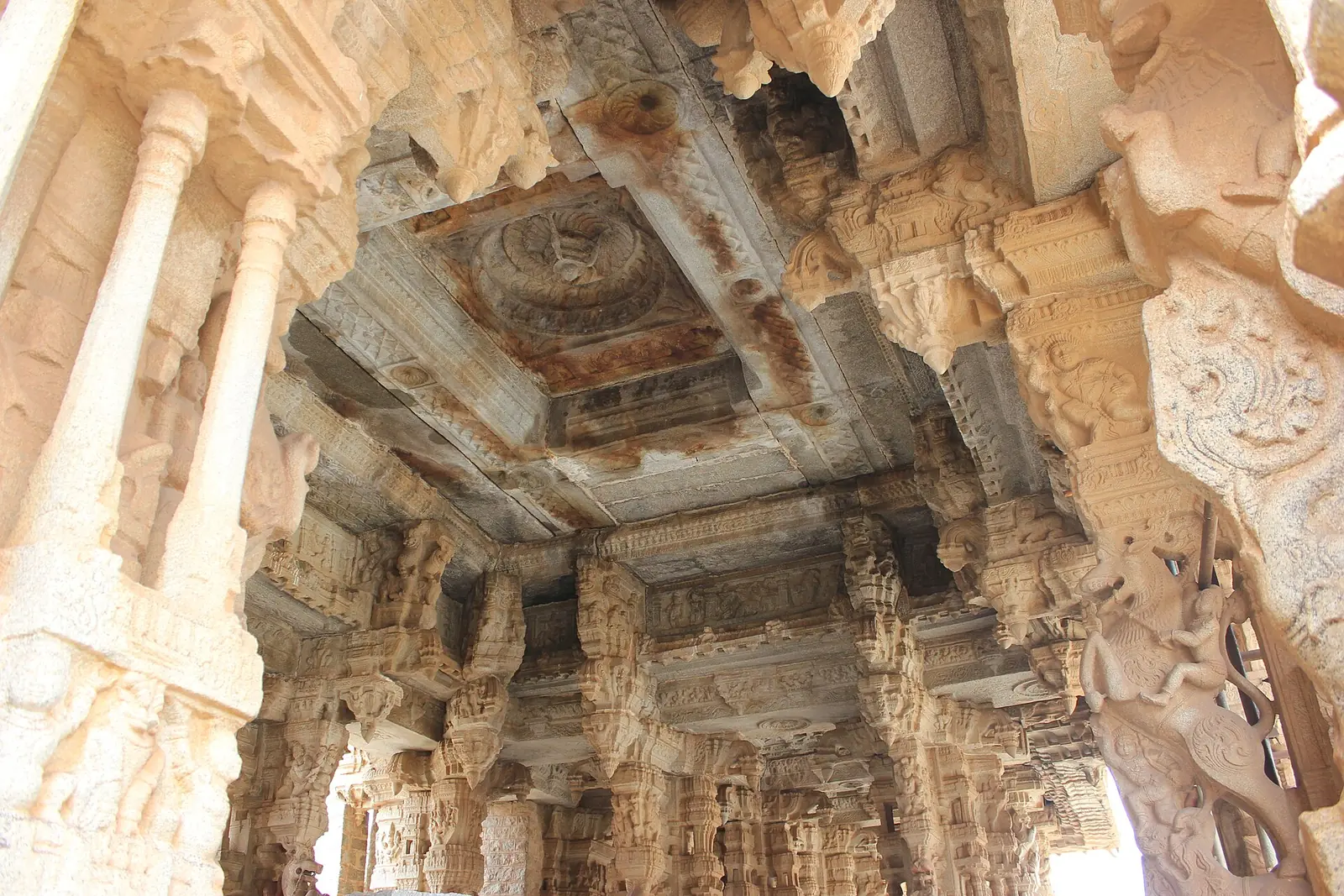
In the south the mandapa became an architecture of its own. Vijayanagara builders made pillars that were whole sculptures, with rearing yalis, and added the kalyana mandapa, where the marriage of Bhagwan and Devi is celebrated each year, and the open vasanta mandapa. The Vitthala temple at Hampi, whose halls took several decades to complete under the Tuluva kings, is the most famous of them. The Hoysalas, in Karnataka, turned their mandapa pillars on a lathe, each different from the next. Every such hall answers the same need: a place for many people to stand together before Bhagwan, under one roof, out of the sun and rain.