Cite
MLA
“Amalaka and kalasha: the crown.” Hindu History, 2026, https://www.hinduhistory.in/sthapatya/amalaka-and-kalasha/. Accessed .
APA
Hindu History. (2026). Amalaka and kalasha: the crown. Retrieved , from https://www.hinduhistory.in/sthapatya/amalaka-and-kalasha/
What defines it
- 01
Amalaka: ribbed stone disc named for the amla fruit
- 02
Kalasha (stupi in the south): the finial pot
- 03
Odisha mastaka: beki, amla, khapuri, kalasa, ayudha
- 04
Lion supports under the Odia amalaka
- 05
Rows of kalasams on gopuram crests
01The amla fruit
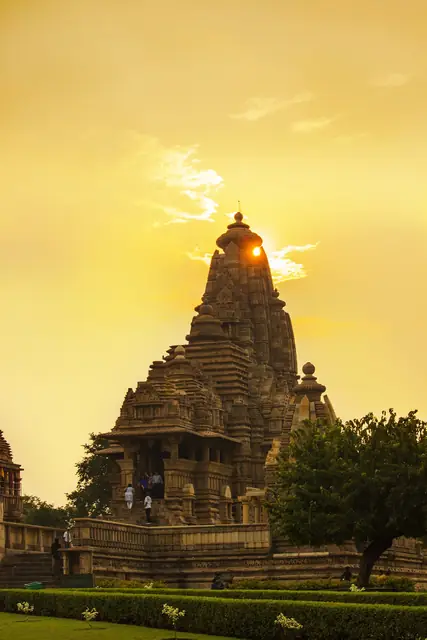
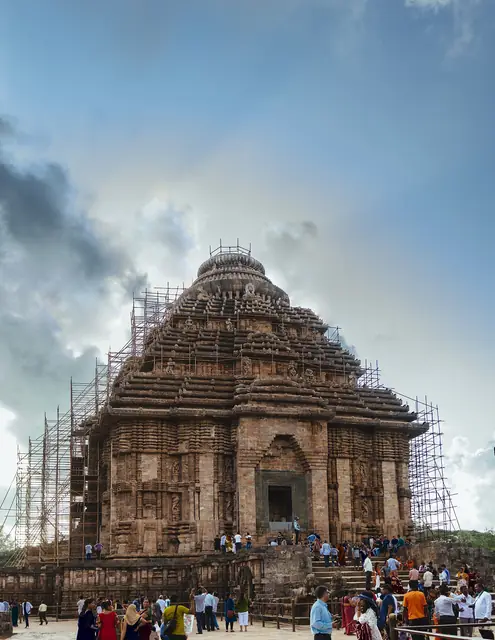
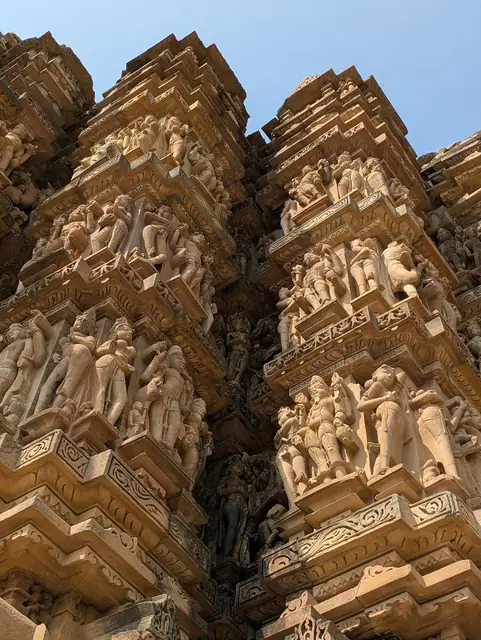
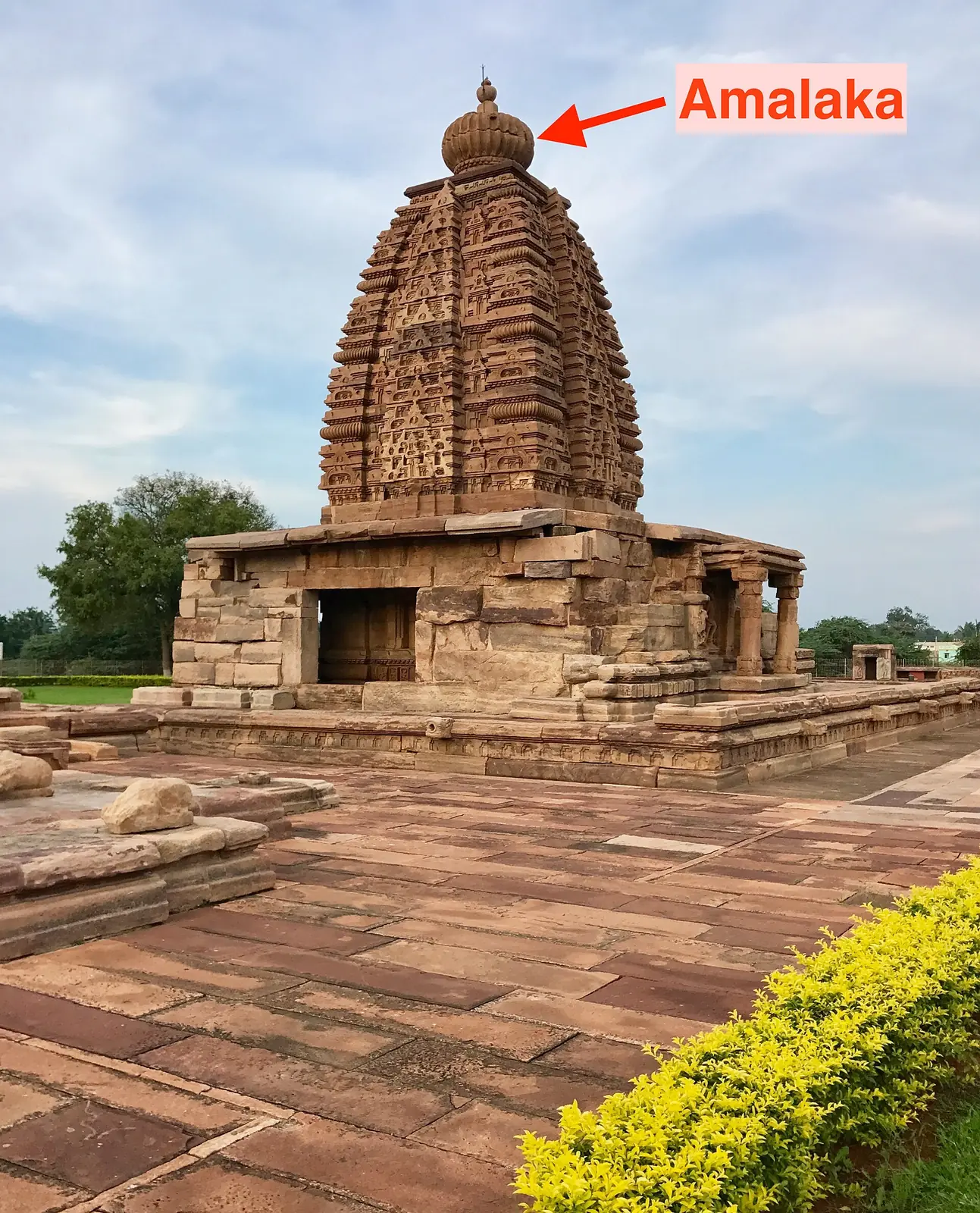
The amalaka takes its name from the amla, the Indian gooseberry, whose ribbed round fruit it resembles; seen from below it looks like a cogged wheel laid flat. It sits at the summit of the Nagara shikhara and carries the kalasha. Smaller amalakas also cap the corners of each storey and the tops of the miniature spires, so that a shekhari tower like Kandariya Mahadeva carries dozens. In Odisha the amalaka is often huge and is held up by four seated lions. Odia builders call the whole crown the mastaka, the head, and stack it as beki or neck, amla, khapuri, kalasa and ayudha, the deity's emblem, such as the chakra of Shri Jagannath.
02The pot of fullness
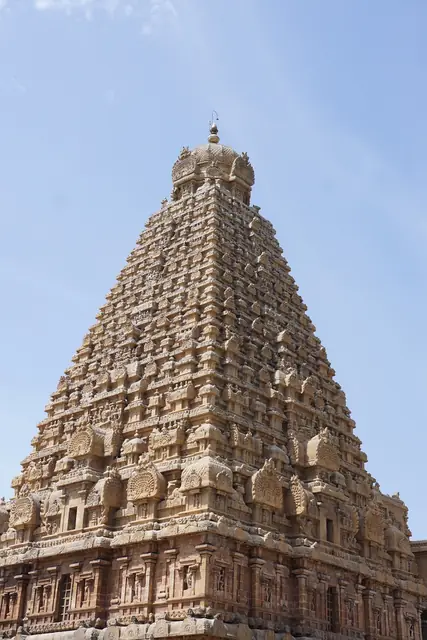
The kalasha is an urn or water-pot, the vessel of offering, and it appears at the peak of every style of shikhara or vimana. In the south the same member is called the stupi, and gopurams carry whole rows of kalasams along their crests, of metal or of stone. In Kerala a copper kalasham crowns the sloping roof of the sreekovil. In the north the kalasha usually stands on the amalaka, sometimes with a smaller amalaka between. Because the finial sits exactly over the murti, on the temple's axis, the kalasha marks the point where the line rising from the garbhagriha meets the sky. On many temples a flag flies above it, the dhvaja of the deity.
03Seen in stone
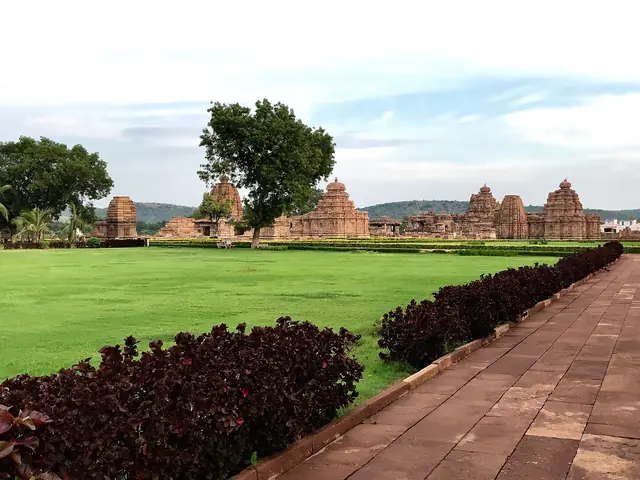
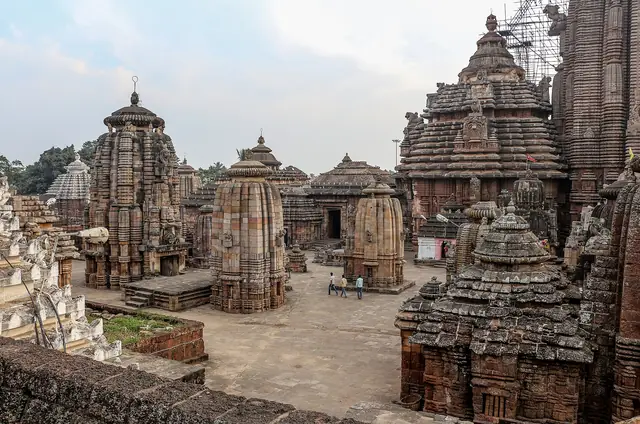
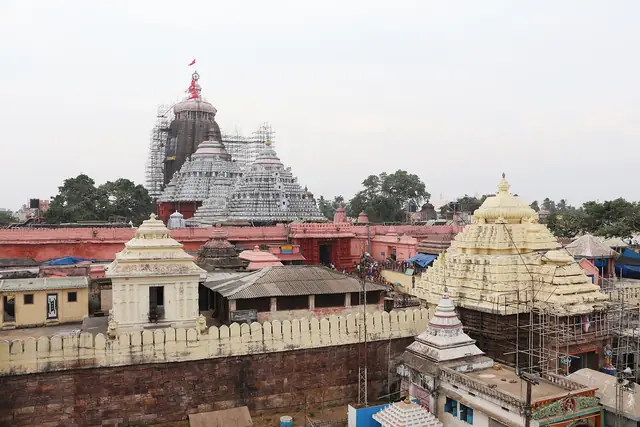
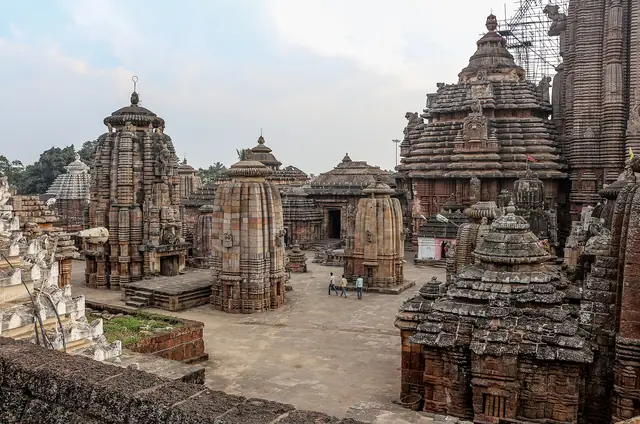
The Galaganatha temple at Pattadakal, of the 8th century, still has its great stone amalaka. At Bhubaneswar, the amalakas of the Lingaraja and its subsidiary shrines show the Odia lion supports. At Puri the Nilachakra of Shri Jagannath stands above the main tower as the ayudha of the mastaka. On a Dravida temple the eye climbs the talas to the domed shikhara and stops at the stupi; on a Nagara temple it climbs the curve to the amalaka and stops at the kalasha. Either way the smallest part of the building, set highest, is the one that marks the deity's place from far away.