Cite
MLA
“Al-Biruni and the Kitab al-Hind.” Hindu History, 2026, https://www.hinduhistory.in/sakshi/al-biruni/. Accessed .
APA
Hindu History. (2026). Al-Biruni and the Kitab al-Hind. Retrieved , from https://www.hinduhistory.in/sakshi/al-biruni/
Mahmud utterly ruined the prosperity of the country, and performed there wonderful exploits, by which the Hindus became like atoms of dust scattered in all directions, and like a tale of old in the mouth of the people.
The route
What defines it
- 01
Learned Sanskrit; translated Patanjali’s Yoga Sutra into Arabic
- 02
Eighty chapters on Hindu belief, science and custom
- 03
Measured the earth from Nandana fort
- 04
Recorded Mahmud’s ruin of the country and of Somnath
- 05
Never travelled beyond the Punjab
01A captive scholar learns Sanskrit
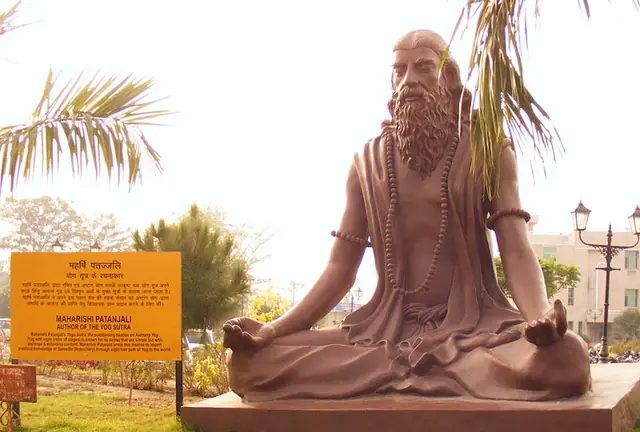
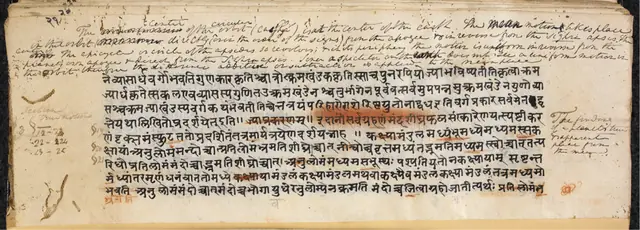
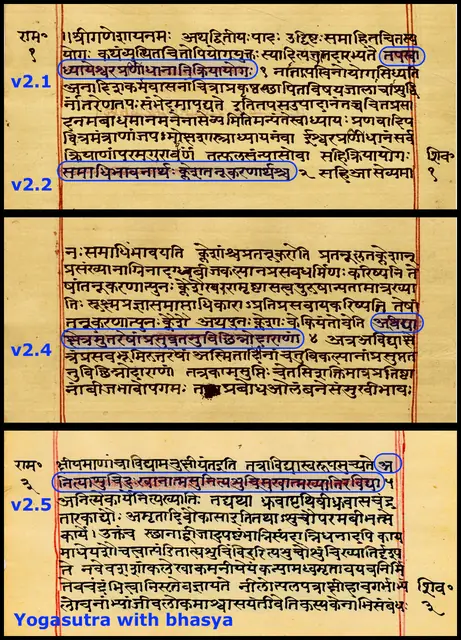
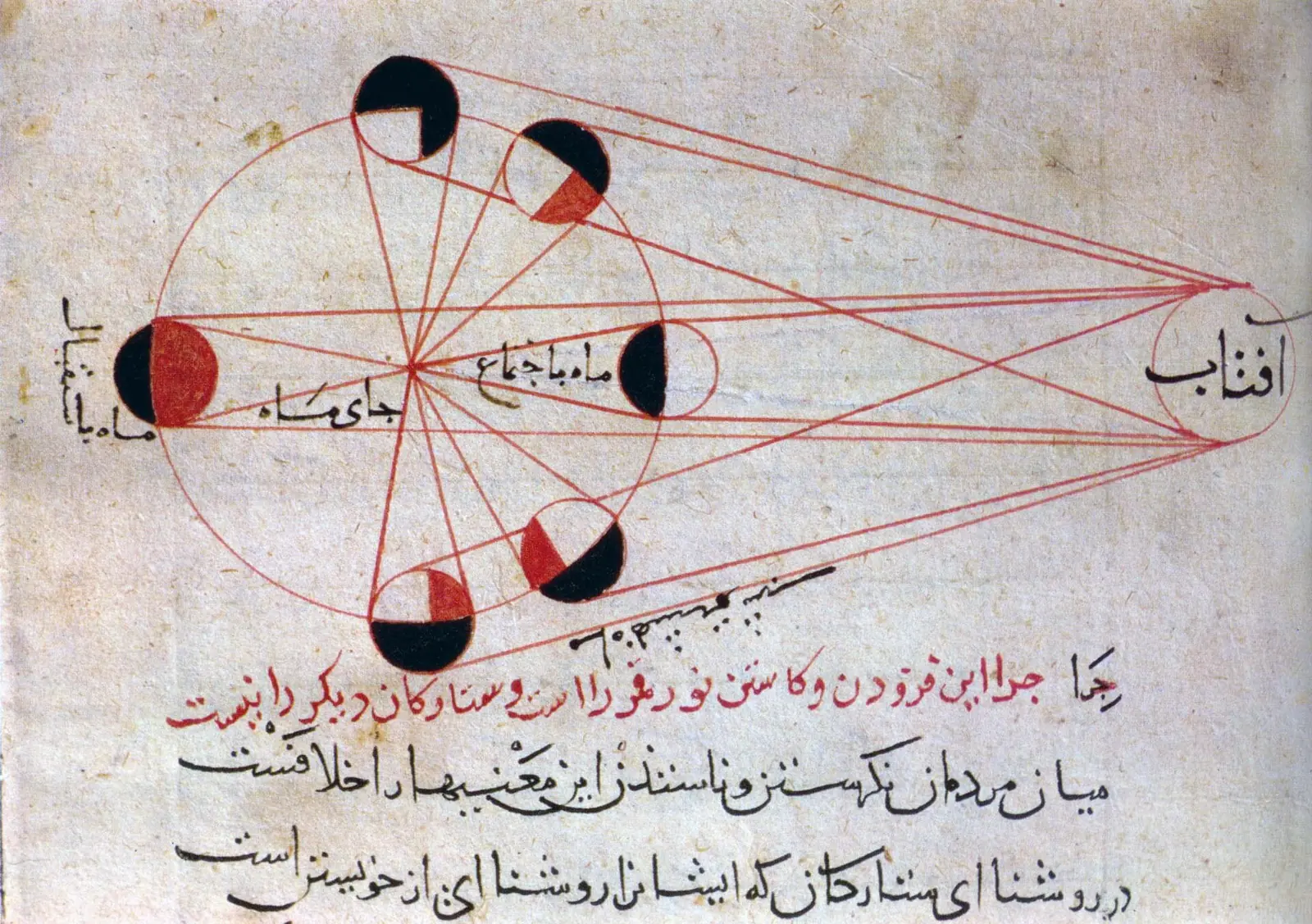
Abu Rayhan al-Biruni was born in 973 in Khwarazm, south of the Aral Sea. When Mahmud of Ghazni took Khwarazm in 1017 he carried its scholars off to Ghazni, al-Biruni among them. Over the next years al-Biruni went with Mahmud’s court into the Punjab, where the Hindu Shahi kingdom had just been destroyed. From the fort of Nandana in the Salt Range he measured the dip of the horizon from a hilltop and worked out the size of the earth. He sat with pandits, learned Sanskrit well enough to translate Patanjali’s Yoga Sutra and a Samkhya text into Arabic, and read Varahamihira, Brahmagupta and the Puranas. The Kitab al-Hind, ‘Book of India’, was finished around 1030, soon after Mahmud’s death.
02Hindu thought in its own words
His method was new. He quotes the texts themselves, the Bhagavad Gita again and again, the Vishnu and Vayu Puranas, Patanjali, Varahamihira’s Brihat Samhita, and sets them beside Greek philosophy to show that learned Hindus held God to be one, eternal, without beginning or end. He separates what the learned believe from what the common people do, and says plainly that he writes as a reporter, not a critic. There are chapters on the Vedas and how they were handed down by recitation, the eighteen Puranas, the varnas, the Hindu calendar and its eras, Shaka, Vikrama and the Gupta era, weights and measures, festivals, pilgrimage, and the yugas. Nothing as full was written on Hindu learning by an outsider for the next seven hundred years.
03Somnath, Multan and the ruin of a country
Al-Biruni lived at the conqueror’s court and still wrote what the conquest cost. In his first chapter he says that Mahmud utterly ruined the prosperity of the country, that the Hindus were scattered like atoms of dust, and that this is why Hindu sciences had fled from the conquered parts to Kashmir, Varanasi and places beyond reach. He describes the Somnath linga, to which water of the Ganga was brought daily, and records that Mahmud broke it in 416 of the Hijra, 1025–26 CE. He tells of the sun image of Multan, the Aditya, destroyed by the Qarmatian rulers before Mahmud. And he speaks with respect of the Hindu Shahi kings of Kabul and Waihind, Jayapala and Anandapala’s line, who fought Mahmud and lost.
04Limits of the best witness
Al-Biruni never went beyond the Punjab and the Indus country. Almost everything about the rest of Bharat came to him through books and the pandits around him, so his geography of the east and south is secondhand, and he sometimes misreads a Sanskrit term or follows one text where many disagree. He also complains, with feeling, that Hindus of his day thought there was no country, king, religion or science like theirs and would not share knowledge with foreigners; he admits this was sharpened by the hatred Mahmud’s raids had planted. Edward Sachau’s English translation of 1888 is still the standard. For Hindu astronomy, calendar and the eras, scholars still check their dates against his tables.
In the texts
- Tahqiq ma li-l-Hind, the Kitab al-Hind (c. 1030)
- Arabic translation of Patanjali’s Yoga Sutra (Kitab Patanjal)
- Translation by Edward C. Sachau, Alberuni’s India (1888)