Cite
MLA
“Jain darshana: Anekantavada.” Hindu History, 2026, https://www.hinduhistory.in/darshana/jain-anekantavada/. Accessed .
APA
Hindu History. (2026). Jain darshana: Anekantavada. Retrieved , from https://www.hinduhistory.in/darshana/jain-anekantavada/
What defines it
- 01
Anekantavada: reality has many aspects
- 02
Nayavada: partial standpoints
- 03
Syadvada and the saptabhangi
- 04
Seven tattvas, from jiva to moksha
- 05
Three jewels: right faith, knowledge, conduct
01The path of the Jinas
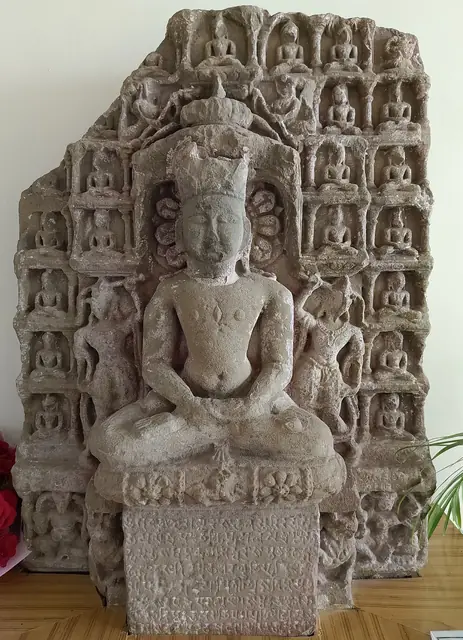
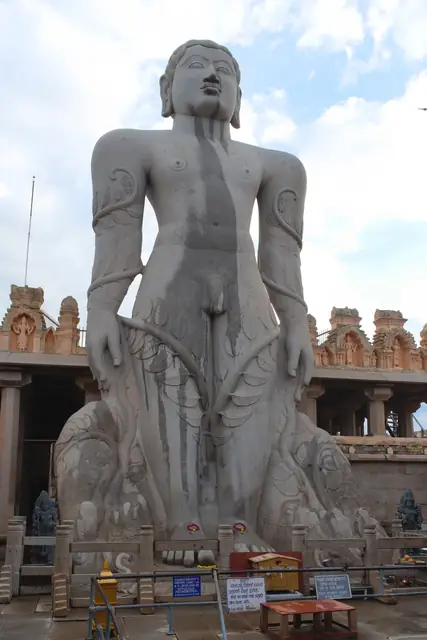
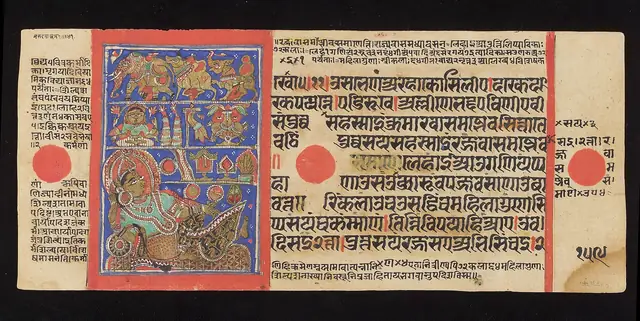
Jains follow the teaching of the twenty-four Tirthankaras, the last of whom, Bhagwan Mahavira, attained nirvana at Pawapuri; the Svetambara reckoning places his life from 599 to 527 BCE. The Tattvartha Sutra of Umasvati, accepted by both Svetambaras and Digambaras, opens with the path in one line: right faith, right knowledge and right conduct together are the way to moksha (1.1). Reality has seven tattvas: jiva, the soul; ajiva, the non-soul; asrava, the inflow of karma; bandha, bondage; samvara, stopping the inflow; nirjara, shedding karma; and moksha. Every soul is in itself pure and all-knowing, and karma, a subtle matter, clouds it. Ahimsa, satya, asteya, brahmacharya and aparigraha are the five vows.
02Many sides, seven ways of saying
Anekantavada holds that a thing has countless aspects, and that it is at once lasting in its substance and changing in its modes. The Tattvartha Sutra says reality is grasped through pramana, valid knowledge, and naya, partial standpoints (1.6); the nayas are commonly counted as seven. Syadvada, the doctrine of the word syat, “in some respect”, sets out the saptabhangi, seven forms of predication: in some respect it is; in some respect it is not; in some respect it is and is not; in some respect it is inexpressible; and three further combinations with inexpressible. Jain teachers used the parable of the blind men who each touch one part of an elephant: each is right about his part and wrong to deny the others.
03The great Jain logicians
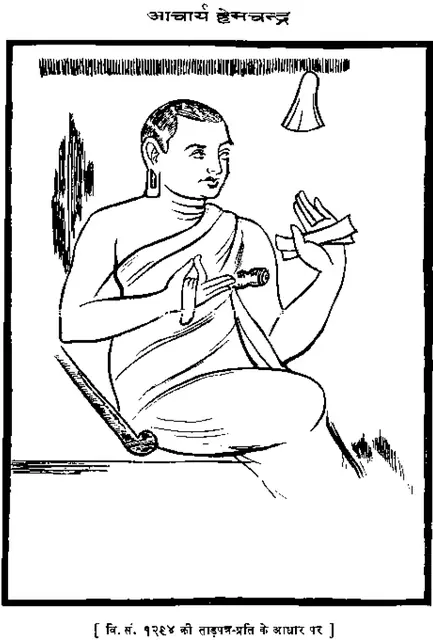
Siddhasena Divakara’s Sanmati Tarka and Samantabhadra’s Aptamimamsa built anekanta into a full logic; Akalanka and Vidyanandi carried it further. Haribhadra, around the 8th century, wrote the Shaddarshana Samuccaya, a short survey of six schools, setting out Jain, Bauddha, Nyaya, Sankhya, Vaisheshika and Mimamsa views in order. Acharya Hemachandra of Patan, in the 12th century, wrote the Pramana Mimamsa and a hymn in thirty-two verses on other schools that his commentator Mallishena expanded into the Syadvada Manjari. In the 17th century Yashovijaya engaged with Navya-Nyaya. Jain thinkers sat in the same debates as the Hindu darshanas for two thousand years, and each side sharpened the other.
Great masters
In the texts
- Tattvartha Sutra 1.1, 1.6
- Aptamimamsa of Samantabhadra
- Shaddarshana Samuccaya of Haribhadra
- Syadvada Manjari of Mallishena