Cite
MLA
“Stepwells: vav and baori.” Hindu History, 2026, https://www.hinduhistory.in/vijnana/stepwells-vav-engineering/. Accessed .
APA
Hindu History. (2026). Stepwells: vav and baori. Retrieved , from https://www.hinduhistory.in/vijnana/stepwells-vav-engineering/
01Why build down
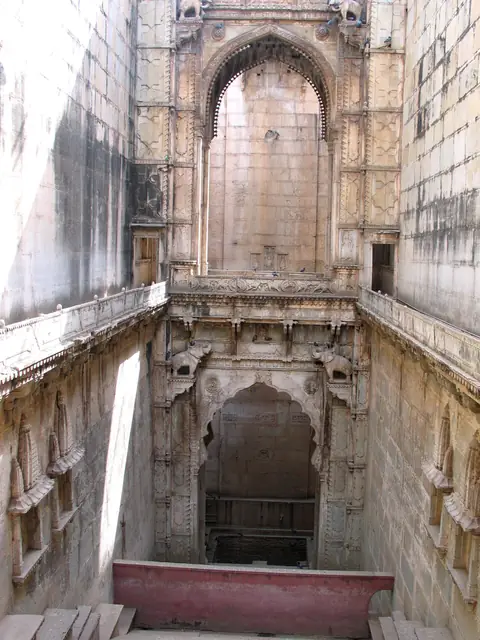
In Gujarat and Rajasthan the water table falls far in the hot months and rises after the monsoon. A stepwell lets people reach the water at any level by walking down to it, keeps it shaded and cool, and gives a place to rest. The structure has to hold back the earth on all sides at great depth, so builders used deep stone walls braced by pillared galleries at each level. Chand Baori at Abhaneri, built in the 9th century, has some 3,500 steps in a criss-cross pattern on three sides, down about 13 storeys.
02Rani ki Vav
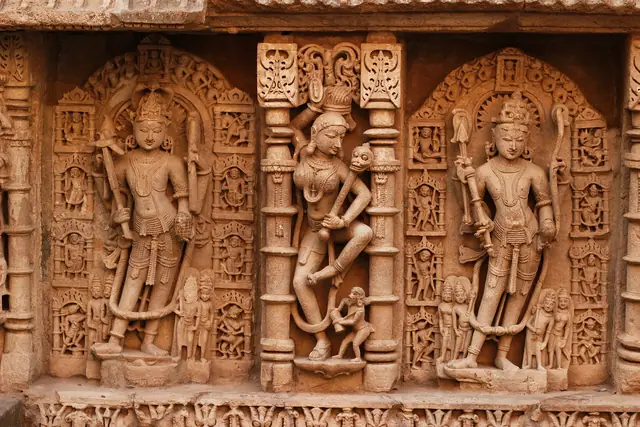
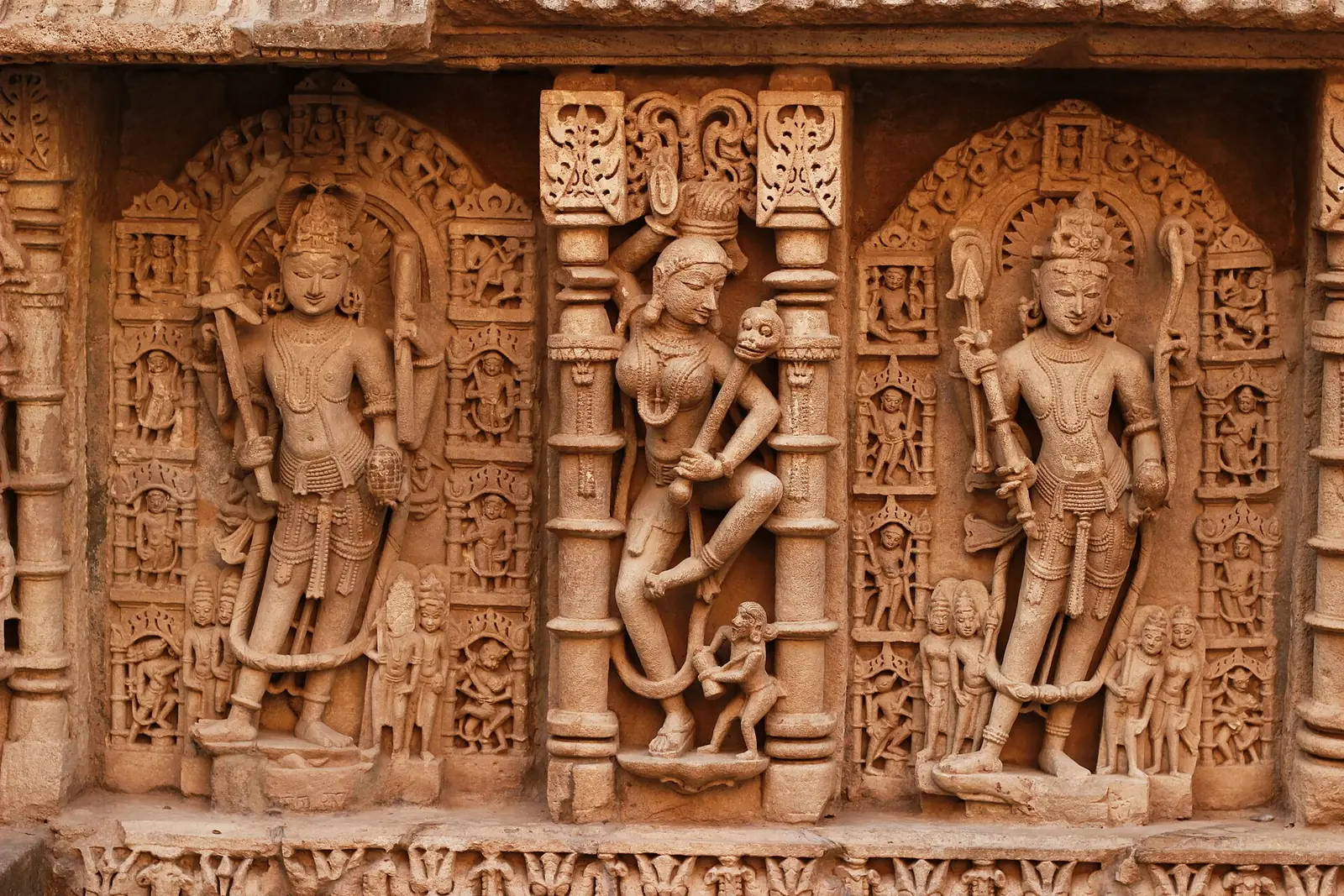
At Patan, the Chaulukya capital, a stepwell was built around 1063 in memory of King Bhima I; the Prabandha Chintamani of Merutunga credits his queen Udayamati. It runs about 64 metres long and 27 metres deep in seven levels, and its walls carry some 500 principal sculptures, with the Dashavatara of Vishnu, the Devis and apsaras. The Sarasvati river flooded it and it lay under silt for centuries, which kept the carvings sharp. The ASI cleared it in the 1980s, and UNESCO inscribed it in 2014.
03Lost and found
Thousands of stepwells were built from about the 7th century to the 19th, by kings, queens, merchants and village assemblies, and many carry inscriptions naming the donor. Adalaj near Ahmedabad was finished in 1499 by Rani Rudabai. Under British rule piped water and fears of disease left most of them to silt up. Many are being cleaned now as water-harvesting structures, which is what they always were.
In the texts
- Prabandha Chintamani of Merutunga (1304)