01Bhima I and the year 1026
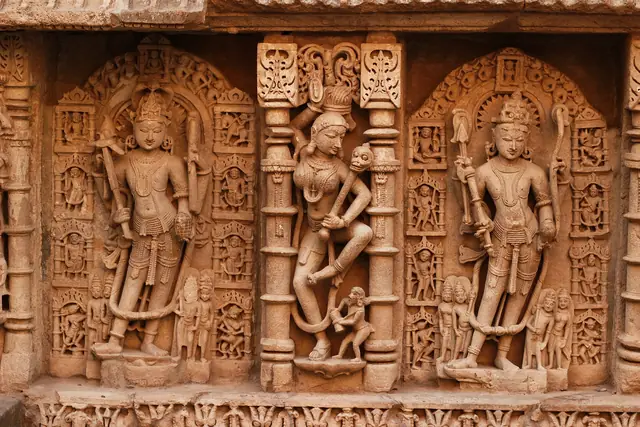
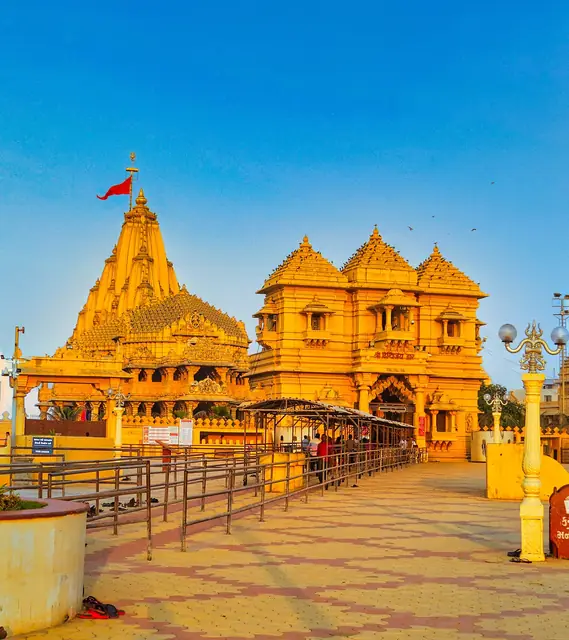
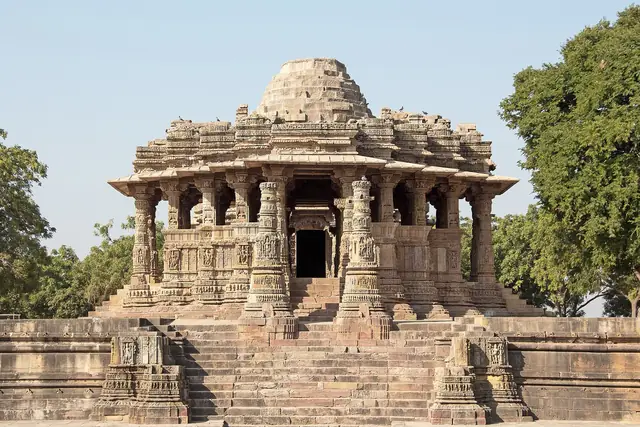
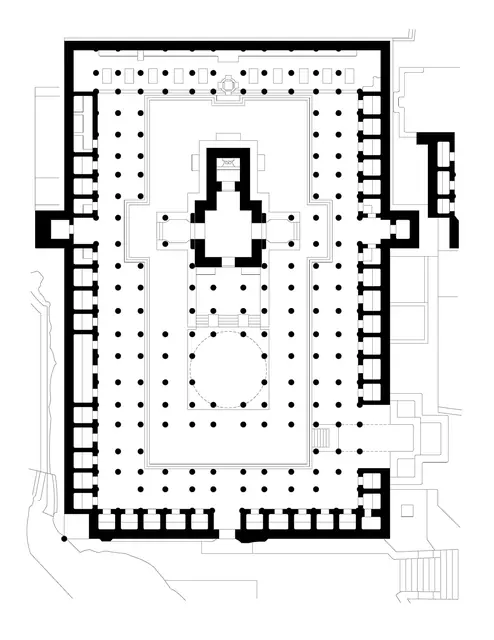
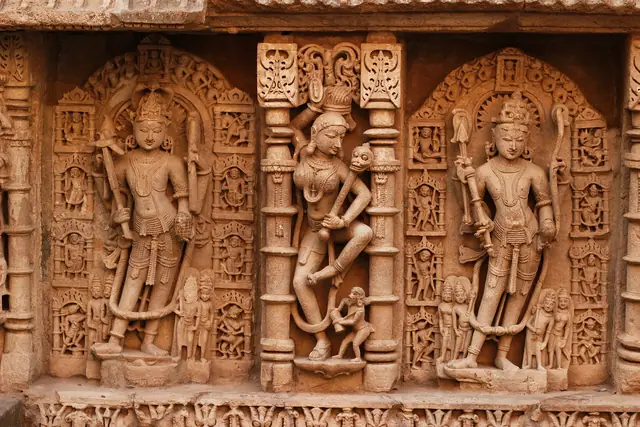
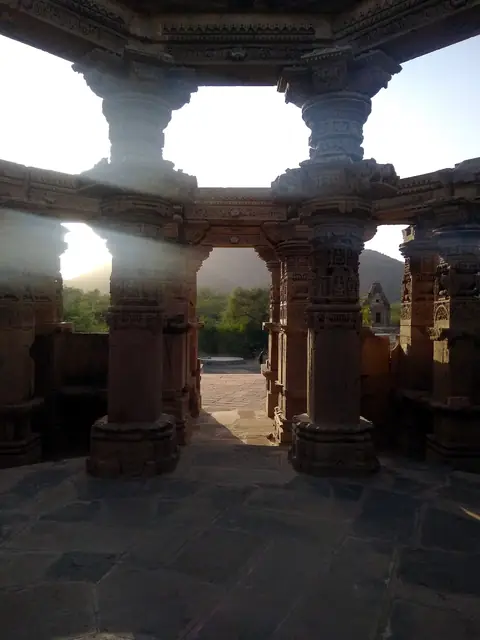
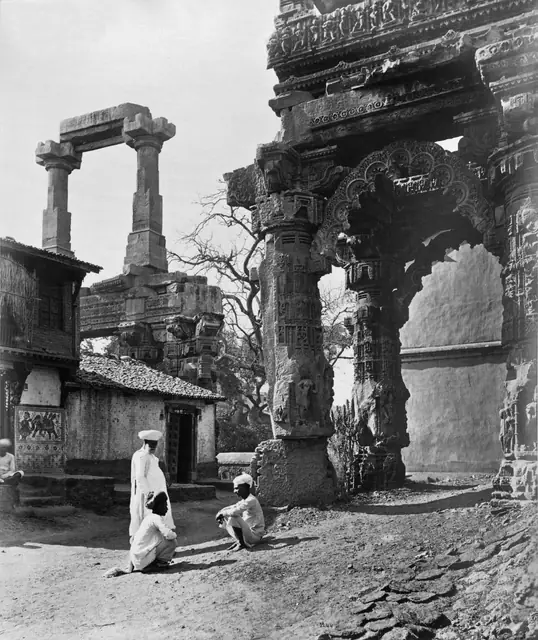
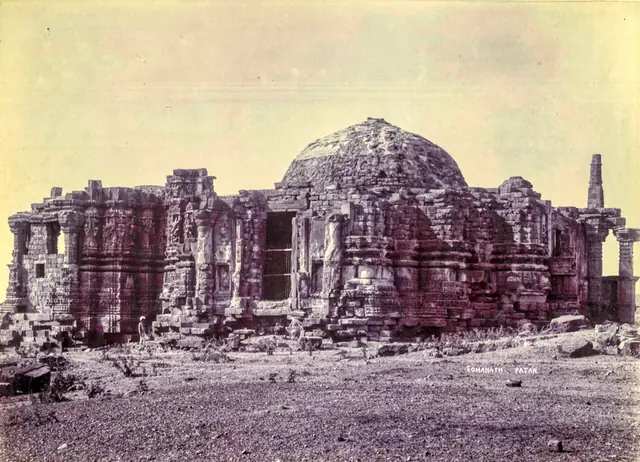
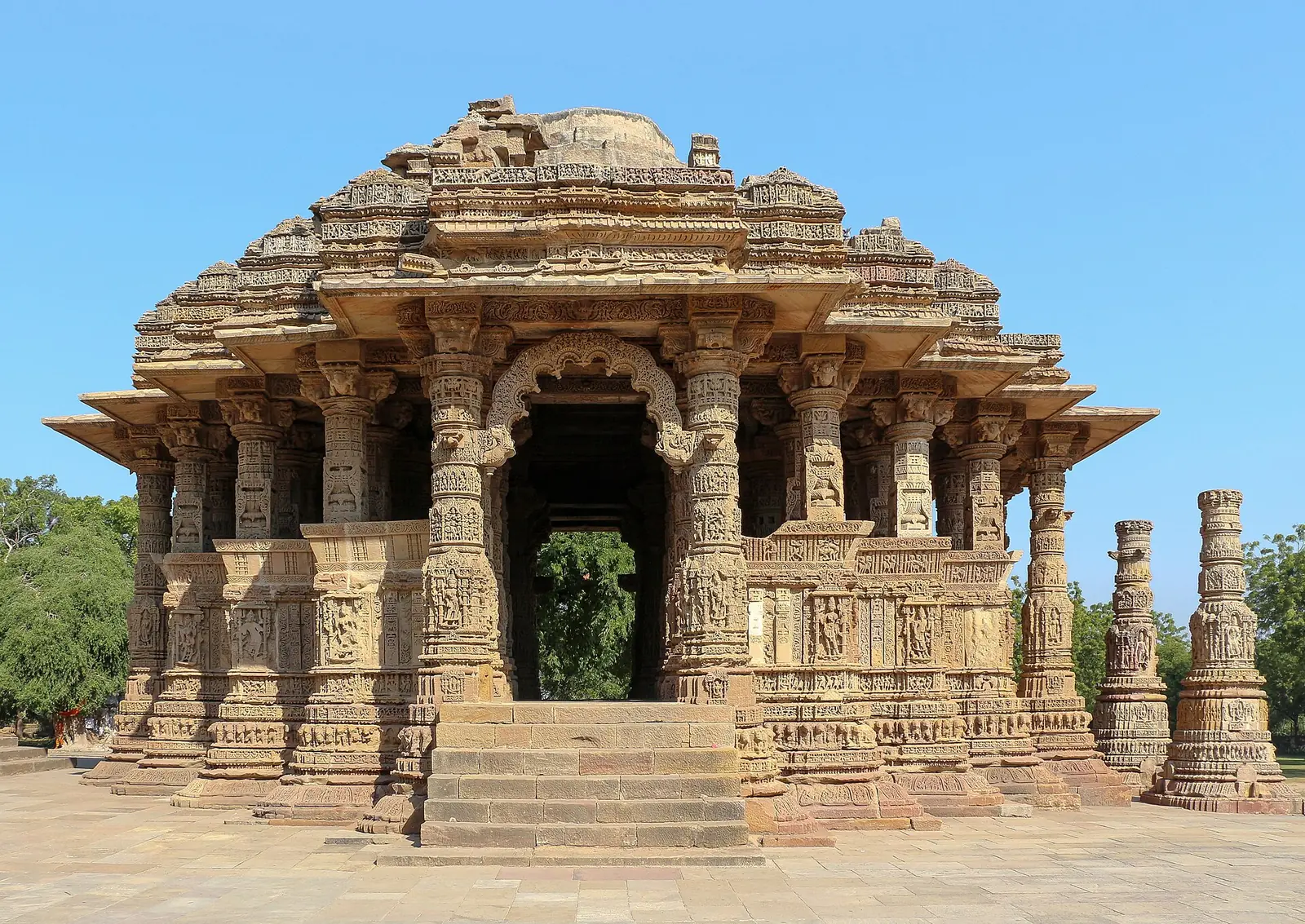
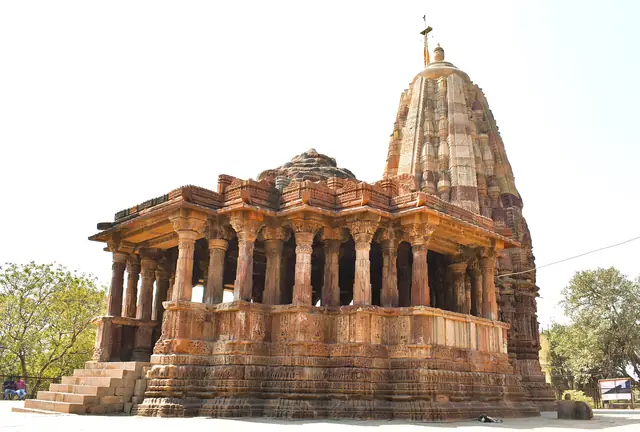
Mahmud of Ghazni crossed the desert in the winter of 1025–26, took Anahilavada, and in January 1026 broke the temple of Somanatha at Prabhas Patan. Bhima I withdrew to Kanthkot in Kutch and returned when the raiders left. Somnath was rebuilt. In the same years his kingdom built the Sun temple at Modhera, whose inscription gives the year 1026–27, and his widow Udayamati built the Rani ki Vav at Patan, a stepwell seven storeys deep.
02Siddharaja and Kumarapala
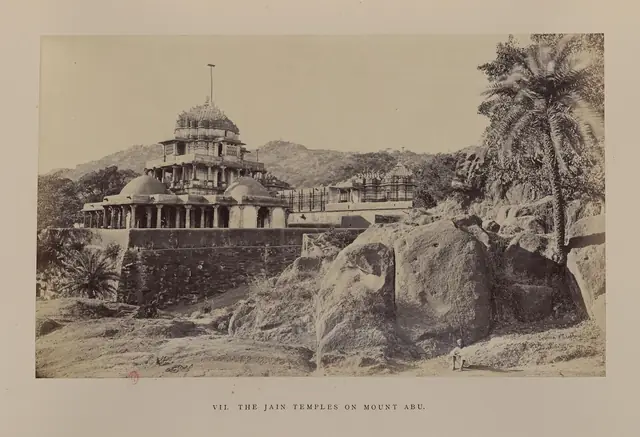
Jayasimha Siddharaja conquered Malwa from the Paramaras, built the Sahasralinga lake at Patan, and gave the Jain acharya Hemachandra his place at court. Hemachandra’s grammar, Siddha-Hema, was named for the king. Kumarapala followed, close to Hemachandra and a patron of Jain shrines across Gujarat; the Bhava Brihaspati inscription of 1169 at Somnath records that he rebuilt the Shiva temple there in stone. The Jain temples of Taranga and Vimala Vasahi at Mount Abu, built by Bhima I’s minister Vimala in 1031, belong to this line’s reign.
03Kasahrada, 1178
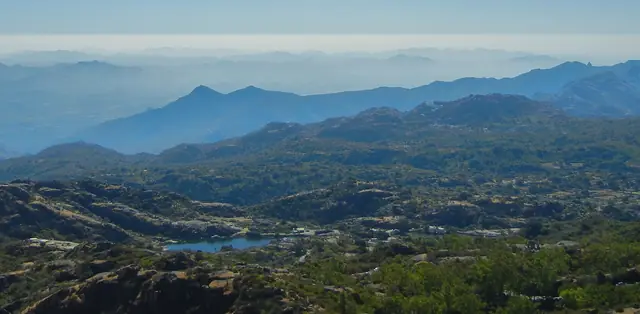
Muhammad of Ghor marched on Gujarat in 1178 through the desert route. The boy king Mularaja II was still a child, and his mother Naiki Devi led the army. At Kasahrada, at the foot of Mount Abu, the Chaulukya army broke the invaders; Muhammad escaped with difficulty and never tried the Gujarat road again, turning instead to Punjab. Bhima II then ruled for sixty years, though his ministers held much of the power. After 1244 the throne passed to the Vaghelas, a branch of the same family.
The rulers
- 1Mularaja IFounder at Anahilavadac. 941–996
- 2Chamundarajac. 996–1008
- 3Durlabharajac. 1008–1022
- 4Bhima IMahmud’s raid 1026; Modhera; Rani ki Vavc. 1022–1064
- 5KarnaFounded Karnavati, near Ahmedabadc. 1064–1092
- 6Jayasimha SiddharajaTook Malwa; patron of Hemachandrac. 1092–1142
- 7KumarapalaRebuilt Somnath in stone, 1169c. 1142–1171
- 8Ajayapalac. 1171–1175
- 9Mularaja IIVictory at Kasahrada under Naiki Devic. 1175–1178
- 10Bhima IIc. 1178–1240
- 11TribhuvanapalaLast of the main linec. 1240–1244
What they left
- Rani ki Vav, Patan, a UNESCO World Heritage Site
- Modhera Sun temple (1026–27)
- Kumarapala’s Somnath temple (1169), recorded in the Bhava Brihaspati inscription
- Vimala Vasahi at Mount Abu (1031) and the Taranga temple
- Hemachandra’s Siddha-Hema grammar and Dvyashraya Kavya