01A queen’s gift
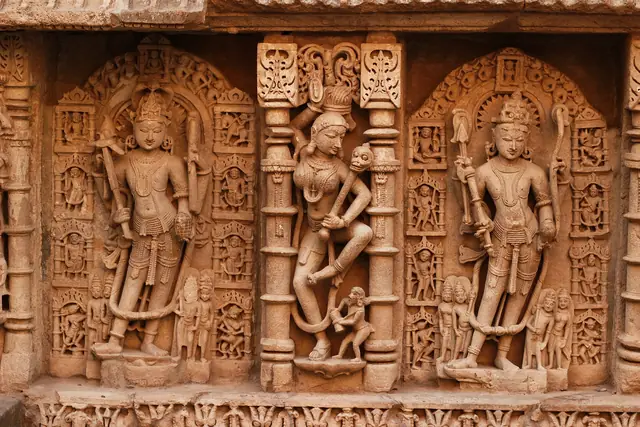
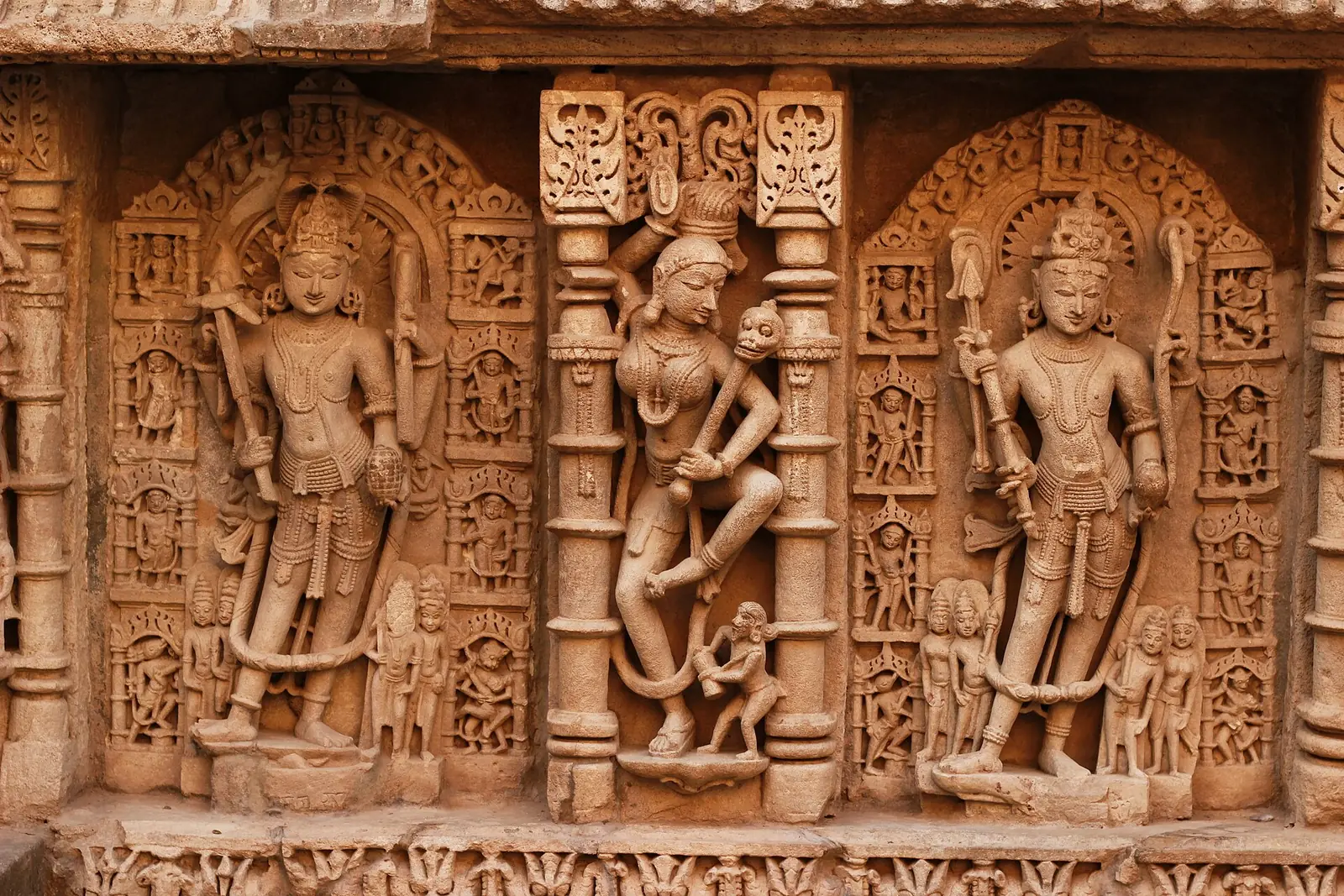
Merutunga’s Prabandha Chintamani, written in 1304, records that Udayamati, queen of Bhima I, had a vav built at Anahilapataka. The work is dated to the 1060s, after the king’s death. A vav is a stepwell: you go down flight after flight, past pillared pavilions, to water that stays cool in the Gujarat summer. Here the descent is about 27 metres, and every wall is carved. More than five hundred principal sculptures survive, with Vishnu’s avatars at the centre: Varaha lifting Bhudevi, Vamana, Narasimha, Rama, Kalki. Between them stand apsaras doing their hair, yoginis and the Saptamatrikas.
02Buried by the river
The Sarasvati changed course and flooded the well. Silt filled it almost to the top, which is why the carvings came out so sharp. When the ASI began clearing it in the late 1950s only the top of the shaft showed. Excavation and restoration ran through the 1980s. In 2014 UNESCO inscribed it as a World Heritage Site, and in 2018 it went onto the back of the new ₹100 note.
The life of this place
- c. 1063 CEBuilt by Queen Udayamati at Anahilapataka.
- 1304 CEMerutunga’s Prabandha Chintamani records the queen’s vav.
- 2014 CEInscribed as a UNESCO World Heritage Site.
- 2018 CEPictured on the ₹100 banknote.
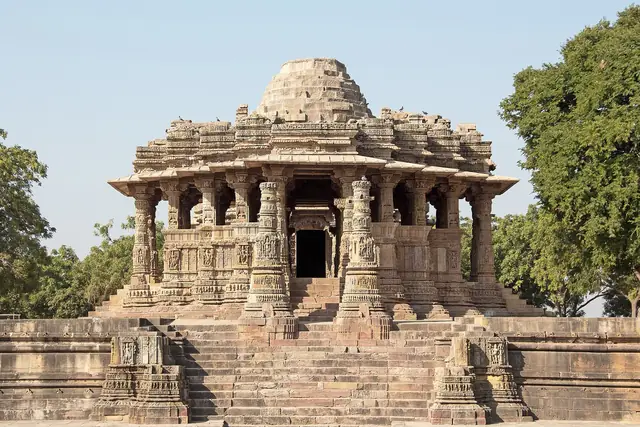
On the edge of Patan town, about 125 km from Ahmedabad; ASI ticket. Pair it with Modhera, 35 km away.